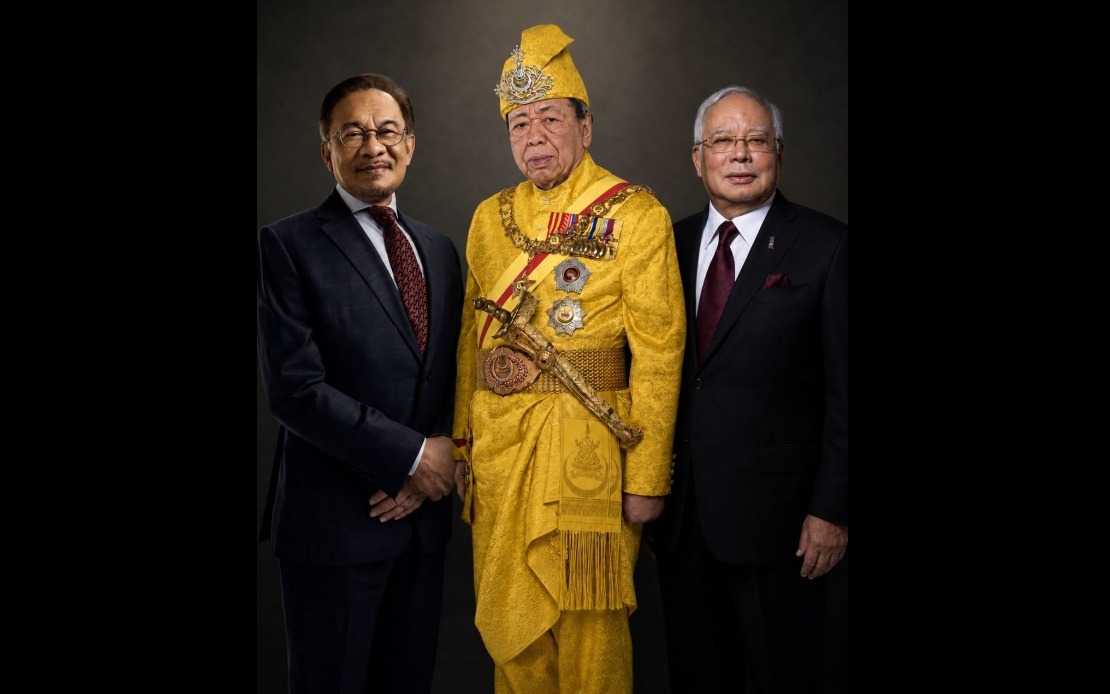
The Sultan of Selangor, Sultan Sharafuddin Idris Shah, has publicly acknowledged Prime Minister Datuk Seri Anwar Ibrahim's role in bringing the Shah Alam Line LRT3 to operational status, following the project's inaugural service launch this week. Through a formal statement, the Sultan extended his gratitude to Anwar for maintaining momentum on the infrastructure initiative after assuming the dual roles of Prime Minister and Finance Minister in 2022, describing the completion as a significant achievement for the state and its residents.
The royal endorsement carries particular weight given that Sultan Sharafuddin has been instrumental in championing the transit project since its conception. According to the Sultan's account, the LRT3 initiative emerged from concerns raised by members of the public, particularly housewives whose spouses struggled with severe congestion while commuting home during peak hours. This personal grievance transformed into a broader recognition that the Klang Valley's transportation infrastructure required substantial upgrading to address chronic traffic flow problems affecting millions of daily commuters.
Under Anwar's stewardship, the project underwent significant reinvigoration. The Prime Minister restored five railway stations that had been cancelled during previous administrative phases, a decision that substantially expanded the network's coverage and utility. Beyond station restoration, Anwar's government proposed the development of affordable residential units near LRT3 stations, a complementary policy designed to maximize the public utility of the new line by improving accessibility for lower-income residents in the region. The Sultan explicitly commended these additions, signaling royal satisfaction with the administration's commitment to making the project accessible and beneficial across economic strata.
The journey to operational status consumed nearly two decades and encountered multiple administrative setbacks. When Malaysia's government changed in 2018, the project suffered a 18-month delay as new leadership reassessed priorities and budget allocations. The situation deteriorated further when the COVID-19 pandemic imposed an additional 19-month suspension stretching from 2020 into 2021. These extended interruptions forced cost-saving compromises: station facilities were scaled down, the number of train coaches was reduced, and as mentioned, five planned stations were eliminated from the original alignment. Despite these constraints, the Sultan insisted that the project retained its fundamental purpose of serving commuters rather than functioning as a prestige megaproject.
The underlying transportation challenge driving the LRT3's creation reflects Selangor's chronic infrastructure constraints. In the period leading up to the project's initiation, Klang was served by only two bridges crossing the Klang River, creating severe bottlenecks during rush hours. The resulting gridlock prompted the government under former Prime Minister Datuk Seri Najib Tun Razak to implement immediate relief measures, including the abolition of the Batu Tiga and Sungai Rasau toll plazas in 2018. However, these were interim solutions to a systemic capacity problem that demanded longer-term infrastructure development.
Sultan Sharafuddin's public tribute to Anwar sits within a broader narrative of multi-administration cooperation, a point the Sultan emphasized deliberately. The royal statement stressed that the LRT3 should not be characterized as the singular achievement of any individual administrator or political party. Rather, the Sultan framed the project's successful completion as the culmination of sustained planning, financial commitment, and inter-governmental cooperation spanning multiple electoral cycles and administrations. This diplomatic positioning seeks to insulate the infrastructure achievement from partisan political appropriation, establishing it instead as a legacy transcending individual political careers or party affiliations.
The operational launch of the Shah Alam Line represents a meaningful expansion of the Kuala Lumpur metropolitan transit network. The new line connects three economically significant urban centers—Klang, Shah Alam, and Kuala Lumpur—while also providing connections to Petaling Jaya. This connectivity is expected to facilitate commuter movement and support the functioning of these municipalities as major economic and administrative hubs. The Sultan expressed optimism that the railway's capacity would meaningfully reduce traffic congestion, particularly during peak hours, while simultaneously offering passengers a transport mode that is faster, more comfortable, and safer than private vehicle travel.
The project carries implications beyond transportation convenience. The Sultan highlighted the potential for the LRT3 to catalyze broader economic development across the Klang Valley region. Improved transit connectivity typically generates secondary economic benefits through property value increases, enhanced business accessibility, and more efficient labor market functioning. For the Selangor state government, the completion represents vindication of long-standing advocacy for federal investment in the region's transportation infrastructure, an issue that has featured prominently in discussions between state and federal authorities over successive administrations.
Operational sustainability emerged as an explicit concern in the Sultan's statement. His Royal Highness specifically appealed to Prasarana Malaysia Bhd, the federal operator responsible for managing the LRT system, to prioritize continuous and adequate maintenance of the new line. This appeal reflects awareness that transportation infrastructure deteriorates without proper upkeep, and that maintenance lapses can diminish public confidence and utility. The Sultan's public emphasis on this operational dimension suggests recognition that the project's long-term success depends not merely on completion, but on sustained quality service delivery to commuters over the coming years.
The Sultan's intervention in publicly crediting Anwar signals royal satisfaction with the current administration's infrastructure priorities, particularly regarding projects benefiting Selangor. Royal statements on infrastructure matters carry considerable symbolic weight in Malaysia's constitutional context, where the nine Sultans exercise both ceremonial and advisory prerogatives. The public nature of this endorsement, issued through formal statement rather than private correspondence, indicates an intention to shape public perception of the government's performance in addressing longstanding regional transportation demands.
For Malaysian and Southeast Asian observers, the LRT3 completion represents a case study in infrastructure project persistence despite political transitions and external shocks. The 18-year gestation period and multiple delays underscore the complexity of delivering large-scale public transit projects in developing urban systems. The eventual operational success, achieved despite cost reductions and scaled-back ambitions, demonstrates that modified versions of ambitious projects can still deliver meaningful public benefits. The Sultan's careful attribution of success to multi-administration continuity offers a template for understanding Malaysian infrastructure development as an iterative process requiring sustained commitment across political divisions.

