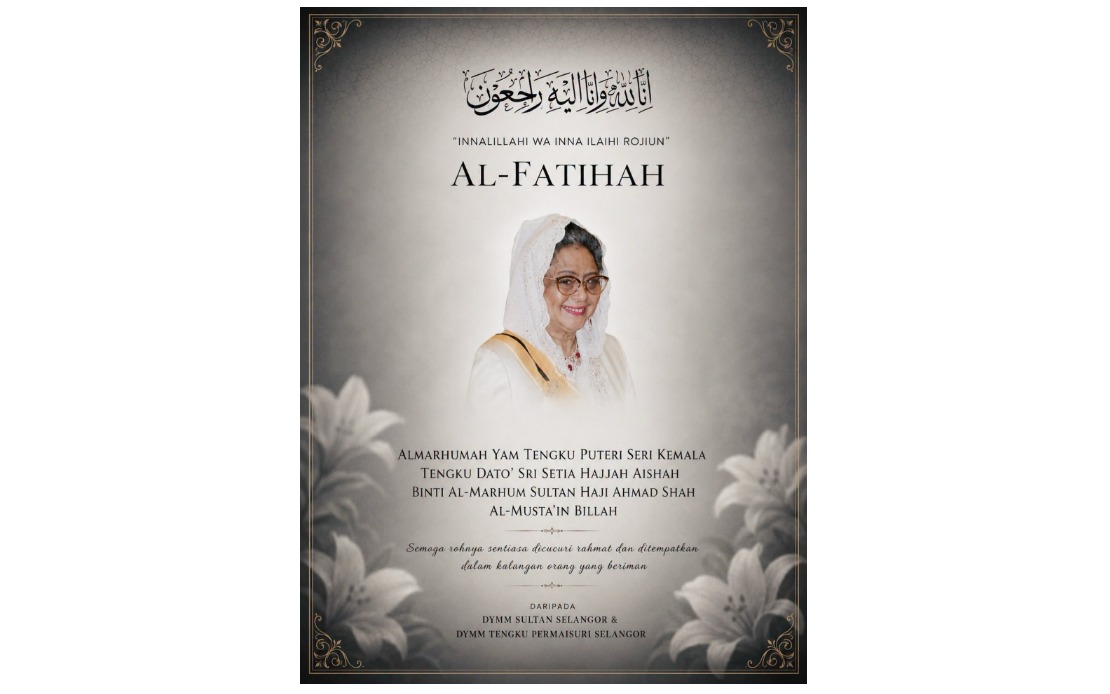
The Sultan of Selangor, Sultan Sharafuddin Idris Shah, and his consort, Tengku Permaisuri Norashikin, have expressed their condolences to Al-Sultan Abdullah Ri'ayatuddin Al-Mustafa Billah Shah, the Sultan of Pahang, following the death of his elder sister. The Selangor Royal Office released a statement conveying the pair's deep sorrow over the passing of Tengku Puteri Seri Kemala Tengku Datuk Seri Aishah Almarhum Sultan Ahmad Shah, marking a gesture of solidarity among Malaysia's royal families during a period of mourning.
Tengku Datuk Seri Aishah, a respected member of the Pahang royal household, passed away at a hospital in Kuala Lumpur at 9.15 pm on August 26. The official statement from Selangor's palace conveyed not only the immediate sadness of Sultan Sharafuddin and Tengku Permaisuri Norashikin, but also their religious sentiments regarding the deceased. In keeping with Muslim tradition, the statement requested prayers for mercy upon her soul and for her to be granted a place among the righteous in the afterlife, concluding with the recitation of Al-Fatihah, the opening chapter of the Quran commonly recited for the deceased.
The expression of condolences from Selangor's royal leadership reflects the interconnected nature of Malaysia's constitutional monarchy system, where the rulers of different states maintain formal protocols of mutual respect and support. Such gestures are customary when members of royal families pass away, particularly senior figures like the Sultan of Pahang's immediate family members. The Pahang sultanate, one of Malaysia's most significant royal institutions, holds considerable historical and cultural importance within the federation.
Following her passing, arrangements were made for Tengku Datuk Seri Aishah to be accorded full royal honours befitting her status. Her remains were scheduled to be transported to the Pahang Royal Mausoleum located in Pekan, the royal seat of Pahang, where she would be laid to rest according to established royal customs and Islamic burial practices. The arrangements underscored the formal recognition of her position within the royal hierarchy and her family's standing.
The death comes during a period when Malaysia's royal institutions continue to play an important symbolic role in national affairs. Beyond their ceremonial functions, the sultanates serve as custodians of Islamic affairs in their respective states and represent the constitutional framework upon which Malaysia's system of government is structured. Events such as the passing of royal family members occasion formal acknowledgments from counterparts across the federation, reinforcing the bonds of protocol and tradition that have long characterized interactions among the country's ruling families.
Pekan, where the royal mausoleum is situated, has long served as the spiritual and administrative heart of the Pahang sultanate. The town carries significant historical weight in Malaysian royal history, having been the residence of Pahang's rulers for generations. The decision to conduct funeral rites and burial according to established royal customs ensures that Tengku Datuk Seri Aishah's passing is marked with the dignity and ceremonial observance commensurate with her station and family connections.
For the broader Malaysian public, such events remind citizens of the continuing relevance of the royal institutions in the nation's civic life. While modern Malaysia has experienced substantial constitutional changes and democratic evolution, the sultanates remain integral to the country's political framework and cultural identity. The respect paid by one state ruler to another during periods of bereavement demonstrates the maturity and formality that characterizes the relationship between Malaysia's various royal households.
The statement from the Selangor Royal Office reflects broader cultural values within Malaysian society regarding the proper acknowledgment of loss and the expression of sympathy. In Islamic tradition, which underpins much of the formal observance in Malaysia's royal circles, the period following a person's death is marked by specific practices and communal support. The public expression of condolences by prominent figures serves not only to comfort the bereaved family but also to affirm the shared values and traditions that bind Malaysian society together.
The passing of Tengku Datuk Seri Aishah represents a moment of reflection on the continuity of Malaysia's institutions during times of transition. While the loss of senior royal family members is a natural occurrence, the manner in which such events are handled—through established protocols, religious observance, and expressions of formal sympathy—demonstrates the institutional stability and cultural consistency that characterize Malaysia's governance structures. The coordinated response from Selangor's leadership ensures that the Sultan of Pahang receives the recognition and support appropriate to his position during a period of personal and family loss.

