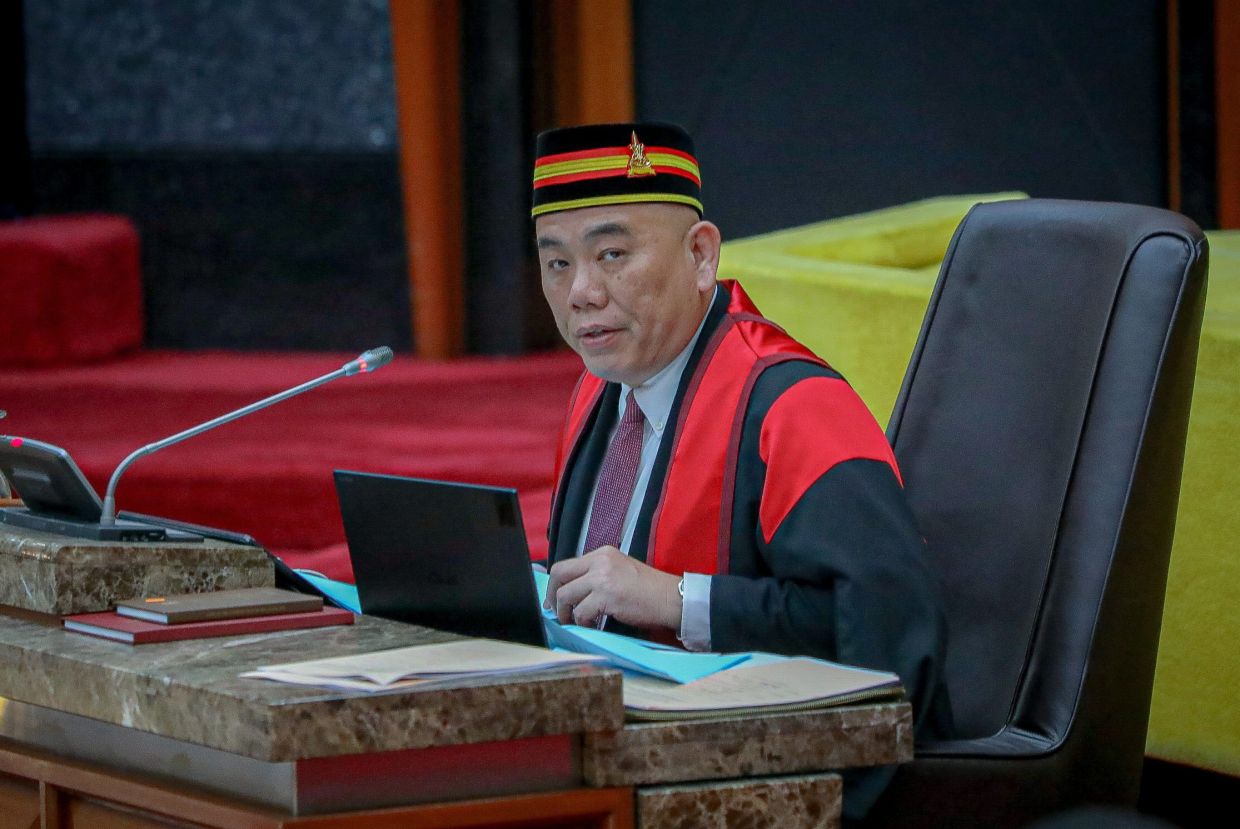
Uncertainty surrounding the possibility of by-elections in Selangor has been definitively resolved, with Speaker Lau Weng San announcing that a thorough review of all state assemblymen has revealed no basis for any of them to relinquish their parliamentary constituencies. The review, which concluded on August 10, examined representatives from all political parties and investigated every relevant aspect of their status, ultimately clearing the way for continued stability in the state legislature.
The Speaker's reassurance comes in the wake of earlier concerns that rippled through political circles when reports emerged of a bankruptcy order issued against a sitting assemblyman. This development had sparked widespread conjecture about the potential triggering of a by-election process, a scenario that would have created a costly and time-consuming exercise for the state electoral commission. The situation was ultimately defused when the High Court intervened and set aside the bankruptcy order, removing the primary catalyst for the anticipated vacancy.
In addressing the media during the Selangor State Assembly session on Thursday, August 13, Lau emphasised that the examination had been comprehensive in scope and thorough in execution. He highlighted that the checks encompassed representatives across the political spectrum and involved detailed scrutiny of all dimensions relevant to their tenure. This methodical approach underscores the importance placed by the legislative body on ensuring the legitimacy and stability of its composition, a concern that resonates particularly in Malaysian politics where seat vacancies can have significant ramifications for coalition stability and governance.
Beyond the question of seat retention, the Speaker used the occasion to address a persistent concern about legislative accountability—the matter of assembly attendance. Recognising that sporadic absences have become a visible issue, Lau announced plans to publish attendance records on social media, introducing greater transparency into the attendance patterns of elected representatives. This move reflects growing public expectations for accountability and tangible evidence of legislators fulfilling their parliamentary duties.
Understanding that absences are not always the result of negligence, Lau outlined the framework through which assemblymen may legitimately remain absent from proceedings. He indicated that written requests for leave, when properly submitted, are accommodated by the legislature. To illustrate this flexibility, he cited the example of the Bandar Baru Klang representative, who had sought temporary absence following surgical procedures on medical advice. Such provisions acknowledge that assemblymen, like other professionals, occasionally face legitimate circumstances requiring their temporary absence from their legislative responsibilities.
The broader attendance landscape at Selangor State Assembly reflects a challenge common across Malaysian state parliaments. Typically, the chamber experiences between three and five absentees during each sitting, a figure that, while not overwhelming, points to a pattern worth monitoring. Lau stressed that while assemblymen are not under strict legal obligation to notify the secretariat when they cannot attend, the practice of absence carries implicit costs that extend beyond the letter of the law. Members who fail to show up forgo opportunities to table questions, receive direct responses from the executive, lodge formal proposals, and absorb critical information disseminated during ministerial winding-up speeches.
Recognising that executive responsiveness can incentivise attendance, Lau noted that state executive councillors possess the discretion to decline answering questions from absent assemblymen during winding-up sessions. This mechanism, while perhaps subtle, creates a form of accountability whereby absenteeism carries practical consequences beyond mere absence records. The approach encourages a culture where physical presence at legislative proceedings is valued as an integral aspect of the representative function.
Contextualising the importance of attendance, the Speaker reminded assemblymen of the relative scarcity of formal legislative sessions. Selangor State Assembly convenes only approximately three times annually, with each sitting typically lasting two weeks or fewer. This limited schedule stands in sharp contrast to the expansive demands placed on elected representatives through constituency work, community engagement, and other local obligations. Lau implicitly urged a recalibration of priorities, advocating for the scheduling of non-urgent constituency matters and appointments to deliberately avoid clashing with designated assembly sitting dates.
The Speaker acknowledged legitimate exceptions to perfect attendance expectations, particularly citing religious and ceremonial obligations such as burials that demand immediate personal participation and cannot be deferred. However, he reinforced that even partial participation carries value within the legislative framework. Members who arrive after proceedings have commenced are still registered as present if they attend any portion of the sitting, a provision that acknowledges the genuine complexity of assemblymen's schedules while maintaining baseline attendance standards.
Financial incentives undergird the attendance expectations, with Lau confirming that assemblymen receive attendance allowances of RM200 for morning sessions and RM150 for afternoon sessions. These modest stipends, while not substantial, represent tangible compensation for the time investment required for legislative participation. The allowance structure implicitly communicates that attendance is a compensated responsibility rather than a discretionary contribution, further emphasising the institutional expectation that representatives should be present during formal proceedings.
The convergence of these measures—the publication of attendance records, the clarification of leave procedures, the emphasis on the finite nature of legislative sessions, and the articulation of financial incentives—reflects a sophisticated approach to managing legislative discipline in Selangor. Rather than imposing draconian penalties, the Speaker has employed transparency, procedural clarity, and institutional incentives to encourage greater participation. This balanced approach recognises the genuine pressures facing elected representatives while reinforcing the principle that legislative duty remains a paramount commitment.
For Malaysian observers, the Selangor Speaker's pronouncements carry implications extending beyond state-level politics. The management of attendance, the handling of potential seat vacancies, and the transparency mechanisms employed in Shah Alam may serve as models—or cautionary examples—for other state assemblies grappling with similar challenges. As state legislatures across Malaysia continue to navigate questions of accountability and effectiveness, the Selangor experience demonstrates both the persistent nature of these institutional questions and the variety of responses available to legislative bodies seeking to maintain integrity and public confidence.

