The Selangor state government is poised to reach a resolution this week regarding the status of a contested state legislative seat, paving the way for the Election Commission to decide whether fresh polling is warranted, Menteri Besar Datuk Seri Amirudin Shari indicated on Friday. The announcement came after weeks of deliberation centring on the eligibility qualifications of an incumbent assemblyman, a matter that has drawn considerable attention within state political circles and among observers monitoring constitutional procedures in Malaysia's largest and most politically influential state.
Amirudin explained that the administration remains in waiting mode for an official pronouncement from the Speaker of the Selangor State Legislative Assembly, whose role encompasses determining the validity of a seat holder's continued tenure. Concurrently, the state's legal counsel has been tasked with drafting a comprehensive legal memorandum that will synthesize the facts and relevant statutory provisions before escalating the matter through appropriate channels. This preparatory work is integral to ensuring that subsequent decisions rest on solid legal footing and comply with constitutional requirements governing state assembly composition.
The Menteri Besar underscored that the Speaker's determination represents a critical juncture in the process, with the legal adviser's note expected to reach completion before the week concludes. Once these preliminary steps are finalised, the dossier will move to the Election Commission, whose mandate includes assessing whether the prescribed conditions for holding a state seat remain satisfied. Should the Commission determine that a vacancy has genuinely arisen, it would subsequently issue directives regarding the timeline and conduct of any remedial election. The government's position, Amirudin stressed, is one of deference to institutional processes and readiness to implement whatever determination emerges from this structured sequence.
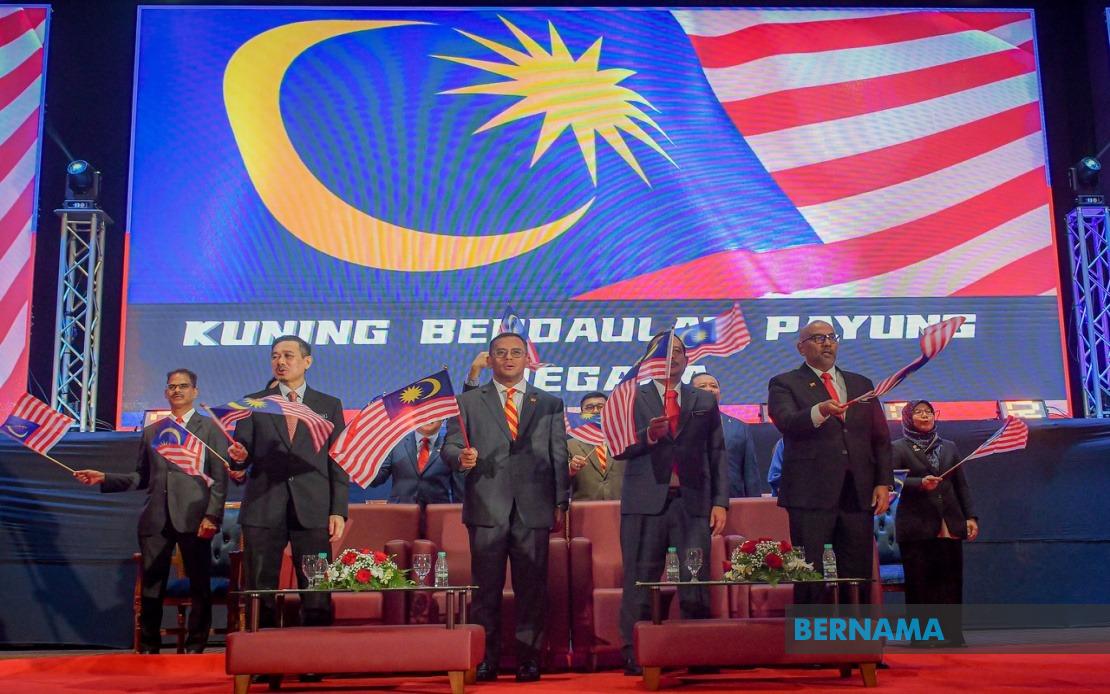
Speaking to journalists during a ceremony launching the Fly the Jalur Gemilang campaign at Shah Alam, Amirudin reiterated the state's commitment to honouring all lawful decisions emanating from the Election Commission. He emphasised that compliance with established legal frameworks governing assembly vacancies and electoral procedures represents a fundamental principle of democratic governance. The administration's role, he suggested, extends only to furnishing accurate information and co-operating with institutions tasked with interpreting and enforcing constitutional requirements. Such restraint, he implied, reflects the proper balance between executive action and institutional independence.
The eligibility question surfaced following media disclosures alleging that a Selangor state assemblyman may not satisfy the statutory criteria required for continuous tenure of his seat. While specific details remained somewhat opaque in public communications, the concern centres broadly on qualification standards established under Malaysia's state and federal electoral laws. The emergence of such questions, though occasionally contentious politically, underscores the necessity of rigorous gatekeeping mechanisms to ensure that those occupying legislative positions genuinely meet foundational requirements. In Malaysia's federal system, state seats carry particular importance as building blocks of state governance and, cumulatively, influence the composition of Parliament through state representation dynamics.
Beyond the electoral mechanics, the situation illustrates the intricate interplay between the state government, the legislature's administrative apparatus, legal advisories, and independent electoral institutions. The involvement of multiple bodies reflects checks inherent in Malaysia's constitutional architecture, whereby no single entity can unilaterally determine matters of seat vacancy or representation. This multi-layered approach, while occasionally drawing criticism for slowness, reduces the risk of political manipulation and ensures that determinations rest on coherent legal reasoning rather than partisan calculation. For Malaysian observers, the transparent manner in which Amirudin articulated the government's patience with processes—rather than attempting to expedite or short-circuit them—offers a noteworthy example of institutional restraint.
Amirudin separately addressed escalating public concern over stray dog populations across Selangor, a matter that has sparked animated debate between animal welfare advocates and those prioritising public safety. He articulated a nuanced position acknowledging that while enforcement action is necessary to protect residents from potential harm, such action must be executed humanely and with sensitivity to animal welfare considerations. This balancing act reflects a broader tension in urban governance: the state's duty to maintain public order and safeguard citizens must be pursued without abandoning ethical standards regarding treatment of animals, whether strays or pets.
The Menteri Besar clarified that local authorities have not acted arbitrarily or solely in response to social media campaigns, contrary to suggestions from some quarters. Rather, community safety concerns regarding roaming animals have been consistently flagged through formal channels, including complaints raised previously in the State Legislative Assembly itself. This historical record, Amirudin argued, demonstrates that the matter transcends recent viral incidents and reflects longstanding, systematic concerns requiring responsible governance. The challenge for administrators lies in crafting enforcement approaches that satisfy both constituencies: those demanding action against dangers posed by uncontrolled animal populations, and those advocating for merciful, regulated solutions.
The matter acquired additional prominence following statements from Tengku Permaisuri Norashikin, the Selangor royal consort, who expressed deep concern over documented instances of animal cruelty that circulated widely online. Rather than viewing her intervention as criticism of government inaction, Amirudin framed it as a shared commitment to ensuring that necessary enforcement aligns with humane principles. The Istana Alam Shah subsequently issued a statement indicating that the Tengku Permaisuri has urged the Federal Government to review penalties enshrined in the Animal Welfare Act 2015, advocating for more stringent and consistent application of sanctions against those convicted of cruelty towards animals.
This royal imprimatur for enhanced animal welfare protections carries weight in Malaysia's constitutional monarchy, where the Ruler and royal family occupy significant symbolic and sometimes substantive roles in policy advocacy. By positioning the matter not as opposition to enforcement but as a call for stricter accountability of offenders, the Tengku Permaisuri has reframed debate from whether action should occur to how such action should be calibrated and regulated. For Selangor administrators, this provides a valuable endorsement for pursuing balanced approaches that combine effective public health measures with ethical standards. The state government's explicit acknowledgment of the royal concern signals receptiveness to this broader perspective.
The intersection of the seat eligibility question and the stray dog enforcement debate, though seemingly unrelated, both illustrate challenges confronting Selangor's administration in navigating competing pressures whilst maintaining fidelity to legal processes and humanitarian values. In the electoral sphere, the government has signalled commitment to constitutional procedures over expeditious resolution. In the animal welfare sphere, officials have attempted to reconcile public safety imperatives with ethical considerations, drawing on royal guidance as a moral compass. These parallel endeavours suggest an administration attempting to govern within established frameworks whilst responding sensitively to societal concerns—an approach that, if sustained, may offer lessons for governance across Malaysia's federal system.
For observers tracking Selangor politics, the coming days will prove instructive. The resolution of the seat eligibility question will clarify whether the state assembly's composition remains stable or whether a by-election becomes necessary—an outcome with potential ripple effects for state government stability and coalition mathematics. Simultaneously, how the state implements animal welfare enforcement in months ahead will indicate whether the government can indeed strike the balance Amirudin described, or whether practical pressures will lead to approaches that satisfy neither advocates nor critics. Both issues, though distinct, reflect broader questions about governance quality in Malaysia's most economically dynamic state.

