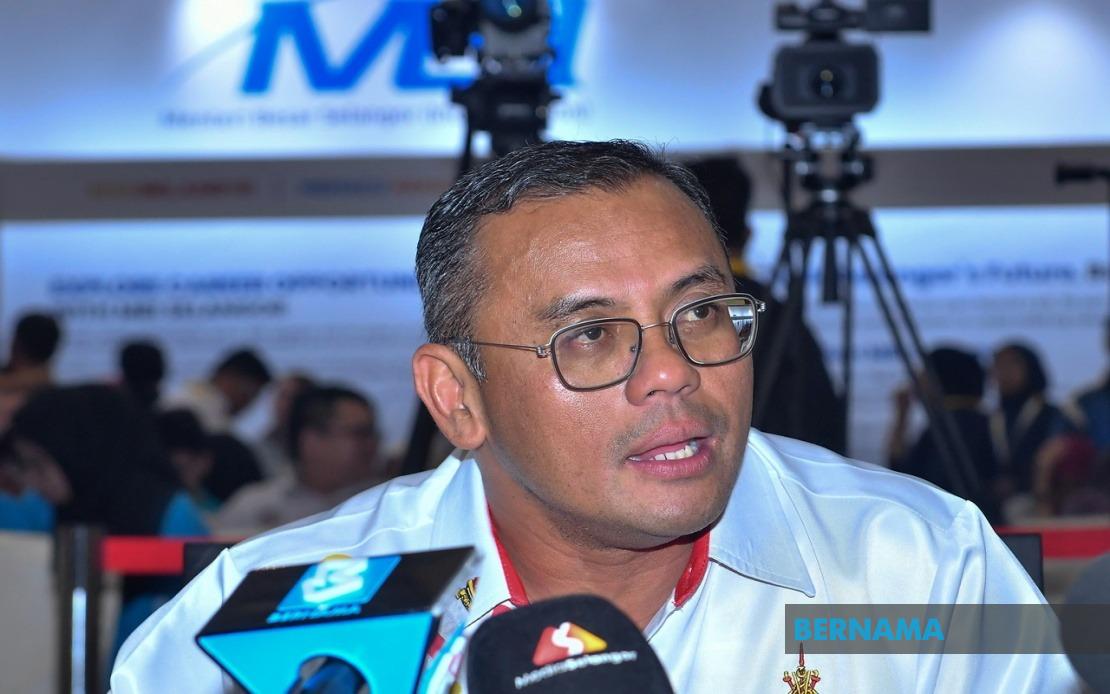
The Selangor state government has committed to engaging with hundreds of workers whose livelihoods face disruption following Panasonic AVC Networks Kuala Lumpur Malaysia Sdn Bhd's decision to wind down television production operations. Menteri Besar Datuk Seri Amirudin Shari announced that officials would convene with affected employees next week to chart a pathway forward, underscoring the state's determination to cushion the blow of industrial restructuring in an era of manufacturing transformation across Malaysia.
The closure will impact approximately 400 workers, with operations ceasing by the end of March 2026. Rather than leaving employees to navigate retrenchment alone, the state has mobilised a coordinated response involving multiple agencies. V. Papparaidu, chairman of the State Human Resources, Poverty Alleviation, Indigenous & Minority Affairs Committee, will lead discussions alongside representatives from the Social Security Organisation (PERKESO), the statutory body responsible for workers' protection and benefits nationwide. This multi-agency approach signals recognition that manufacturing transitions require layered intervention beyond symbolic gesture.
Immediate relief measures form part of the government's response package. Amirudin outlined plans to distribute food baskets to affected workers, addressing the urgent material needs that arise when employment terminates abruptly. However, the state's strategy extends beyond temporary stopgaps. Officials have positioned employment facilitation as the cornerstone of their assistance programme, aiming to help retrenched workers secure alternative positions within Selangor's broader economy. Given that thousands of workers have built families and communities in the state over their tenure at Panasonic, the emphasis on local job placement reflects pragmatic acknowledgement that economic security requires continuous employment rather than cash transfers alone.
PERKESO's involvement introduces a critical insurance mechanism that many displaced workers may not fully understand. Papparaidu explained that the organisation now administers a structured unemployment support scheme designed to bridge income gaps during job transitions. Retrenched employees who remain jobless qualify for staged payments calculated as percentages of their previous salary: recipients receive 80 per cent of their earnings in the first month following redundancy, declining to 50 per cent in the second month, then stabilising at 30 per cent thereafter. This tapering structure theoretically incentivises faster return to employment while providing meaningful income replacement during the critical search period. For Selangor residents accustomed to formal sector stability, this safety net represents a comparatively robust cushion against the precarity that retrenchment typically introduces.
The timing of the Panasonic announcement intersects with broader state initiatives aimed at redeploying retrenched workers into sectors experiencing labour shortages. The Selangor Mega Jobcare 2026 programme, unveiled during the same period, operates as a counterweight to manufacturing sector contractions. The event assembled 147 employers offering more than 11,000 job vacancies, with the substantial majority—62.2 per cent—advertising positions paying monthly salaries exceeding RM3,000. This wage threshold aligns with Panasonic's likely compensation levels, meaning displaced workers could potentially transition into comparable employment without accepting significant pay reductions. The career fair, jointly organised with MYFutureJobs, targeted participants between 18 and 60 years old, deliberately encompassing the demographic most likely to face difficulty relocating once rooted in communities.
Panasonic's television manufacturing closure reflects accelerating industrial restructuring across Southeast Asia as automation and shifting supply chains reshape electronics production landscapes. Malaysia has experienced multiple such transitions as multinational manufacturers relocated operations to lower-cost jurisdictions or vertically integrated production processes to eliminate discrete manufacturing stages. Selangor, as the nation's industrial heartland and home to countless manufacturing facilities, faces recurring displacement challenges as corporations optimise global footprints. The state government's proactive stance with Panasonic workers establishes precedent for managing future similar transitions.
The closure also illuminates divergences in state capacity and political will across Malaysia. Selangor's ability to mobilise resources, convene multiple agencies, and launch complementary job placement initiatives reflects both stronger revenues from its more developed economy and political commitment to active labour market intervention. Workers in less industrialised states or those affected by factory closures in regions with weaker fiscal positions may encounter far less systematic support. This geographical unevenness suggests that retrenchment outcomes in Malaysia increasingly depend partly on location rather than solely on individual circumstances or employer generosity.
For the broader Southeast Asian manufacturing sector, Panasonic's decision signals ongoing consolidation and geographic concentration of production. Selangor's experience managing this closure offers potential lessons for neighbouring countries navigating similar industrial transitions. The combination of immediate material support, structured income replacement during job search, and integration with broader job placement initiatives represents a reasonably comprehensive toolkit for mitigating retrenchment impact. Whether such interventions prove sufficient depends partly on the speed with which 400 workers secure alternative employment and the extent to which new positions offer comparable stability and advancement opportunities.
The state's emphasis on early intervention carries significance beyond symbolic reassurance. By meeting with workers next week rather than delaying engagement until redundancies formally commence, officials aim to establish trust and identify individual circumstances that might complicate reemployment. Some workers may require upskilling programmes, others might need childcare support or transportation assistance to reach new workplaces, while some may face ageism or other barriers in competitive labour markets. Granular understanding of affected workers' situations allows for targeted support calibration rather than generic assistance that misses critical needs.

