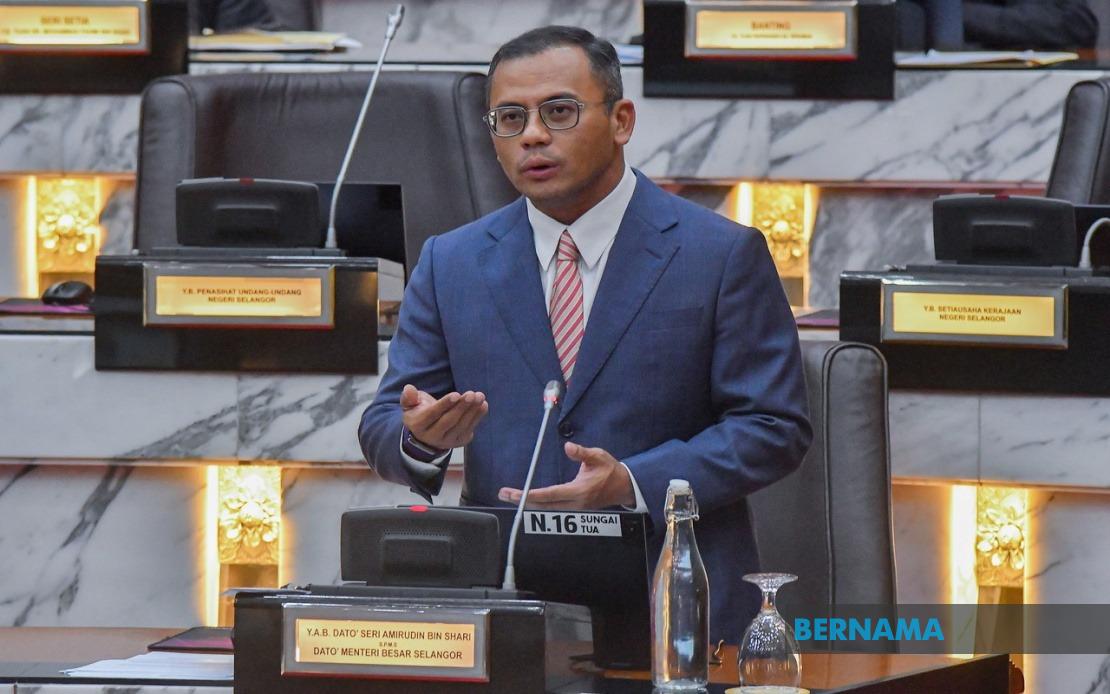
Selangor's top administrator has moved to address mounting concerns over fragmented public transport connections, issuing a directive to all local authorities across the state to assess and improve their linkage infrastructure. Menteri Besar Datuk Seri Amirudin Shari emphasized that the government stands prepared to inject additional resources into creating a more seamless journey for commuters, particularly focusing on enhancing pedestrian access and safety features that bridge the gap between transport hubs and residential areas.
The announcement comes amid growing frustration captured in viral social media posts highlighting inadequate connectivity, particularly around the Light Rapid Transit Line 3 (LRT3) and surrounding neighborhoods. Rather than waiting for such complaints to surface online, Amirudin stressed that local council officials must proactively engage with elected representatives and community stakeholders to identify and resolve these accessibility bottlenecks. This approach signals a shift toward more responsive governance that addresses issues before they gain widespread public attention through platforms like X and Threads.
The Selangor government's commitment to funding improvements reflects a strategic priority: encouraging modal shift from private vehicle use to public transportation. Authorities recognize that even with subsidized fares, commuters will default to cars if the total journey—encompassing walking, waiting, and transfers—remains inconvenient or time-consuming. The first-mile and last-mile problem, which describes the challenge of reaching transit stations and completing journeys after alighting, has emerged as a critical factor determining whether residents embrace public transport alternatives.
Implementing this directive will fall to the State Investment, Trade and Mobility Committee, with chairman Ng Sze Han tasked with convening all public transport operators across Selangor to conduct comprehensive service mapping. This exercise aims to identify specific geographic and temporal gaps where current routes and schedules fail to serve communities adequately. By visualizing these shortfalls systematically, authorities hope to design targeted interventions rather than implementing broad but inefficient improvements.
The funding mechanism presents an interesting policy lever. Amirudin acknowledged that state subsidies can reduce operator costs, but he warned that financial support alone cannot resolve the fundamental issue of poor service design. If operators continue maintaining limited operating hours or routes that skip over underserved neighborhoods, subsidies simply transfer money without generating the desired behavioral change. This candid assessment suggests the government intends to link future financial support to concrete improvements in service coverage and accessibility.
For Malaysian readers, particularly those in Selangor's rapidly expanding suburban areas, this initiative carries tangible implications. Improved connectivity could transform how families access employment, education, and services, potentially reducing commute times significantly. The Klang Valley region, which encompasses Selangor's urban core, has long grappled with congestion partly because inadequate transit connections force commuters to drive even short distances. Better walkways and shuttle services connecting residential clusters to transit stations could unlock latent demand for public transport.
The political context surrounding this directive also merits attention. Danial Al-Rashid Haron Aminar Rashid's parliamentary intervention, representing the Batu Tiga constituency under Pakatan Harapan, highlighted that connectivity issues resonate across political constituencies. This cross-party concern suggests the problem extends beyond a single neighborhood or demographic group, reinforcing the urgency of systematic rather than piecemeal solutions. Local authorities that delay addressing these gaps risk facing constituent complaints and reputational damage.
The emphasis on avoiding excessive costs while achieving mobility objectives reflects broader fiscal constraints. Selangor's state government must balance transportation investment against competing demands for education, healthcare, and infrastructure spending. By instructing local authorities to review existing facilities rather than immediately authorizing massive new construction, the approach prioritizes optimizing current infrastructure and identifying low-cost, high-impact improvements. This pragmatism aligns with best practices in transit-oriented development, where small improvements in pedestrian infrastructure often yield significant ridership gains.
Regional observers should note the potential implications for other Malaysian states. If Selangor successfully maps and addresses its connectivity gaps, the methodology could provide a blueprint for Kuala Lumpur, Johor, Penang, and other jurisdictions grappling with similar challenges. The emphasis on systematic service mapping before investment aligns with World Bank and ADB recommendations for improving transit systems in developing Asian cities, suggesting Selangor may be positioning itself as a leader in evidence-based transport planning.
The coordination requirement with public transport operators introduces another complexity. Companies operating bus services, LRT lines, and other modes have competing commercial interests and operational constraints. Achieving genuine integration—where schedules align, transfers are convenient, and coverage is comprehensive—requires operators to sacrifice some autonomy in exchange for subsidies and guaranteed service contracts. The success of Selangor's initiative will largely depend on whether negotiators can forge such cooperative arrangements.
Looking forward, the effectiveness of this directive will be measured through concrete changes: new pedestrian bridges, extended operating hours, route modifications, and reduced average commute times for transit users. The government has set itself measurable goals implicitly, and local authorities will face accountability if residents continue reporting connectivity problems six months hence. This explicit focus on performance creates incentives for genuine rather than nominal compliance with the directive.