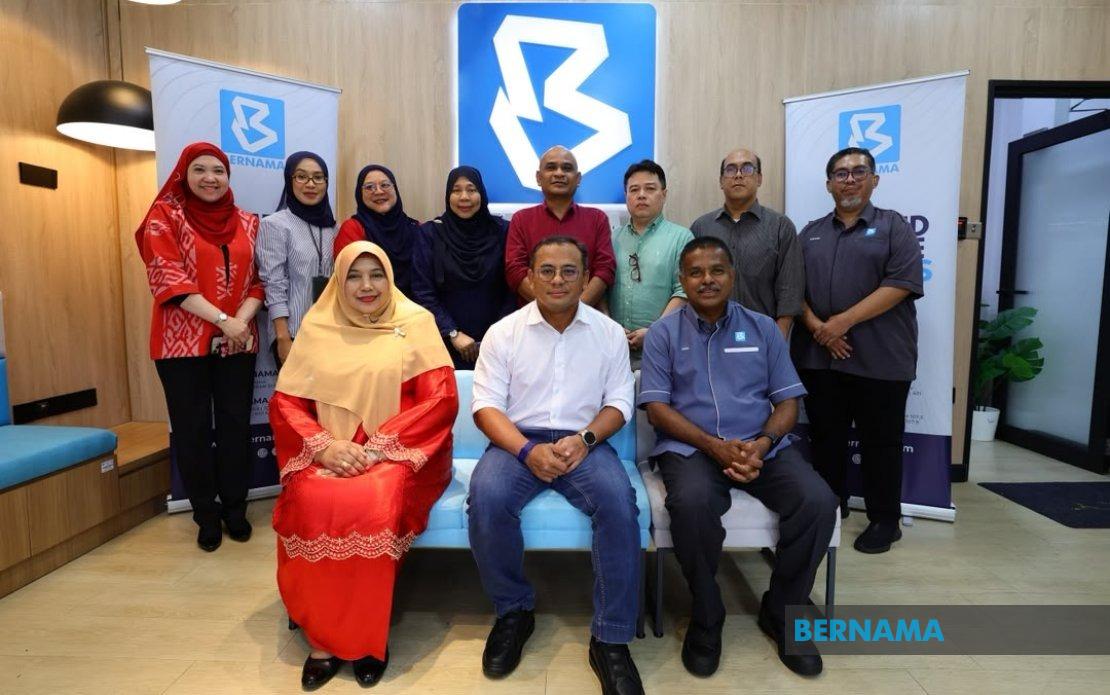
Selangor Menteri Besar Datuk Seri Amirudin Shari made an unscheduled visit to Bernama's Negeri Sembilan bureau on July 20, conducting a firsthand inspection of the newsagency's election operations headquarters during an active campaign for the 16th state election. The visit, which commenced at 2 pm, underscored the importance of media monitoring and coordination during a significant electoral cycle in Malaysia's central region.
Amirudin, serving simultaneously as the Pakatan Harapan election director, was received by Bernama's chief executive officer Datin Paduka Nur-ul Afida Kamaludin and editor-in-chief Arul Rajoo Durar Raj. The presence of senior management personnel including deputy editor-in-chief of News Services Mohd Shukri Ishak and Negeri Sembilan bureau chief Nursyabiha Sukri highlighted the formal nature of the inspection. Such visits by political figures to media operations centres during campaigns are relatively uncommon in Malaysia, suggesting an emphasis on transparency and media engagement by the opposition coalition.
The principal component of Amirudin's visit involved receiving a comprehensive briefing from Mohd Hisham Abdul Rafar, Bernama's coordinating editor for election coverage. This session illuminated the logistical complexity of managing nationwide news dissemination during state elections, with particular focus on the operational protocols Bernama had implemented for the Negeri Sembilan contest. At that juncture, the campaign had already entered its third day, meaning the agency had already processed substantial volumes of election-related reporting, commentary, and official announcements.
Beyond the institutional briefing, Amirudin's agenda included scheduling a formal interview recording with Bernama TV, the newsagency's television division. This commitment reflected the broader political communications strategy of the Pakatan Harapan coalition, which has demonstrated systematic engagement with both print and broadcast media outlets during the campaign period. Television appearances remain crucial for political messaging in Malaysia, where broadcast news continues to reach substantial demographic segments across urban and semi-urban populations.
The Election Commission's official timeline for the Negeri Sembilan election established July 28 as the early voting date, with the main polling day designated for August 1. This compressed schedule—typical for Malaysian state elections—meant that campaign activities were intensifying at the moment of Amirudin's visit. The three-day campaign window he referenced had already seen significant political activity, media coverage saturation, and voter outreach initiatives across the state.
Negeri Sembilan holds particular strategic significance within Malaysian politics as a economically important state with a mixed urban-rural demographic profile. Its electoral outcomes frequently foreshadow broader trends in peninsular Malaysia, making comprehensive media coverage essential for political analysts and stakeholders. Bernama's role as Malaysia's national news agency vests it with responsibility for ensuring balanced, accurate, and comprehensive reporting across all state constituencies, a mandate requiring substantial coordination during active campaigns.
The decision by Amirudin to visit the election operations centre—rather than conducting standard campaign rallies or attending public events—suggests a calculated political strategy emphasizing institutional engagement and media partnership. This approach differs from traditional campaign methods and may reflect evolving political communication tactics within the Pakatan Harapan coalition, which has increasingly emphasised media relations and strategic public information dissemination.
Bernama's Negeri Sembilan bureau serves a dual function during state elections: maintaining normal news operations while simultaneously coordinating extensive special coverage of electoral processes, candidate statements, voter sentiment analysis, and official declarations. The coordination required between ground reporters, editors, and broadcast producers demands meticulous planning and real-time decision-making, responsibilities that Amirudin's briefing session would have illuminated.
The visit also carried symbolic weight within Malaysia's broader political context. Pakatan Harapan's engagement with established national institutions like Bernama demonstrates the coalition's commitment to working within existing governance frameworks, contrasting with certain opposition rhetoric that occasionally critiques institutional structures. By formally inspecting media operations and committing to media interviews, Amirudin positioned his coalition as cooperative with constitutional institutions during a democratically significant period.
For Malaysian and Southeast Asian observers, the Negeri Sembilan election represents a microcosm of electoral dynamics within Malaysia's federal system. The state's multiple constituencies, diverse voter demographics, and historically competitive political contests make it an important testing ground for political messaging and campaign effectiveness. Media coverage quality and comprehensiveness directly influence voter information access and electoral decision-making, making Amirudin's engagement with Bernama's operations centre substantively significant beyond ceremonial considerations.
The broader implications of this visit extend to questions about media-politics relations in Malaysia. Established newsagencies like Bernama occupy a delicate position, maintaining institutional independence while operating within a framework that requires government liaison and engagement with political parties. Amirudin's visit, conducted transparently and formally documented, contributes to public understanding of how news operations function during elections and how political actors interact with media infrastructure.

