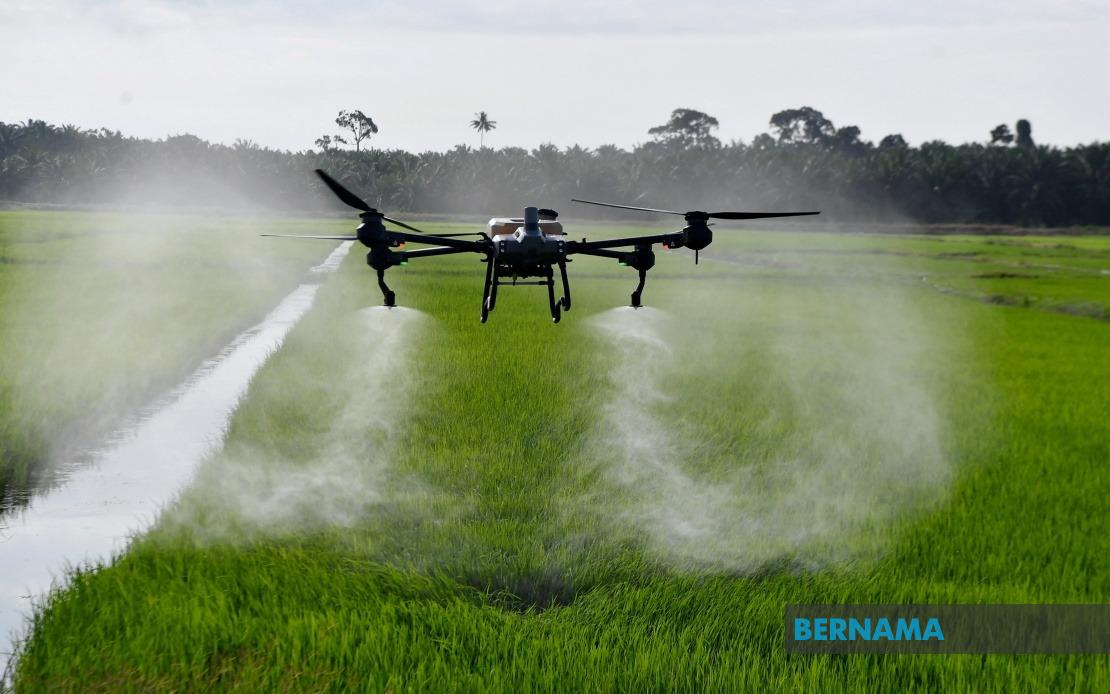
Selangor is making a significant push into drone technology development, committing RM500,000 in state funding to strengthen the sector's growth trajectory and position the state as a regional innovation hub by 2027. The allocation, announced by State Islamic Affairs and Innovation Culture Committee chairman Dr Mohammad Fahmi Ngah, extends beyond basic infrastructure to encompass comprehensive ecosystem building that integrates academia, industry partners, and emerging technology verticals ranging from hardware manufacturing to artificial intelligence applications.
The centrepiece of this initiative is Droneport-1000, an advanced facility being developed at Universiti Selangor that represents the largest designated airspace testing zone in Malaysia. Spanning 24 square kilometres with operational clearance up to 1,000 metres altitude, the facility is designed to function as both a research laboratory and commercial testing ground where companies can develop and validate drone applications in a controlled environment. The project is currently pursuing full certification from the Civil Aviation Authority of Malaysia, a regulatory milestone that will unlock broader commercial possibilities once achieved.
What distinguishes Selangor's approach is its deliberate ecosystem strategy rather than isolated infrastructure investment. Dr Mohammad Fahmi emphasised that the state is planning targeted incentive schemes, including matching grants, to attract both homegrown firms and multinational technology companies into drone development. This competitive funding mechanism signals recognition that the sector requires sustained private sector engagement to achieve commercial viability. The partnership with Selangor Aviation & Technology Innovation and Geospatial SmartSel, along with collaborations featuring established players like Aerodyne, creates a network intended to reduce the typical friction between academic research and market-ready products.
The drone sector in Malaysia extends well beyond the popular perception of aerial photography or delivery systems. Selangor is positioning itself across multiple value chain segments, including software platforms, artificial intelligence systems that process drone-collected data, and semiconductor chip design and manufacturing currently materialising in Puchong. This vertical integration approach creates multiple revenue streams and attracts companies at different technological maturity levels, from component suppliers to systems integrators. By developing this comprehensive ecosystem, Selangor aims to capture economic activity across the entire value chain rather than functioning merely as an assembly or testing location.
The practical applications articulated by state officials underscore the technology's relevance to Southeast Asian governance challenges. Monitoring capabilities covering areas up to ten times larger than Singapore's entire landmass enable authorities to track forest reserve encroachment, coastal erosion, and infrastructure failures with unprecedented speed and coverage. Traditional monitoring methods relying on field personnel or satellite imagery face constraints in resolution, timeliness, and cost that drone networks equipped with AI-powered analytical systems can overcome. For a state managing urban sprawl, environmental pressures, and aging infrastructure, this technological capability offers significant operational advantages in resource management and environmental stewardship.
Universiti Selangor's role as the institutional anchor for Droneport-1000 reflects a deliberate strategy to bridge the traditional divide between universities and commercial industry. The facility essentially functions as a physical manifestation of technology transfer, where academic researchers can progress from laboratory discovery to field validation with real commercial partners, while companies gain access to specialised testing infrastructure and skilled talent without bearing full capital costs. This model aligns with broader Southeast Asian efforts to strengthen innovation ecosystems, particularly relevant as countries compete for high-value technology sector development that generates sustained employment and intellectual property creation.
The timing of Selangor's investment reflects growing regional recognition of drone technology's strategic importance. Singapore has invested heavily in autonomous systems development, while Indonesia and Thailand are exploring agricultural and disaster management applications. By establishing Malaysia's largest and most comprehensively supported drone ecosystem in Selangor, the state positions itself to capture regional talent, investment, and commercial activity. The international recruitment potential is significant given that drone technology expertise remains concentrated in developed markets, creating opportunities to attract Malaysian diaspora and skilled foreign engineers seeking to build tech ecosystems in emerging markets.
The semiconductor dimension adds particular relevance for Malaysia's technology strategy. As global supply chain anxieties increase around chip manufacturing concentration, developing local capabilities in specialised applications like drone control systems and AI processing chips strengthens national technological independence. Selangor's Puchong semiconductor corridor, now explicitly connected to drone technology development, begins to form a coherent advanced manufacturing cluster with strategic defensibility that mere assembly operations cannot provide. This positions the state to capture higher-margin activities in the technology value chain.
Economic modelling suggests the Droneport-1000 project carries substantial multiplier potential. Beyond direct investments in the facility itself, successful anchor companies will require supporting services spanning software development, systems integration, data analytics, maintenance and repair services, and specialised talent development programmes. These secondary and tertiary activities typically generate greater employment than the core technology sectors themselves. For a state balancing urban development pressures with economic diversification goals, the drone sector offers a pathway to knowledge-intensive activity that complements rather than cannibalises existing manufacturing and services sectors.
The matching grant incentive structure introduces competitive dynamics that can accelerate industry maturation. By requiring private sector co-investment, the state ensures that company participation reflects genuine commercial conviction rather than subsidy-seeking behaviour. This disciplined approach to public investment has succeeded in other Southeast Asian economies where matching requirements forced selection of genuinely viable ventures, improving overall portfolio performance compared to unconditional grants. For Malaysian officials evaluating public sector efficiency, this mechanism provides accountability assurance while maintaining attractiveness to profit-oriented enterprises.
Implementation challenges will prove as important as stated objectives. The certification pathway with CAAM must balance regulatory caution with pragmatic timelines that prevent regulatory delays from exceeding industry technology cycles. Competition from other states developing aerospace and advanced technology facilities requires Selangor to demonstrate clear advantages in cost structure, regulatory environment, and skill availability. Additionally, the intellectual property framework governing research commercialisation at Universiti Selangor must establish clarity sufficient to encourage both university-based entrepreneurs and corporate partners to invest in joint development initiatives.
For Malaysian readers observing state-level development strategies, Selangor's drone initiative illustrates a maturing approach to economic development that moves beyond passive infrastructure provision toward active ecosystem engineering. Rather than hoping companies will emerge organically, the state is consciously designing institutional arrangements, regulatory frameworks, and financial incentives intended to catalyse specific industries aligned with long-term competitive advantages. This intentionality, whether ultimately successful or not, reflects recognition that high-value sector development requires coordinated ecosystem building rather than isolated sectoral bets.
The sector's trajectory will also indicate whether Malaysian state governments can effectively partner with federal agencies and private firms in technology development. Successful delivery of the Droneport-1000 vision requires sustained coordination among multiple actors operating across different incentive structures and timelines. If Selangor can navigate these coordination challenges while maintaining political and financial commitment across electoral cycles, the drone initiative could serve as a replicable model for other states seeking to develop specialised technology sectors aligned with federal innovation priorities and global market opportunities.

