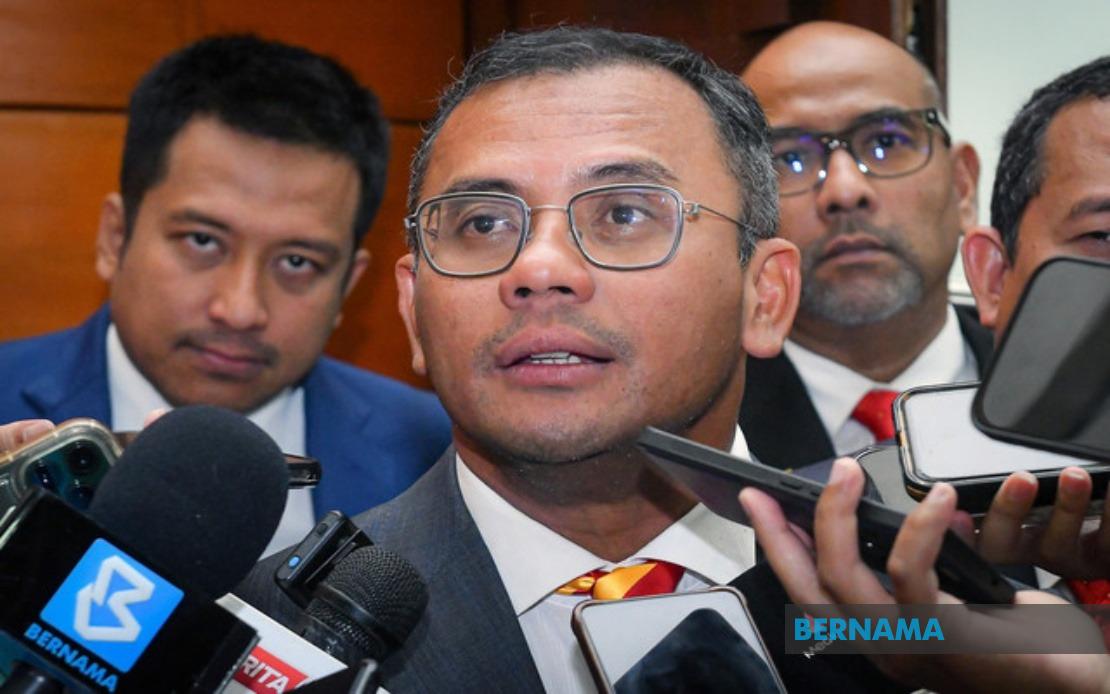
Selangor's commitment to knowledge-driven economic development took concrete form this week when the state government announced RM3.5 million in research funding specifically designed to underpin its Second Selangor Plan (RS-2), a comprehensive economic roadmap targeting RM600 billion in economic value over the next five years. Menteri Besar Datuk Seri Amirudin Shari unveiled the Selangor Development Grant (SELidik) 2026 at a grant handover ceremony in Shah Alam on Friday, framing the initiative as a significant evolution from the previous Selangor Research Grant (GPNS) 2024 and a demonstration of the state's determination to align academic inquiry with policy development.
The strategic reorientation embedded in SELidik reflects a broader shift in how Malaysia's most economically developed state is approaching research funding. Rather than supporting general academic inquiry, the new programme explicitly ties research output to six core missions outlined in the RS-2: economic leadership, balanced regional development, liveable communities, human capital enhancement, sustainability, and effective governance. This alignment ensures that studies undertaken with state funding directly feed into policymaking processes, creating a feedback loop between the research community and government strategists.
In the initial phase of implementation, RM2.5 million has been directed to Selangor's two state-owned universities, Universiti Islam Selangor (UIS) and Universiti Selangor (UNISEL). These institutions are expected to produce tangible research outputs including practical modules, software applications, and functional prototypes rather than traditional academic papers alone. This emphasis on applied research reflects Malaysia's broader push to bridge the gap between university research and commercial or policy application—a persistent challenge in the region's innovation ecosystem.
An additional RM1 million has been reserved for other local universities throughout Selangor, signalling the Menteri Besar's intent to distribute research opportunities beyond the two state universities and tap into the intellectual capacity of a wider network of higher education institutions. This second layer of funding allocation demonstrates recognition that research talent and capability are distributed across multiple campuses, and that competitive grants can mobilise this distributed expertise toward shared state objectives.
Management of the SELidik programme has been entrusted to Yayasan Selangor, the state government's philanthropic arm, which will administer applications and oversee project execution. This institutional arrangement reflects evolving governance practices in Malaysian state administrations, where semi-independent foundations increasingly handle complex programme administration and can provide flexibility that direct government departments sometimes lack. The foundation structure also provides a buffer that may enhance research independence while maintaining accountability to state development priorities.
Research applications remain open to Malaysian scholars and scientists, though with a critical stipulation: every funded study must demonstrate direct relevance to at least one of the six RS-2 themes and involve collaboration with relevant government departments. This requirement ensures thematic coherence and practical uptake but also raises questions about the breadth of inquiry that can be supported. Previous research under the state's grants has spanned agriculture, technological innovation, and development sciences—fields that generally align well with state development needs though the stricture may discourage exploratory blue-sky research.
A two-phase rollout strategy suggests the state government is proceeding cautiously, learning from the initial UIS and UNISEL experience before expanding to other public institutions nationally in subsequent phases. This staged approach allows administrators to test processes, evaluate research quality and relevance, and refine programme management before scaling up significantly. It also provides flexibility to adjust fund allocation if particular research themes demonstrate exceptional promise or economic impact potential.
The Menteri Besar has indicated openness to involving international universities if surplus funds materialise, pointing to a pragmatic recognition that world-class research on certain topics may not be available locally. This caveat demonstrates that while Selangor prioritises supporting domestic institutions, the ultimate objective—generating research that drives economic and policy outcomes—takes precedence over localism. For the region's academic ecosystem, this signals a potential pathway for cross-border research collaboration that could benefit institutions throughout Southeast Asia.
The economic logic underpinning SELidik extends beyond academic credibility. Amirudin framed the RM3.5 million investment as capable of generating returns through multiple channels: economic development stemming from innovation commercialisation, enhanced academic standing that attracts talent and investment, and improved human capital through research participation and skills development. This framing aligns with international evidence suggesting that research investment yields multiplier effects, though actual returns depend heavily on how effectively research findings are translated into policy and practice.
The Second Selangor Plan itself represents an ambitious political commitment, articulating a vision that extends well beyond conventional state development plans. With six distinct missions spanning from economic leadership to inclusive governance, the RS-2 requires empirical grounding and continuous evidence review to track progress and adjust course. SELidik essentially creates the research infrastructure necessary to support this ambition, furnishing policymakers with ongoing data, analysis, and evaluation rather than relying on ad-hoc studies or external consultants.
For Malaysia's broader innovation and research landscape, Selangor's approach carries instructive value. The explicit linking of research funding to state development priorities, managed through institutional intermediaries and applied research emphasis, represents a model that other states and the federal government may consider. It also reflects growing impatience with the traditional academic-government disconnect, where university research proceeds on tracks largely separate from policy formulation and implementation.
The RM3.5 million allocation, while not enormous by international standards, signals serious commitment to closing the research-policy gap. For Selangor's universities and research community, it represents both opportunity and constraint—opportunity to secure funding for strategically valuable work, constraint in the requirement to align with prescribed themes. How effectively this balance is managed will determine whether SELidik becomes a model for productive state-research engagement or an exercise in directing academic effort without genuine application.
As Selangor pursues its RM600 billion economic target through 2030, the quality and relevance of research supporting policy decisions will substantially influence outcomes. By investing in applied research infrastructure now, the state government is betting that evidence-driven decision-making will prove more effective than intuition-based policy, a wager that carries implications extending far beyond Selangor's borders in a region increasingly competitive for economic transformation.

