Selangor's emergence as Malaysia's rail transport hub presents significant economic opportunities, with the state hosting between 63% and 67% of the nation's rail operations and corporate headquarters. Recognising this concentration as a competitive advantage, state leadership is now strategically positioning the sector as a cornerstone industry capable of generating high-value employment and driving technological advancement across the Southeast Asian region. The move reflects a deliberate shift towards developing domestic expertise rather than relying on external talent, a policy approach increasingly adopted by regional governments seeking to build self-sufficiency in critical infrastructure sectors.
Mentri Besar Datuk Seri Amirudin Shari articulated this vision during an event at Universiti Tun Hussein Onn Malaysia in Sungai Buloh on August 19, emphasising the state's commitment to sustained investment in rail sector training and education. His remarks came as the university unveiled a significant institutional rebrand, transforming the Metro System Academy into RailX—a symbolic gesture underscoring the growing prestige and scope of rail industry training. This rebranding signals confidence in the sector's trajectory and positions the institution as a forward-looking centre of excellence, moving beyond conventional transit operations training towards broader innovation in mobility systems.
To institutionalise its approach, Selangor has established the Selangor State Rail Council, a governance structure designed to map industry dynamics comprehensively and identify emerging skills gaps before they constrain sector growth. This preemptive mechanism reflects understanding that infrastructure expansion—particularly megaprojects like the LRT3, ECRL, and MRT extensions—require sustained pipeline of qualified personnel. The council's establishment suggests a degree of sophistication in workforce planning that goes beyond reactive hiring, instead anticipating future demand trajectories and calibrating training capacity accordingly.
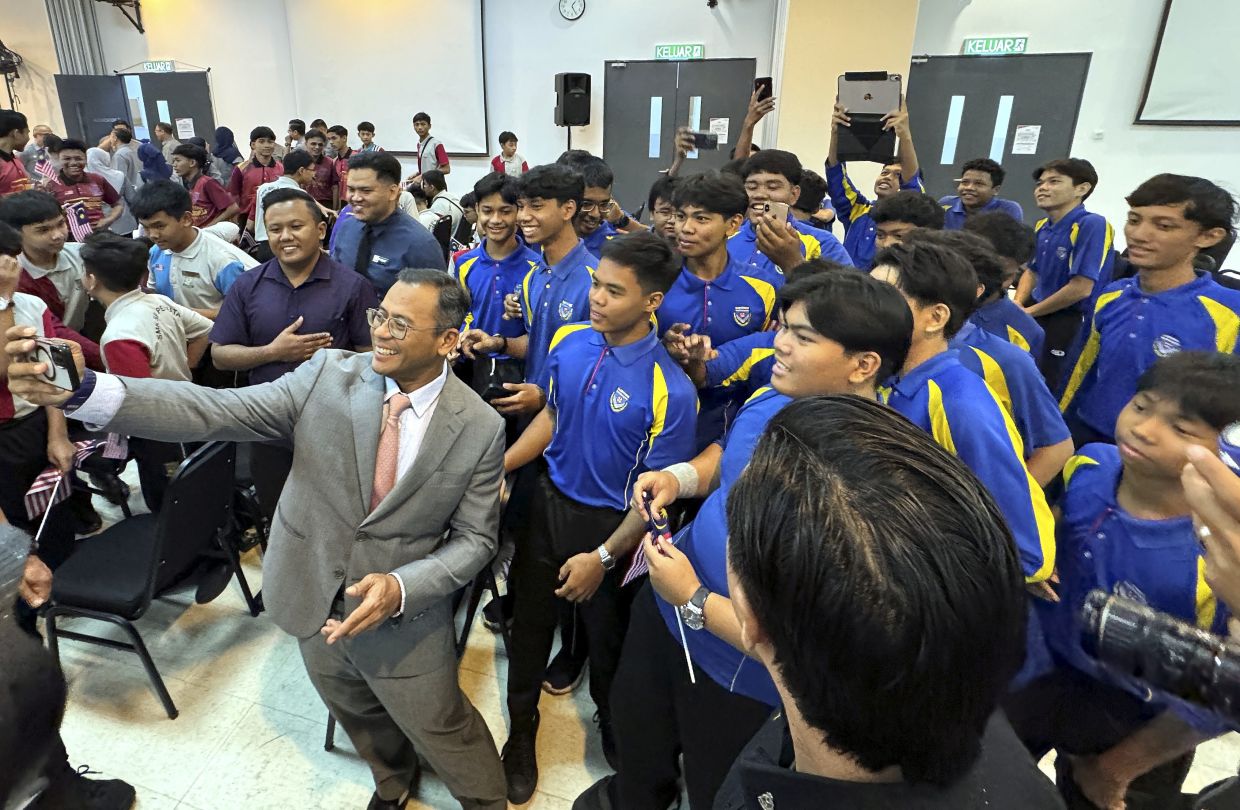
RailX's inaugural treasure hunt programme demonstrates how institutional rebrand translates into tangible community engagement. Spanning seven districts including Gombak, Petaling, Hulu Langat, Sepang, Klang, Sabak Bernam, and Kuala Selangor, the initiative will draw secondary school students into interactive experiences at selected MRT stations. This grassroots engagement strategy addresses a critical challenge in technical workforce development: early exposure and demystification of complex industrial careers. By introducing rail operations to students before tertiary education, Selangor increases the likelihood of informed career choices and cultivates a pipeline of intrinsically motivated talent.
The partnership between UTHM and Mass Rapid Transit Corporation underpinning RailX represents the type of triple helix collaboration increasingly recognised as essential for regional competitiveness. MSA UTHM's dual focus on workers and students creates a flexible training ecosystem capable of serving both immediate operational needs and longer-term human capital development. This flexibility proves crucial in fast-evolving sectors where technology adoption rapidly alters job requirements, necessitating continuous reskilling alongside entry-level training. The involvement of industry giants like MRT Corp and Rapid Rail ensures curriculum relevance and job placement prospects, closing the traditional gap between academic training and workplace requirements.
Amirudin contextualised these initiatives within the Malaysia Education Plan 2026–2035, positioning rail talent development as integral to the nation's broader educational transformation. This framing elevates rail sector training beyond sectoral interest, situating it within Malaysia's macro-level aspirations for workforce quality and technological capacity. For Southeast Asian observers, this represents a template for aligning vocational development with national strategic planning—a contrast to approaches where technical education operates peripherally to mainstream policy frameworks.
Selangor's multi-tiered talent pipeline architecture reveals ambitious scope. The Selangor Technical Skill Development Centre functions as an entry point for basic and intermediate training, with articulation pathways enabling graduates to progress through diploma and bachelor's programmes at UTHM. This graduated progression model—from TVET foundations through university-level qualifications—creates a complete technical education ecosystem addressing talent needs at every industry level. Such comprehensive infrastructure contrasts sharply with fragmented training environments where workers face dead-ends or costly retraining transitions.
The strategic emphasis on developing local experts carries implications extending beyond Selangor's boundaries. As Malaysia positions itself within regional transit and infrastructure networks, domestically trained rail specialists enhance the nation's credibility in cross-border projects and technical collaborations. Southeast Asian rail expansion—particularly initiatives like proposed high-speed corridors and integrated metro systems—increasingly requires countries to demonstrate native technical capacity. Selangor's workforce development investments thus contribute to Malaysia's standing in regional infrastructure negotiations and technology partnerships.
This initiative also reflects pragmatic economics. Importing foreign expertise for sustained rail operations proves prohibitively expensive and creates dependency vulnerabilities. Developing local expertise reduces long-term operational costs whilst building a skilled class capable of innovation and problem-solving rooted in Malaysian contexts. For policymakers across the region grappling with infrastructure development amid tight fiscal environments, Selangor's model offers instructive lessons on leveraging education systems to reduce reliance on external technical resources.
The convergence of industry expansion, institutional reorganisation, and strategic workforce planning suggests Selangor leadership recognises rail transport's potential as a generational growth driver. Unlike sectors dependent on resource extraction or consumption cycles, rail infrastructure creates enduring employment and spawns related technical services. By investing now in talent development infrastructure, Selangor positions itself to capture high-value employment gains whilst these systems mature and multiply across the region.
Looking forward, the success of these initiatives depends substantially on sustained coordination between government, educational institutions, and industry stakeholders. The triple helix model outlined by Amirudin requires ongoing dialogue to ensure training remains responsive to evolving technological demands—particularly as automation and digitalisation reshape rail operations. For Malaysian observers and regional counterparts, Selangor's rail sector strategy demonstrates how deliberate human capital investment can transform sectoral advantages into sustainable competitive positions within increasingly integrated Asian infrastructure networks.

