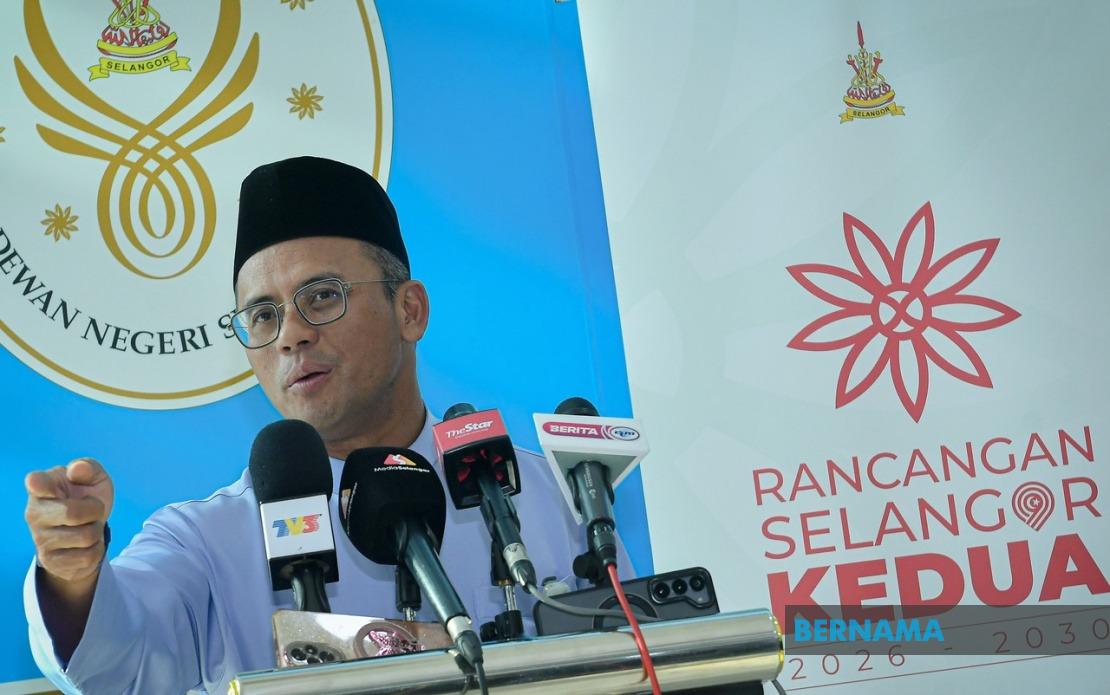
The Selangor government has set an ambitious target to construct 200,000 affordable homes as part of its comprehensive RS-2 housing initiative, according to Menteri Besar Datuk Seri Amirudin Shari. The announcement, made during the August 7 Selangor State Legislative Assembly sitting in Shah Alam, underscores the state's determination to tackle one of Malaysia's most pressing social challenges: ensuring that ordinary working families can afford to own their homes.
Progress on the initiative has been substantial to date. The state has already completed 64,188 housing units, while an additional 69,014 units remain under active construction across various developments. This brings the cumulative tally to 133,202 units, representing roughly two-thirds of the final 200,000-unit target. The pace of delivery suggests the government remains on track to meet its objectives, though the sheer scale of Malaysia's housing deficit means even this substantial commitment addresses only a fraction of national need.
Beyond simple construction targets, the Selangor government is pioneering innovative financing mechanisms to help renters transition into homeownership. Under a rental component of the scheme, 30 per cent of tenants' monthly rental payments will be deposited and held by the Selangor Housing and Property Board (LPHS). When residents accumulate sufficient savings and are ready to purchase their own property, these funds will be returned to them as a housing deposit, effectively transforming rent payments into forced savings toward ownership.
This approach addresses a fundamental barrier facing lower-income Malaysians: the inability to accumulate sufficient capital for a down payment while simultaneously paying market-rate rent. By converting a portion of housing expenditure into equity, the scheme creates a pathway that previously did not exist for many workers. The initiative particularly benefits younger professionals and growing families who struggle with competing financial obligations while attempting to save for homeownership.
The state government intends to expand the rental component significantly, though specific expansion targets were not detailed in the announcement. This suggests that while the 200,000-unit goal encompasses both purchase and rental options, the leadership recognizes that rental affordability represents a distinct and equally pressing challenge. Many Selangor residents, including essential workers such as healthcare and education professionals, may never accumulate sufficient capital for homeownership and require stable, affordable rental solutions throughout their working lives.
Complementing the housing development strategy, Selangor is implementing a sophisticated monitoring framework to evaluate the effectiveness of household assistance programmes. A new statistical unit will develop an index to assess how well targeted interventions improve residents' circumstances. Rather than adopting a one-time evaluation approach, the government plans periodic assessments at 12 and 24-month intervals, creating accountability mechanisms that track whether beneficiaries are achieving genuine economic progress rather than merely receiving temporary assistance.
Transportation connectivity has emerged as a critical component of the comprehensive housing strategy. The government recognizes that affordable housing located far from employment centres and public services offers limited practical value to residents. Consequently, Selangor is pursuing systematic improvements to public transport access, including increased frequency of LRT and MRT services serving housing estates and enhanced bus connectivity to residential areas.
Every new Rumah Selangorku Harapan and Rumah Selangorku Idaman development will be required to include dedicated bus stops, institutionalizing transport access rather than relying on ad hoc arrangements. The state is also advancing an ambitious urban design vision emphasizing walkability, with covered walkways planned at every transit station. This approach reflects international best practices in sustainable housing policy, where transit-oriented development reduces residents' transportation costs while improving quality of life and environmental outcomes.
The integration of technology into transport planning represents a forward-looking dimension of the strategy. Rather than relying on traditional planning assumptions, the government intends to use data analytics to identify traffic patterns, pedestrian concentrations, and the precise locations where small bus stops would maximally benefit residents. This evidence-based approach to infrastructure placement should improve transport efficiency and ensure resources reach areas where demand is genuinely highest.
For Malaysian policymakers and housing advocates, Selangor's RS-2 initiative offers instructive lessons about integrated housing policy. The scheme demonstrates that affordable housing requires attention to three interconnected challenges: construction capacity, financing accessibility, and transportation connectivity. Each element depends on the others; housing without transport is disadvantageous, transport without affordable housing serves limited populations, and financing mechanisms without adequate supply cannot function effectively.
The initiative also reflects growing recognition that housing policy affects economic productivity and social stability across broad segments of the population. When skilled workers cannot afford housing in growing economic centres, regional competitiveness suffers. The Selangor approach, targeting working families rather than only the most vulnerable, acknowledges this economic dimension alongside social considerations.
Success will ultimately depend on sustained execution and adequate financing. Building 200,000 homes represents an enormous undertaking requiring consistent budget allocation, institutional coordination, and political commitment across multiple electoral cycles. The early progress—with over two-thirds of the eventual target already underway—suggests the government has mobilized sufficient resources. Whether construction can be sustained, whether transport improvements keep pace with housing development, and whether the financing schemes reach intended beneficiaries will determine whether RS-2 becomes a transformative policy or remains a partial solution to an enduring challenge.

