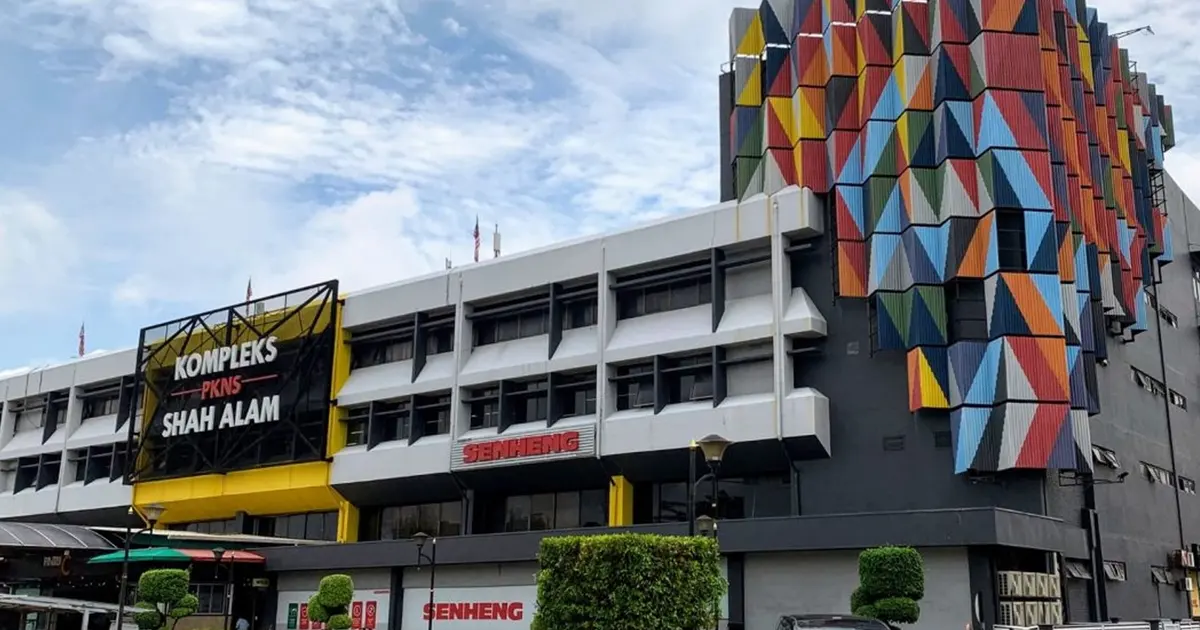
Petroliam Nasional Sdn Bhd's Selangor counterpart, the Selangor State Development Corporation (PKNS), has moved swiftly to counter mounting allegations regarding its financial health, dismissing reports of RM103.7 million in losses and RM6.1 billion in outstanding debt as fundamentally misleading. The state-owned corporation issued a formal denial, characterising the claims as inaccurate and potentially damaging to its institutional credibility and standing within the property development and state investment sectors.
The denial assumes particular significance given PKNS's prominent role in Selangor's economic landscape. As the primary state vehicle for property development and land management, the corporation oversees substantial real estate portfolios and infrastructure projects across the state. Any question mark over its financial stability naturally reverberates through construction contracts, property transactions, and investor confidence in developments bearing the PKNS brand. The corporation's refusal to accept the debt allegations suggests it views the claims not merely as accounting disputes but as potential threats to ongoing business operations and future fundraising capacity.
For Malaysian property investors and stakeholders, particularly those with exposure to PKNS-managed projects or seeking transparency in state-controlled enterprises, the corporation's categorical rejection raises important questions about verification mechanisms. The nature of the original allegations—their source, methodology, and how they were calculated—becomes crucial for assessing credibility. Without substantive disclosure of the corporation's actual financial position, public scepticism regarding state-owned entities' accountability persists, a concern that extends beyond PKNS to similar development corporations across Malaysia's other states.
The dispute underscores broader tensions surrounding financial transparency in Malaysian government-linked corporations. While private companies face mandatory reporting standards and regulatory scrutiny, state development corporations sometimes operate with less stringent disclosure requirements. This structural asymmetry can create information gaps that fuel speculation and rumour, precisely the environment in which unverified financial claims gain traction. PKNS's rebuttal, therefore, must contend with this inherent credibility deficit unless accompanied by more detailed financial documentation made available to independent auditors or the public.
The corporation's insistence that allegations are inaccurate presents an opportunity—though potentially unrecognised—to demonstrate institutional transparency. If PKNS possesses clean or improved financial statements, releasing independently verified audited accounts would decisively counter the claims rather than relying solely on denial. Such openness would strengthen public confidence and differentiate the corporation from entities where financial opacity breeds legitimate concern. Selangor's state government, which ultimately oversees PKNS, faces parallel pressure to facilitate such disclosure.
The timing of these allegations merits consideration. Selangor's state government has pursued ambitious development initiatives and infrastructure projects, many of which depend on PKNS's financial capacity and creditworthiness to execute effectively. If genuine debt pressures exist, they could constrain future state development ambitions or necessitate restructuring that impacts project timelines and delivery. Conversely, if allegations prove baseless, their circulation may reflect political manoeuvring or deliberate attempts to undermine confidence in state governance structures, particularly relevant given Malaysia's fraught political landscape.
Investor confidence in PKNS-associated projects may already be affected regardless of the allegations' accuracy. Property buyers, corporate partners, and financial institutions evaluate counterparty risk constantly. Unresolved questions about a state corporation's financial position create friction in deal-making, potentially driving developers elsewhere or complicating refinancing negotiations. This practical dimension extends the controversy beyond accounting debates into real economic consequences affecting Selangor's development sector.
The corporation's denial also highlights the challenge of accountability within Malaysia's state-owned enterprise ecosystem. Unlike listed companies subject to Bursa Malaysia oversight and continuous public scrutiny, development corporations answer primarily to political leadership rather than market mechanisms. This creates a governance structure where financial problems may remain obscured until they reach crisis point, at which intervention becomes costly and disruptive. PKNS's current situation illustrates why independent oversight mechanisms and mandatory financial transparency would benefit both the corporations and the public they ostensibly serve.
Moving forward, PKNS requires a more comprehensive communication strategy than simple denial. Publishing audited financial statements, providing detailed explanations of balance sheet items, and inviting third-party verification would substantially strengthen its position while demonstrating genuine commitment to accountability. The corporation's stakeholders—from property purchasers to government officials overseeing state finances—deserve clear visibility into the institution's financial reality rather than conflicting claims resolved through assertion rather than evidence.
Ultimately, the PKNS situation reflects systemic vulnerabilities in how Malaysian state-controlled entities manage public perception and financial credibility. Whether the current allegations prove accurate or fabricated, the episode underscores pressing needs for enhanced transparency standards, independent auditing, and substantive disclosure practices across the state development corporation sector. Such reforms would protect both the institutions themselves and the communities depending upon their competent, financially stable operation.

