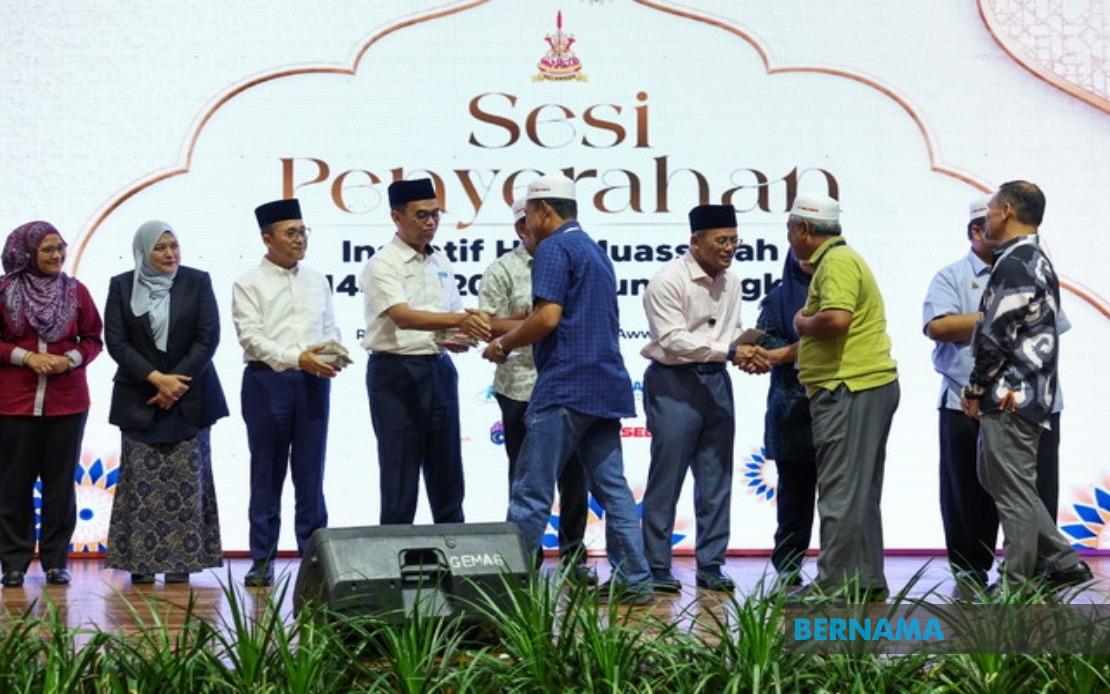
Selangor's Menteri Besar Datuk Seri Amirudin Shari has confirmed that nearly 80 per cent of haj pilgrims earmarked for the state's 2026 Muassasah Haj Incentive have already received their financial support, with officials working to track down the remaining recipients ahead of an anticipated September completion date. Speaking at a contribution presentation ceremony in Puchong on Monday, Amirudin indicated that the state administration is actively pursuing contact with more than 1,000 remaining beneficiaries to ensure the entire allocation reaches its intended recipients without delay.
The Selangor Menteri Besar Incorporated Foundation, operating under state government auspices, has committed RM9 million to support 6,000 pilgrims preparing for the sacred journey. Each qualified participant receives RM1,500 to defray preliminary expenses associated with hajj undertakings, covering necessities ranging from ceremonial attire and medical supplies to religious equipment and other travel-related needs. The programme reflects a strategic effort by the Selangor administration to ease the financial burden on lower-income Muslim residents seeking to fulfil one of Islam's five pillars.
The disbursement initiative extends across multiple state constituencies, with ceremonies held progressively throughout Selangor to maintain transparency and community engagement. The Dengkil constituency session attended by Amirudin encompassed 259 recipients, underscoring the programme's extensive reach within the state. Deputy Housing and Local Government Minister Datuk Aiman Athirah Sabu, who represents the Sepang parliamentary seat, participated in the Puchong event, highlighting cross-party acknowledgment of the scheme's social importance and reflecting collaborative federalism between state and federal representatives.
For Malaysian observers tracking government social welfare initiatives, this programme demonstrates how state administrations are adapting religious observance support within contemporary fiscal frameworks. The phased rollout approach allows the Selangor government to monitor implementation effectiveness and identify logistical improvements before expanding the scheme. Officials can assess recipient satisfaction, verify proper fund utilisation, and refine targeting mechanisms—insights that potentially benefit other state governments considering similar initiatives.
Amirudin has signalled governmental ambition to enhance the per-recipient allocation significantly, projecting an increase to RM2,000 by 2027 or 2028 contingent upon budgetary health and macroeconomic circumstances. This measured optimism reflects awareness that expanding welfare commitments requires sustainable revenue bases and prudent fiscal management. The statement demonstrates acknowledgment that aspiring hajjis face escalating costs for flights, accommodation, and services, necessitating periodic programme adjustment to maintain genuine assistance value.
However, the cautious language surrounding future enhancements—emphasising financial constraints and circumstantial variability—reveals the inherent tension within state-level welfare provisioning. Selangor, as Malaysia's economically strongest state, enjoys greater fiscal flexibility than many peers, yet even substantial revenue cannot guarantee perpetual programme expansion. Officials must balance constituent expectations against economic realities, making transparent communication about limitations as important as announcing improvements.
The hajj assistance scheme also reflects broader religious governance patterns in Malaysia's federal system. While the federal government maintains constitutional authority over Islamic affairs in most states, Selangor's Pakatan Rakyat administration has leveraged state-level discretionary spending to support religiously-motivated undertakings. This approach avoids theological overreach while addressing practical economic concerns—a pragmatic model potentially applicable to other faith-based welfare initiatives across Malaysia's diverse religious communities.
From a Southeast Asian perspective, Selangor's programme offers instructive lessons regarding public support for religious observance. Across the region, governments employ varying approaches to facilitate pilgrimage—from direct funding mechanisms to tax incentives or subsidised travel arrangements. Selangor's model, emphasising fixed allocations and transparent disbursement processes, may resonate with neighbouring Muslim-majority administrations seeking replicable frameworks that respect religious autonomy whilst addressing genuine economic barriers to pilgrimage participation.
The programme's success also depends substantially on effective recipient identification and outreach. That over 1,000 individuals remain difficult to contact suggests administrative challenges inherent in comprehensive welfare distribution—issues exacerbated by incomplete documentation, residential mobility, or awareness gaps. The state government's commitment to completing disbursement by September indicates determination to overcome such obstacles, though experience suggests some eligible beneficiaries may remain unreached despite earnest efforts, representing persistent limitations in even well-intentioned bureaucratic processes.
Looking forward, stakeholders should monitor whether the September deadline materialises and whether the projected RM2,000 enhancement eventuates as economic conditions permit. The sustainability of such programmes depends partly on diversified revenue streams and economic growth trajectories—factors increasingly uncertain in Malaysia's evolving fiscal environment. Nonetheless, Selangor's commitment to regular adjustment and expansion of the hajj assistance initiative, subject to financial capacity, demonstrates principled governance balancing resource constraints against constituent welfare aspirations, establishing benchmarks against which future state welfare provision will inevitably be measured.

