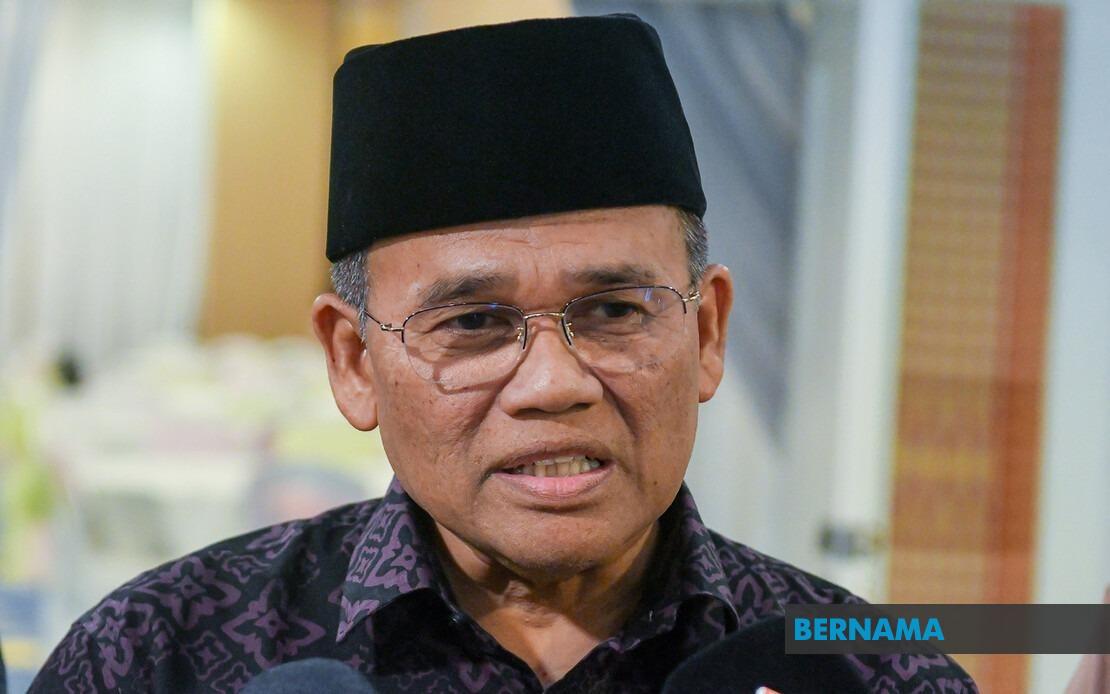
The Selangor Islamic Religious Council (MAIS) has officially authorised the conducting of Friday prayers at the musala facility within IOI City Mall in Putrajaya, marking a significant decision for religious observance in one of the country's major commercial hubs. The approval, which took effect from September 6, 2024, came following a formal assessment and endorsement by the Selangor State Mosque and Surau Governance Committee (JATUMS), with the explicit blessing of the Sultan of Selangor, Sultan Sharafuddin Idris Shah. MAIS chairman Datuk Salehuddin Saidin outlined the reasoning behind this approval in a statement released in mid-July, emphasising the practical considerations that guided the council's decision-making process.
The primary justification for granting this exceptional permission centres on the substantial concentration of Muslim workers within the shopping complex and the steady flow of Muslim visitors who frequent the premises. This demographic reality created a genuine impediment to their ability to discharge one of Islam's fundamental obligations—attending congregational Friday prayers—within the conventional framework of neighbourhood mosque attendance. The difficulty arose not merely from geographical distance but from the inadequacy of existing religious facilities to accommodate the scale of demand generated by the mall's operations and footfall.
The geographical analysis presented by MAIS underscores the extent of the accessibility challenge. The two nearest mosques available to workers and visitors at IOI City Mall are Masjid Al-Mustaqim in Kampung Dato' Abu Bakar Baginda, situated approximately 7.6 kilometres away, and Masjid UNITEN in Kajang, at roughly 7.7 kilometres distance. For individuals working within or visiting a shopping centre during business hours, such distances present formidable practical barriers to attendance, particularly when Friday prayer times often coincide with operational hours when workers cannot easily absent themselves or travel that far within the time constraints.
Beyond the distance factor, MAIS identified a critical capacity constraint that rendered reliance on these existing mosques untenable. Both facilities, despite being the closest available options, lack the physical infrastructure necessary to accommodate the volume of congregants who would require prayer spaces if all Muslim workers and visitors at IOI City Mall attempted to utilise them. This capacity shortfall represents a structural limitation that cannot be immediately rectified and would prevent the realisation of mosque attendance for a significant portion of the potential congregation.
Crucially, MAIS characterised this approval as a temporary measure rather than a permanent arrangement. The permission is explicitly conditional and will terminate once a new mosque specifically designed to serve the vicinity of IOI City Mall has been constructed and becomes operational. This sunset clause reflects a principled approach whereby the religious authorities recognise that the ideal solution involves dedicated mosque infrastructure properly resourced and sited to serve the area's Muslim population, rather than adapting commercial spaces indefinitely. The temporary nature of the permission thus signals an interim accommodation pending proper infrastructure development.
The decision also reflects broader institutional coordination within Selangor's Islamic governance framework. MAIS indicated that it would work in tandem with the Selangor Islamic Religious Department (JAIS) to ensure that the management and execution of Friday prayers throughout the state adheres to established standards and maintains compliance with Islamic jurisprudence and applicable legal statutes. This supervisory partnership underscores the commitment to preserving procedural propriety and religious authenticity even as the authorities adapted to exceptional circumstances.
It is noteworthy that earlier in July, MAIS chairman Salehuddin had issued a broader statement indicating that Sultan Sharafuddin had not granted general consent for suraus or musallas located within shopping centres across Selangor to conduct Friday prayers as standard practice. This pronouncement contextualises the IOI City Mall decision as a carefully considered exception rather than the first instance of a pattern. The MAIS chairman's clarification acknowledged that while one shopping centre musalla had received permission to hold Friday prayers, this authorisation was extended precisely because of the absence of a nearby mosque and the resulting hardship, positioning it as a responses to urgent necessity rather than a change in baseline policy.
For Malaysian readers and observers of Islamic religious administration, this episode illustrates the pragmatic balance that religious authorities must strike between upholding traditional forms of Islamic practice and responding to the realities of modern urban commerce and employment patterns. The shopping mall has become a significant venue of daily life for millions of Malaysians, and the presence of substantial Muslim workforces and customers within such spaces creates genuine religious observance challenges that cannot be dismissed. Yet the authorities have chosen to manage this through temporary permissions rather than wholesale modification of norms, preserving the principle that purpose-built mosques remain the appropriate venues for congregational worship.
The decision also carries implications for shopping mall operators and developers across Selangor and potentially elsewhere in Malaysia. It signals that religious authorities will evaluate requests for prayer facilities based on demonstrable need, workforce demographics, and geographical accessibility, creating a framework within which commercial enterprises can anticipate approval processes. At the same time, the emphasis on temporariness and the requirement that new mosque development should address the underlying gap suggests that major commercial developments may face future expectations regarding religious infrastructure provisioning.
Looking forward, the approval of Friday prayers at IOI City Mall represents an accommodation born of necessity, bounded by time, and premised on the eventual resolution of the underlying infrastructure deficit. It reflects the capacity of Malaysia's Islamic institutional framework to respond to practical challenges whilst maintaining fidelity to established religious principles and governance structures. The fate of this permission will ultimately depend on the pace at which a new mosque can be developed and completed in proximity to IOI City Mall, a project that now assumes significance beyond mere commercial convenience.

