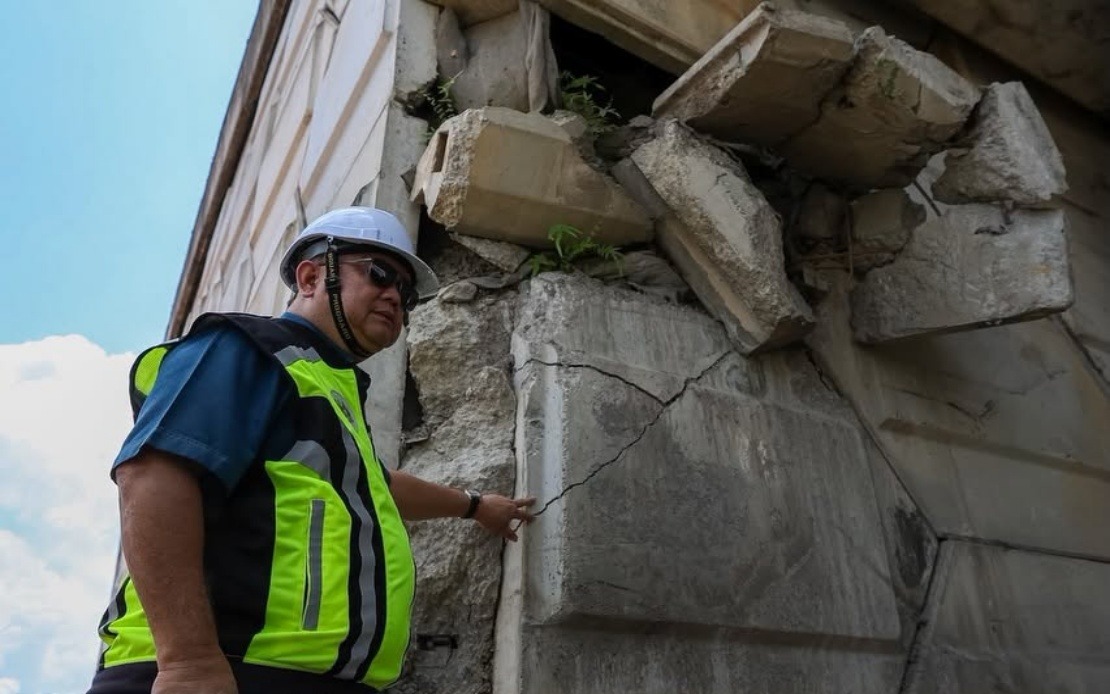
The Selangau-Mukah Interchange Flyover on the Pan Borneo Highway will reopen in controlled stages once structural repairs meet stringent safety benchmarks, Works Minister Datuk Seri Alexander Nanta Linggi announced during an on-site inspection in Sibu on July 6. The commitment comes after authorities completely shut down Ramp 1 of the critical transport link following a collision that compromised its structural integrity.
Nanta explained that the initial closure was a precautionary measure to protect motorists after a palm oil tanker struck the structure, damaging part of the retaining wall system. Technical assessments conducted immediately following the incident revealed the extent of the damage, prompting the ministry to prioritise comprehensive repairs over expedited reopening. The minister emphasised that safety considerations will always supersede pressure to restore traffic flow, particularly given the flyover's significance as part of the Pan Borneo Highway network.
The reconstruction strategy involves controlled structural repairs designed to restore stability to the compromised sections while allowing unaffected portions to resume operations progressively. This phased approach reflects both engineering necessity and operational pragmatism—sections of the flyover that were not impacted by the collision can be returned to public use once inspected, reducing the geographic disruption while repairs continue on the damaged ramp. Nanta pledged rigorous oversight of the repair timeline to prevent unnecessary delays that could extend commuter inconvenience beyond what the damage itself requires.
The minister acknowledged widespread public concerns about the extended closure, recognising that the Bintulu-Mukah-Sibu corridor serves as a vital economic artery for Sarawak's interior communities. Residents and regular users of this route face significant detours and travel delays, adding pressure on local economies and supply chains. However, Nanta reiterated that restoring the road prematurely without addressing structural concerns could create far greater risks and longer-term disruptions should another failure occur.
Nanta stressed the importance of maintaining transparent communication with affected communities throughout the repair process. He highlighted that public feedback—whether conveyed through conventional media channels or social media platforms—must be taken seriously and incorporated into project management. This acknowledgement reflects growing awareness among Malaysian government officials that infrastructure projects affecting large populations require sustained engagement with stakeholders, not merely technical competence.
Three concrete priorities will guide the ministry's approach: unwavering commitment to road user safety above all other considerations, vigilant monitoring of the repair schedule to minimise unnecessary delays, and provision of comprehensive public information regarding alternate routes, current closures, and work progress. These commitments suggest the ministry intends to project competence and reliability throughout the repair process, countering any perception of negligence or mismanagement that the initial collision might have prompted.
For Malaysian and Southeast Asian readers, the incident underscores the operational challenges facing the Pan Borneo Highway, a major infrastructure project designed to improve connectivity across Sarawak. While the highway represents significant investment in regional development, maintenance and safety protocols remain critical ongoing concerns. The collision and subsequent closure reveal that structures within the network remain vulnerable to accidents and environmental stresses, requiring vigilant inspection regimes and rapid response capabilities.
The incident also reflects broader questions about heavy vehicle management on Malaysian highways. Palm oil tankers frequently traverse primary routes transporting valuable commodities, yet accidents involving such vehicles can cause disproportionate structural damage due to their mass and the forces involved in collisions. Enhanced monitoring of heavy vehicle routes, stricter compliance standards, and improved barriers or protective infrastructure may warrant consideration as complementary measures to repair work.
Nanta's assurance of a phased reopening provides some relief to communities and businesses dependent on this corridor, though the timeline for full restoration remains unclear. Contractors will need to conduct detailed engineering surveys to determine the extent of internal structural damage beyond the visible retaining wall injury, potentially extending the project duration. Malaysian readers should anticipate that interim announcements regarding partial reopening will follow technical assessments, likely within weeks rather than days.
The situation also highlights the importance of contingency planning for critical infrastructure. Businesses relying on the Bintulu-Mukah-Sibu route should explore alternative logistics strategies and supply chain adjustments for the duration of the closure. Government support mechanisms for affected enterprises may become relevant, particularly for smaller businesses that cannot absorb extended travel delays and increased transport costs.
As repair work proceeds, the ministry's handling of this incident will serve as a benchmark for future infrastructure crisis management in Malaysia. Transparent communication, adherence to safety protocols despite economic pressure, and demonstrated competence in project oversight can restore public confidence in the government's capacity to maintain critical transport networks. Conversely, delays, communication failures, or further incidents could undermine trust in infrastructure safety across the region.

