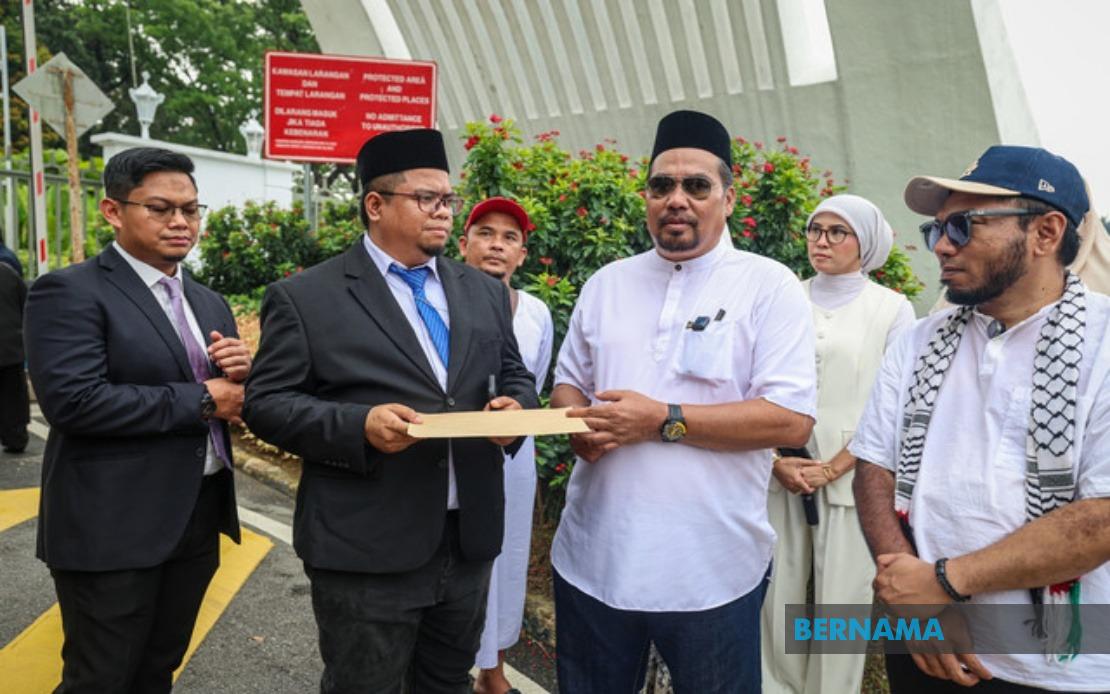
The social media activist collective known as Sekretariat Gerak Gempur Media Sosial Rakyat Malaysia, or SEKPUR, has intensified pressure on Malaysia's government to hold accountable those implicated in a series of governance failures at Lembaga Tabung Haji, the state-owned Islamic pilgrimage fund manager. The group delivered its formal memorandum during a peaceful demonstration held at Parliament's main gates, capitalising on heightened public scrutiny following the official release of a comprehensive inquiry into the institution's troubled operations.
The memorandum, accepted by Zairudin Hashim, press secretary to the Minister in the Prime Minister's Department (Religious Affairs), represents a significant moment in the ongoing accountability debate surrounding Malaysia's most important Islamic financial institution. SEKPUR secretary Mohd Yani Alias framed the submission as a direct response to the Yang di-Pertuan Agong's explicit directive that all those found culpable in the Tabung Haji debacle must face the full force of the law, signalling royal-level concern about the institution's governance crisis.
The underlying grievance animating SEKPUR's intervention centres on the conviction that political affiliation should play no role in determining who faces consequences for institutional mismanagement. Alias emphasised that accountability must transcend partisan considerations, stressing that Tabung Haji functions as a sacred trust held on behalf of Malaysia's Muslim and Malay communities. This framing elevates the issue beyond routine corporate governance to encompass questions of communal faith and stewardship of religious resources.
The 211-page Royal Commission of Inquiry report, released publicly on July 29, catalogued systematic weaknesses in operational and managerial practices spanning from 2014 through 2020, a critical six-year window during which the institution accumulated substantial losses. The inquiry documented deficiencies across multiple domains, though specific findings have not been exhaustively outlined in public discourse. The sheer length and scope of the investigation suggest the commission identified deeply rooted institutional problems rather than isolated incidents.
Beyond the immediate question of individual accountability, SEKPUR has articulated broader concerns about Tabung Haji's long-term financial viability and its capacity to provide competitive returns to depositors through hibah distributions. For millions of Malaysian Muslims who have entrusted savings to the institution as part of their pilgrimage planning, questions about financial sustainability directly threaten their ability to fulfill one of Islam's Five Pillars. The activist group's emphasis on competitive hibah rates reflects awareness that depositors compare returns against alternative Islamic banking products.
The escalating cost of performing the Hajj constitutes another dimension of SEKPUR's advocacy agenda. Rising prices for pilgrimage packages have progressively narrowed access to this spiritual obligation, creating hardship particularly among lower and middle-income Malaysians. By connecting Tabung Haji's governance failures to increasing haj expenses, SEKPUR has drawn a line between institutional mismanagement and the financial burden experienced by ordinary worshippers.
Transparency in the allocation and management of haj quotas emerged as a further grievance highlighted in the memorandum. Malaysia's haj quota system, which determines how many citizens can perform the pilgrimage annually, has historically been the subject of speculation and concern regarding fairness and equitable distribution. SEKPUR's call for greater clarity in this process reflects longstanding questions about whether quota allocation mechanisms operate according to transparent, merit-based criteria or whether opaque processes favour particular constituencies.
The timing of SEKPUR's intervention coincided with a special Dewan Rakyat sitting convened specifically to allow the relevant minister to brief Parliament on the RCI report's findings and government plans to rehabilitate Tabung Haji's financial condition. This parliamentary focus indicates that the issue has achieved sufficient political salience to warrant extraordinary parliamentary procedures. The government's commitment to addressing the institution's restoration suggests recognition that the credibility gap must be bridged through demonstrable action.
Among the 25 recommendations contained in the RCI report, implementation rates had reached 75 percent as of July 30, suggesting that some corrective measures were already underway even as the report remained under consideration. However, the specific nature of these implemented recommendations remains publicly opaque, leaving questions about whether completed actions address root causes or merely constitute superficial reforms. The emphasis on the implementation rate may reflect government efforts to demonstrate responsiveness, though activist scrutiny will persist regarding whether these measures constitute genuine institutional transformation.
For Malaysian depositors and prospective haj pilgrims, the RCI report and subsequent calls for accountability represent a pivotal moment in determining whether Tabung Haji can restore institutional credibility and financial soundness. The intersection of religious obligation, personal savings, and questions of governance integrity makes this case particularly resonant within Malaysian society. SEKPUR's mobilisation demonstrates that public pressure and civil society activism continue to play crucial roles in demanding accountability when state institutions disappoint public trust, particularly when issues touch on matters of deep cultural and religious significance to Malaysia's Muslim majority population.

