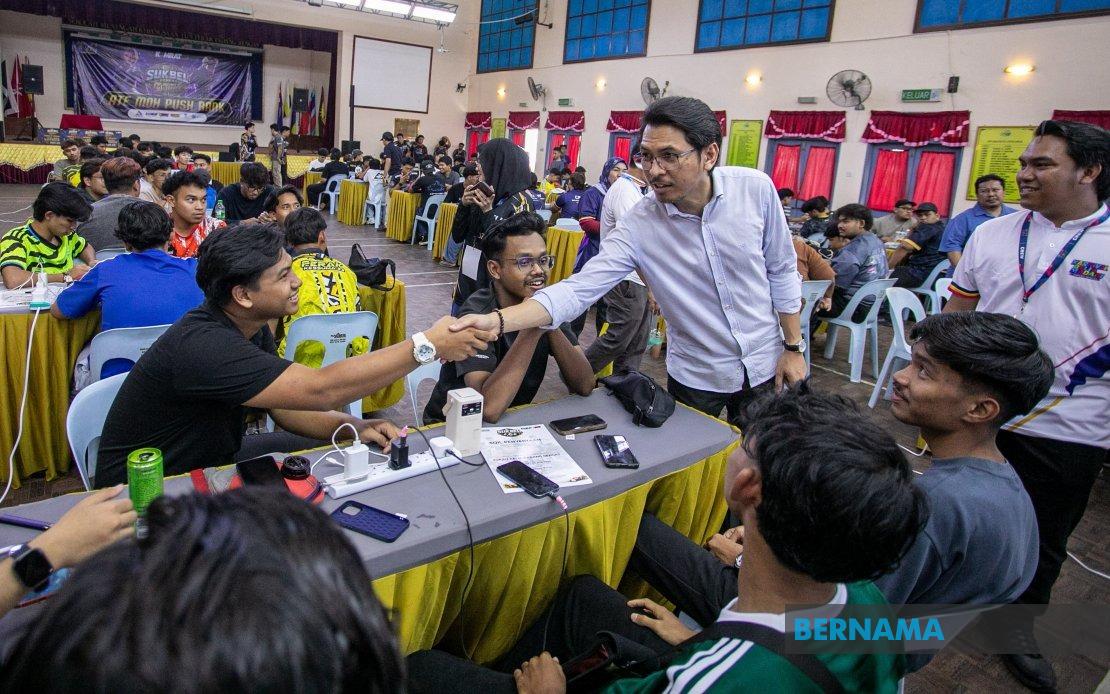
The Sejahtera MADANI initiative operating across Perak has reached an important milestone, providing RM2.3 million in targeted assistance to approximately 2,000 residents while securing additional government backing to sustain and broaden its reach. The Finance Minister's political secretary Muhammad Kamil Abdul Munim announced the supplementary RM3 million allocation during a roadshow in Padang Rengas, signalling the government's determination to scale the programme across more parliamentary constituencies in the state.
Beyond simple cash transfers, the initiative takes a multifaceted approach designed to address the root causes of economic hardship in Malaysian communities. The expanded funding will enable the programme to reach vulnerable segments including struggling entrepreneurs operating from home or small premises, wage earners struggling with monthly expenses, and academically gifted students from disadvantaged backgrounds pursuing tertiary qualifications. This tiered support structure reflects a policy philosophy that recognises different groups require different forms of intervention to meaningfully improve their circumstances.
The tangible benefits extended through Sejahtera MADANI extend far beyond monetary handouts. Micro-entrepreneurs receive not only financial support but also access to business equipment and tools designed to enhance operational efficiency and profitability. During the Padang Rengas roadshow, five small-scale business owners received equipment packages intended to boost productivity and generate higher income streams. Simultaneously, 13 high-achieving students entering university programmes received laptops—recognising that educational advancement depends on access to modern technology, a disparity that disproportionately affects lower-income families in Malaysia.
The initiative's emphasis on merit-based incentives for academic excellence represents a deliberate policy choice to encourage educational aspiration among economically disadvantaged youth. By rewarding students who performed well in the Sijil Pelajaran Malaysia examinations with practical tools for higher learning, the programme signals that merit matters and that government support extends to those who demonstrate commitment to self-improvement. This approach stands in contrast to purely redistributive assistance, instead creating pathways for social mobility grounded in demonstrated achievement.
Muhammad Kamil framed the expanded allocation as evidence of the MADANI Government's commitment to ensuring that public resources reach beneficiaries with measurable, tangible impact rather than being dispersed through inefficient channels. He emphasised that the government takes seriously its responsibility to deploy taxpayer funds in ways that generate real improvements in living standards and educational outcomes for ordinary Malaysians. This positioning attempts to establish the initiative as part of a broader governance philosophy prioritising accountability and results-oriented public spending.
However, the Finance Minister's political secretary also acknowledged critical weaknesses that have plagued the scheme's predecessor programme, the SejaTi MADANI grant. Several projects funded under that initiative failed to materialise as envisioned, or encountered implementation problems that undermined their intended benefits. These failures prompted the government to fundamentally recalibrate its approach, shifting from a model that devolved project selection entirely to local communities toward a system incorporating substantially tighter oversight mechanisms at multiple implementation stages.
This recalibration represents a notable policy reversal that carries implications for how the government conceives of community participation in development initiatives. The original architecture trusted local groups to identify and prioritise their own needs, reflecting a decentralised, community-driven philosophy. However, acknowledged shortcomings in project execution forced a trade-off between grassroots autonomy and institutional accountability. The new framework maintains community involvement while inserting stronger supervisory checkpoints designed to prevent fraud, reduce misuse of funds, and ensure projects proceed according to specifications.
The commitment to stepped-up monitoring directly addresses a persistent vulnerability in Malaysian public administration: the risk that development funds intended for vulnerable populations may be diverted through corrupt networks or squandered through incompetence. Muhammad Kamil's frank acknowledgment that previous iterations encountered significant problems represents refreshing candour from a government official. His insistence that ongoing supervision will prove essential represents an implicit recognition that even well-intentioned programmes require robust internal controls and regular performance assessment.
For Perak's residents, the expanded Sejahtera MADANI initiative offers concrete opportunities to access government support with fewer bureaucratic barriers than traditional welfare schemes. The rolling roadshow approach bringing the programme directly to parliamentary constituencies like Padang Rengas reduces friction in the application process and creates occasions for public recognition of beneficiaries, potentially reducing stigma associated with receiving assistance. This methodology, combined with the tangible nature of the support provided, may enhance programme uptake compared to schemes requiring multiple office visits or extensive documentation.
The broader national context suggests that assistance schemes combining targeted cash transfers with access to productive assets or human capital investment increasingly form the backbone of Malaysia's approach to poverty alleviation. Rather than viewing welfare assistance and economic development as separate domains, the Sejahtera MADANI model integrates them—recognising that low-income households need both immediate relief and pathways to improved earning capacity. This integration has become increasingly important as Malaysia confronts persistent inequality despite decades of economic growth.
Looking forward, the programme's success will depend substantially on whether the strengthened monitoring mechanisms prove effective without becoming so cumbersome that they discourage legitimate applications or slow programme delivery. The government faces the perennial challenge of balancing institutional accountability with programme accessibility. Additionally, the RM3 million allocated to Perak will require careful prioritisation decisions about how to distribute resources across different beneficiary categories and parliamentary constituencies, choices that inevitably create winners and disappointed potential recipients.

