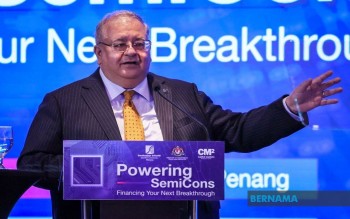
The Securities Commission Malaysia has signalled its readiness to assume regulatory authority over the investment operations of Lembaga Tabung Haji, contingent upon a government decision to proceed with the proposal. SC chairman Datuk Mohammad Faiz Azmi made the statement in George Town, clarifying that while the commission stands ready to implement such oversight, the authority to grant this responsibility rests with the Cabinet and related government ministries.
The proposal to extend SC's purview to include TH's fund management represents one of several recommendations emerging from a Royal Commission of Inquiry into the pilgrimage fund management institution. Currently, a multi-agency task force comprising the SC, Bank Negara Malaysia, and TH itself is engaged in a comprehensive review of all RCI recommendations to determine which proposals merit implementation and how best to operationalise them.
Faiz Azmi's position reflects a circumspect institutional stance: the SC does not regard itself as the primary decision-maker in this matter but rather as an implementer of government policy once directives are issued. He acknowledged that while the commission is examining the feasibility of the regulatory proposal, the ultimate authority to delegate this function belongs to the political leadership. The careful demarcation of roles underscores the sensitivity surrounding TH governance, an institution of profound religious and cultural significance to Malaysia's Muslim population.
The size and complexity of TH's investment portfolio forms a material consideration in evaluating whether SC oversight is warranted. As a major institutional investor managing billions in assets on behalf of millions of Malaysian and foreign pilgrims, TH's financial operations present systemic importance that transcends a single regulatory body's traditional scope. The investment component of TH's mandate has grown increasingly sophisticated, encompassing domestic equities, international securities, real estate holdings, and derivative instruments. This portfolio scale and sophistication arguably align with SC's existing expertise in capital market regulation and institutional investor supervision.
Minister in the Prime Minister's Department (Religious Affairs) Dr Zulkifli Hasan had previously indicated that the SC had been formally proposed as the appropriate authority to oversee TH's fund and investment management. This proposal forms part of a broader institutional strengthening initiative aimed at tightening oversight mechanisms and preventing a recurrence of governance failures that prompted the royal inquiry. The RCI itself appears to have concluded that existing regulatory architecture around TH was insufficient to ensure sound financial management and adequate safeguarding of pilgrims' contributions.
For Malaysian investors and pilgrims, the potential inclusion of TH within SC's regulatory ambit carries several implications. Securities Commission oversight could introduce additional transparency requirements, potentially including enhanced disclosure standards for TH's investment activities and performance metrics. It might also result in stronger compliance frameworks governing TH's fund allocation decisions and risk management protocols. However, any regulatory expansion must be carefully calibrated to preserve TH's distinctive character as an Islamic institution with specific religious and social mandates that extend beyond conventional investment fund management.
The involvement of Bank Negara Malaysia in the task force reflects another dimension of the governance challenge. As Malaysia's central bank, BNM possesses expertise in financial institution supervision, macroeconomic risk assessment, and systemic stability considerations. TH's substantial balance sheet and interconnectedness with Malaysia's financial system warrant BNM's participation in reviewing governance recommendations. The tri-agency task force approach suggests a recognition that no single regulator possesses the complete institutional mandate or expertise necessary to address all dimensions of TH's operations and risks.
The timeline for government consideration of the RCI recommendations remains unclear. Government decision-making processes on matters of significant institutional or religious consequence typically move deliberately, with multiple stakeholder consultations and inter-ministerial coordination required before formal directives emerge. Minister Zulkifli Hasan's earlier public statement suggests the proposal has already achieved at least preliminary backing within the religious affairs portfolio, but broader Cabinet consensus may still be developing.
Sector observers note that SC regulatory authority over TH would represent a meaningful expansion of the commission's remit, particularly if extended to fund management activities beyond traditional securities regulation. This expansion would require clarification of jurisdictional boundaries between the SC's existing responsibilities and those that would be newly delegated, as well as potential amendments to relevant legislation governing both the SC and TH to provide explicit legal foundations for this expanded role.
The overarching context of these regulatory considerations is the Malaysian government's broader effort to restore institutional credibility and governance standards across state-linked entities following the RCI findings on TH. These findings apparently identified governance deficiencies that compromised the institution's fiduciary responsibilities to pilgrims and contributed to financial underperformance. Strengthening external oversight through SC involvement represents a policy response aimed at introducing institutional safeguards and accountability mechanisms that transcend any single organization's internal controls.
International precedents for securities regulators overseeing large pilgrimage funds or religiously-affiliated investment vehicles exist, though each jurisdiction has adapted frameworks to accommodate local institutional contexts and legal traditions. Malaysian policymakers appear to be considering whether SC's existing capital markets expertise and institutional infrastructure could be effectively deployed to strengthen TH governance without compromising the organization's religious character or pilgrims' access to the institution's services.

