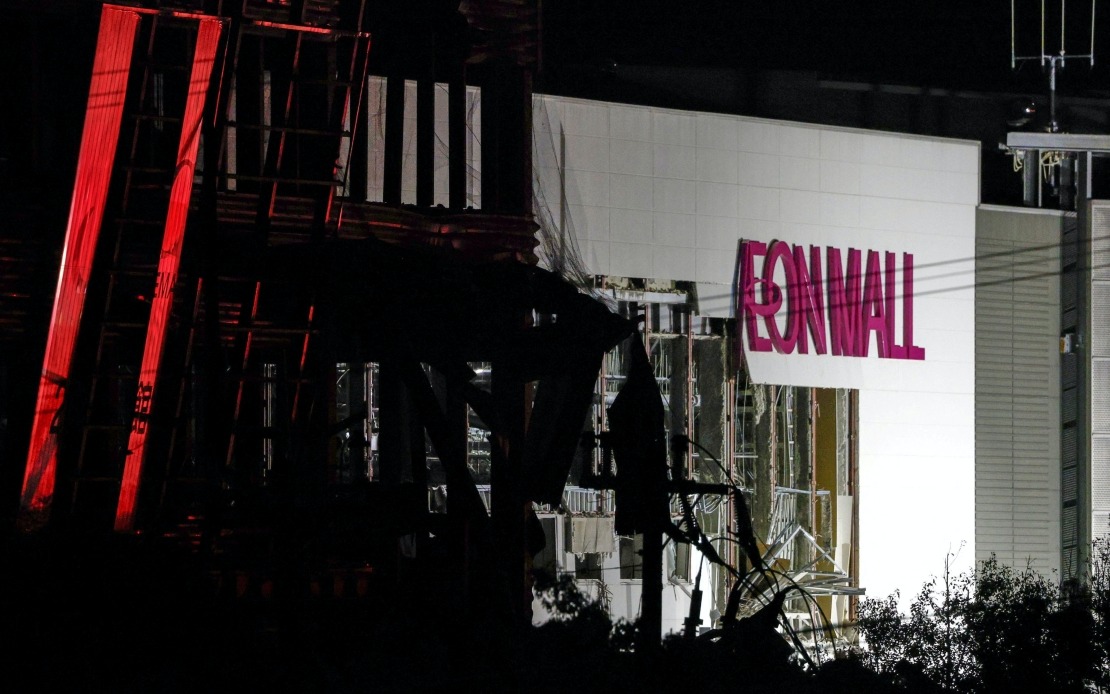
Rescue and emergency services in Japan's Kumamoto Prefecture are engaged in an intensive search for between 20 and 30 employees missing after an explosion tore through Aeon Mall Kumamoto on Tuesday evening. The incident unfolded in Kashima Town hours after a major earthquake rattled the southwestern prefecture, compounding an already dire situation and raising serious concerns about casualties within one of the region's largest retail complexes.
The National Police Agency confirmed that multiple staff members employed at the shopping centre have been unable to reach by authorities or contacted loved ones since the blast struck at approximately 6 pm local time. Officials indicated these individuals were last known to be working at the mall when the explosion occurred, prompting immediate concerns about whether they remain trapped beneath rubble or injured within the damaged structure. The scale of the disappearances underscores the severity of the blast and the challenges facing emergency responders attempting to secure the sprawling facility.
Police and firefighting teams mobilised swiftly to comb through the damaged building, with rescue operations focused on locating any persons still trapped inside. Initial assessments suggest that most customers had already been moved to outdoor safety zones before the explosion happened, reducing the likelihood of large numbers of shoppers remaining inside. However, authorities have yet to determine definitively whether any customers feature among the missing, as the full extent of occupancy at the time of the blast remains unclear. The evacuation efforts, though potentially life-saving, mean that determining who was inside becomes significantly more complicated as investigators attempt to account for every person.
The explosion's timing proved particularly calamitous given that the region had only hours earlier been struck by a magnitude-7.1 earthquake at 4:27 pm local time. This seismic event preceded the mall explosion, leaving rescue infrastructure and emergency personnel already stretched thin in responding to widespread structural damage across Kumamoto Prefecture. Authorities separately reported that fewer than 10 additional individuals remained unaccounted for in other locations directly attributable to the earthquake itself, suggesting the explosion at the shopping complex represents a discrete secondary disaster compounding the prefecture's crisis.
Broadcasters including TBS reported early indications that multiple fatalities had resulted from the blast, with officials from Kumamoto Prefectural Police warning that numerous deaths were feared. Senior police officials stated that authorities anticipated "many fatalities" would ultimately be confirmed, though establishing an accurate death toll would require time as rescue operations continued and identification procedures were completed. The grim assessment highlights the force of the explosion and its devastating impact on those present within the mall's confines at the moment of detonation.
The sequence of events—earthquake followed by explosion—raises questions about potential secondary structural failures or infrastructure damage that may have contributed to the blast. Investigators will need to determine whether the initial seismic activity triggered gas leaks, electrical malfunctions, or other hazards that subsequently ignited within the mall complex. For Malaysian and Southeast Asian observers, this incident serves as a stark reminder of how natural disasters can trigger cascading secondary emergencies that compound rescue and recovery challenges. Japan's sophisticated emergency response systems faced an unusually complex situation requiring simultaneous management of earthquake damage and a major explosion.
The Aeon Mall Kumamoto blast represents a significant incident within Japan's retail sector, affecting one of the country's major shopping destinations. The economic and social implications extend beyond immediate casualty concerns, as the incident will inevitably lead to reviews of safety protocols in large commercial complexes throughout the region. Building codes, emergency evacuation procedures, and hazard mitigation measures will likely face scrutiny as authorities seek to understand how such a catastrophic event occurred and how similar incidents might be prevented.
For regional observers, the incident underscores the vulnerability of major commercial infrastructure to compound disasters. Southeast Asia, which experiences both seismic activity and has numerous large shopping malls concentrated in urban centres, may draw lessons from Japan's response and any subsequent safety recommendations. Malaysian shopping centres, particularly those in earthquake-prone areas or near fault lines, could face pressure to review their emergency preparedness systems and structural resilience measures.
The ongoing search operation reflects the immense difficulty faced by rescue teams operating in the aftermath of structural collapse. Beyond the 20 to 30 missing employees at the mall, the broader earthquake impact across Kumamoto Prefecture meant that regional emergency resources were simultaneously deployed to multiple crisis sites. This dispersal of rescue capacity likely slowed efforts to locate missing individuals at the shopping complex, highlighting how secondary disasters create multiplicative challenges for emergency management authorities attempting to save lives across affected areas.

