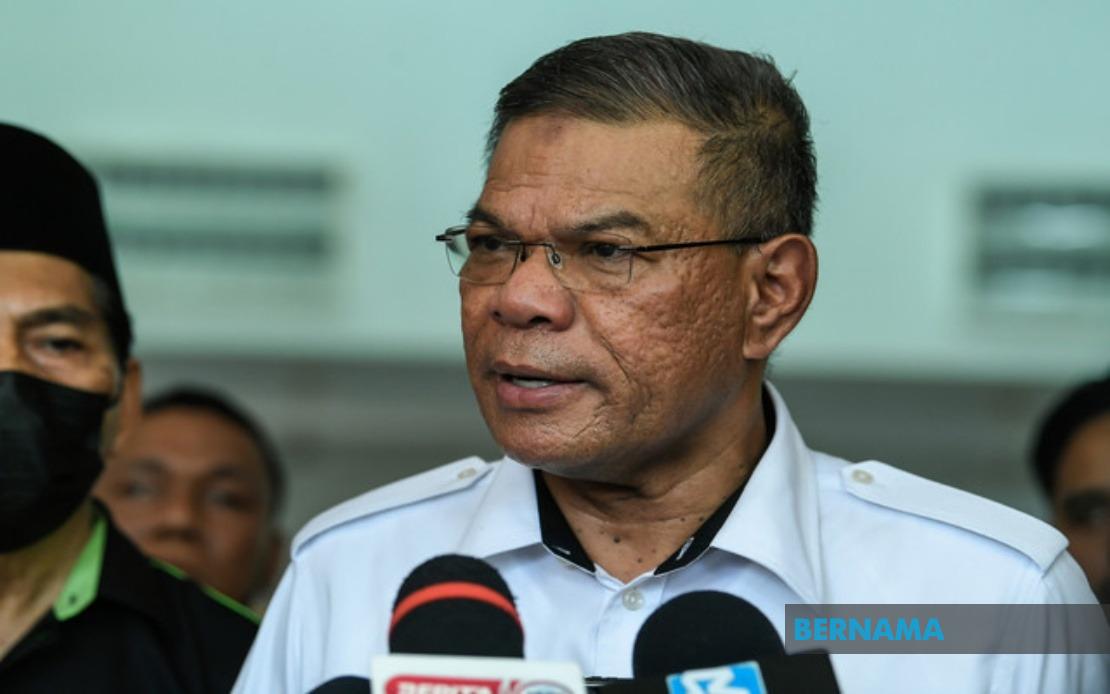
Home Minister Datuk Seri Saifuddin Nasution Ismail has clarified that School Liaison Officers (PPS) serve functions extending significantly beyond bullying prevention, overseeing a comprehensive range of safety concerns that affect student welfare across Malaysian schools. Speaking in Kulim on July 22 after inspecting the damaged hostel at Sekolah Menengah Agama Tarbiah Diniah, Saifuddin emphasised that the Royal Malaysia Police (PDRM) remains committed to strengthening its monitoring infrastructure through the strategic deployment of these officers throughout the country.
The school liaison initiative represents a multifaceted approach to campus security and student protection. Under this framework, police personnel stationed at or near schools serve as dedicated liaisons working directly with educational institutions, parents, and students through structured engagement programmes. These officers investigate not merely interpersonal conflicts but a diverse spectrum of incidents that pose potential risks to the school community. The recent case of a student who fell at a school in Kuala Nerang, which remains under police investigation, exemplifies the breadth of incidents requiring attention beyond the high-profile bullying cases that periodically capture public attention.
Complementing the police presence, the Home Ministry deploys officers from the National Anti-Drugs Agency (AADK) to educational institutions, tasked with monitoring student wellbeing across multiple dimensions. This dual-agency approach reflects recognition that school safety encompasses substance abuse prevention, mental health awareness, and early intervention in student behavioural issues. The coordination between PDRM and AADK personnel creates a more comprehensive oversight mechanism than any single agency could provide, addressing vulnerabilities that might otherwise escape notice until they escalate into serious incidents.
Saifuddin's comments came at a particularly poignant moment, as he was inspecting the aftermath of a devastating fire that had consumed the hostel building at Sekolah Menengah Agama Tarbiah Diniah just hours earlier. The blaze, which erupted at approximately 2.30 am, left 116 students displaced and deprived of their belongings, illustrating how emergencies affecting school facilities can create acute crises requiring rapid institutional response. The fire serves as a sobering reminder that school safety encompasses physical infrastructure protection and emergency preparedness, dimensions that extend beyond the interpersonal dynamics that typically dominate public discourse on student safety.
In response to the immediate humanitarian needs created by the fire, the government mobilised resources with notable speed. Each affected student received RM500 in emergency cash assistance, recognising that many had lost all personal possessions and faced acute financial hardship in replacing essential items. The Home Minister secured Prime Minister approval for a further RM200,000 allocation specifically designated for constructing temporary accommodation, demonstrating commitment to restoring normalcy for displaced students while permanent repairs proceed. This financial intervention addresses not merely symbolic gestures but tangible practical needs that would otherwise impede students' ability to continue their education.
Beyond financial assistance, the government coordinated support services addressing the bureaucratic challenges created by fire damage. The National Registration Department (NRD) deployed mobile services directly to the school, enabling affected students to replace identity documents destroyed in the fire at no cost. This practical assistance recognises that disaster recovery involves navigating administrative systems, and streamlined access to government services can substantially ease the burden on already-stressed individuals. Saifuddin's personal contribution of RM10,000 to the school's Parent-Teacher Association (PTA) further underscores commitment to supporting the community's own recovery efforts.
The MADANI Government's approach to the hostel fire reflects stated priorities regarding educational institutions and student welfare. Officials characterised their response as exemplifying broader commitment to utilising emergency allocations through the State Development Office, channelling available resources to address crises affecting school facilities and learning environments. This framing positions the government's intervention within a larger governance philosophy emphasising rapid, coordinated responses to incidents affecting public services and student populations.
The distinction Saifuddin draws between bullying cases and the broader school safety portfolio carries significance for how Malaysian policymakers conceptualise institutional protection. While bullying incidents—particularly those circulating on social media like recent cases from Cheras—generate substantial public attention and emotional responses, the Home Minister's remarks suggest that comprehensive school safety requires attention to less-publicised risks including accidental injuries, substance abuse exposure, and infrastructure failures. This holistic framing aligns with contemporary international understanding of school safety as encompassing multiple hazard categories and requiring coordinated institutional responses.
The deployment of School Liaison Officers nationwide represents substantial resource commitment and reflects recognition that police presence in educational environments serves preventative and community-building functions beyond enforcement. These officers' engagement programmes create ongoing relationships between law enforcement and school communities, potentially building trust and improving reporting of concerning behaviours that might otherwise go unaddressed. The emphasis on partnership with schools and parents suggests recognition that sustainable school safety requires institutional cooperation rather than purely top-down police intervention.
For Malaysian readers, particularly parents and educators, the clarification of School Liaison Officers' expanded mandate provides important context for understanding how institutional safeguards operate within schools. The confirmation that multiple agencies—PDRM personnel, AADK officers, and school administrators—participate in overlapping oversight systems suggests that protections against various hazards operate simultaneously. However, the apparent need for Saifuddin to publicly articulate these functions indicates potential public confusion about school safety structures, possibly suggesting that communication regarding these programmes requires enhancement.
The hostel fire incident and subsequent government response underscore vulnerabilities in physical infrastructure affecting Malaysian schools, particularly residential facilities housing large student populations. The rapid displacement of 116 students highlights the cascading consequences when school facilities fail, affecting not merely immediate occupants but disrupting educational continuity for entire school communities. This incident may prompt broader assessment of fire safety protocols and infrastructure maintenance across Malaysian educational institutions, particularly boarding schools in rural areas like those near Kulim.
As Malaysia continues developing its school safety frameworks, the integration of traditional law enforcement, specialised drug prevention agencies, and emergency management responses creates increasingly complex institutional ecosystems. The effectiveness of these overlapping systems depends substantially on communication and coordination mechanisms that remain largely opaque to the public. Saifuddin's statements suggest confidence in existing structures, yet the specificity required to explain School Liaison Officers' functions indicates these mechanisms may benefit from more systematic public communication and transparency regarding their operational scope and effectiveness.

