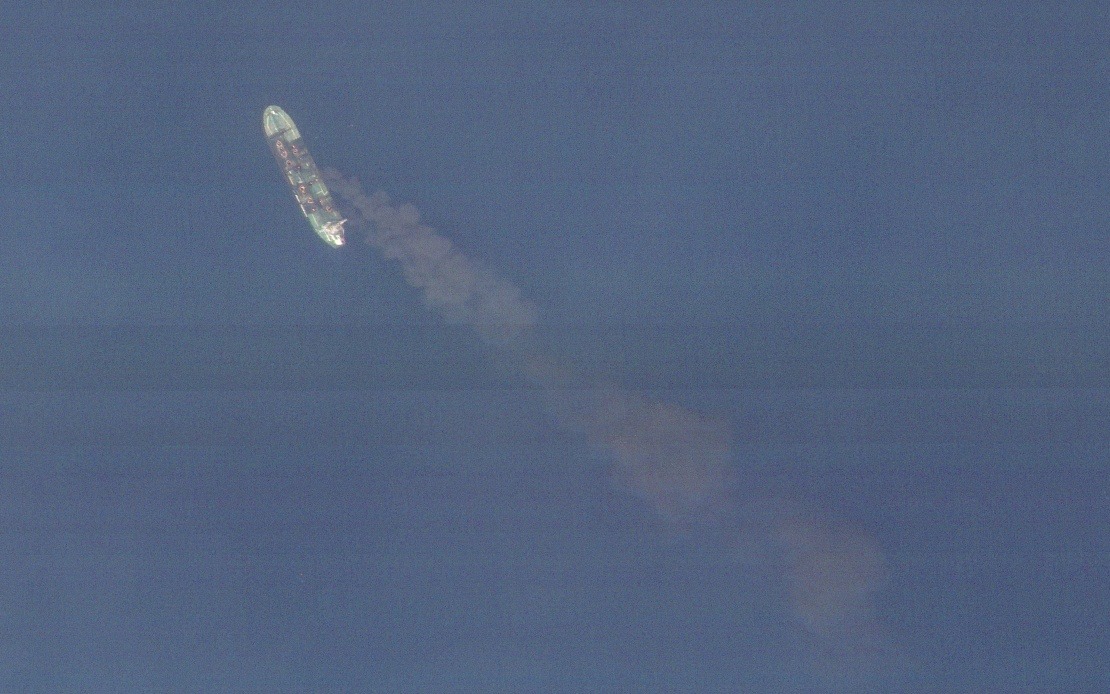
The Saudi-led military coalition operating in Yemen has declared its intention to take decisive action to protect commercial shipping interests traversing the strategically vital Bab al-Mandab Strait, responding swiftly to a maritime restriction announced by the Houthi group. Coalition spokesperson Turki Al-Malki issued a statement via the X social media platform on Monday evening, asserting that the Joint Forces Command is implementing all necessary operational measures consistent with international law to ensure the safe passage of coalition-affiliated vessels through this critical waterway.
The Houthis' announcement of their shipping ban represents an escalation in the Yemen conflict, which has destabilised the region for nearly a decade. The Iranian-aligned militant group justified the restriction by invoking what it termed a "blockade for blockade" principle, framing the measure as a reciprocal response to what the Houthis characterise as Saudi Arabia's "siege" lasting nearly 12 years. This rhetorical framing reveals the deep-rooted grievances driving the conflict, even as it signals the fragility of ceasefire arrangements that have held since 2022.
Al-Malki rejected the Houthi position as inflammatory posturing, emphasising that over 300 commercial vessels had accessed ports under Houthi control during the first six months of 2024 alone, delivering essential commodities including food and fuel supplies. This statistic underscores a significant contradiction in the Houthis' narrative, suggesting that despite political hostilities, humanitarian goods continue to flow to civilian populations in territories the group administers. The coalition's highlighting of this point appears designed to undermine the legitimacy of the maritime ban by demonstrating ongoing commercial engagement and relief efforts.
Simultaneously, Saudi Arabia's Foreign Ministry issued a formal statement rejecting allegations of an economic blockade, contending instead that the kingdom has pursued multiple channels to alleviate humanitarian conditions for Yemen's population. According to the ministry's position, Saudi initiatives encompassing development projects and budgetary assistance represent a commitment to reducing civilian suffering. This diplomatic response reflects Riyadh's effort to reframe the conflict narrative internationally, particularly given the sensitivity surrounding Yemen's humanitarian crisis and its implications for regional stability.
The current tension follows a specific trigger event that demonstrates the precarious nature of the ceasefire framework. Last week, the Saudi-backed Yemeni government deliberately targeted Sanaa International Airport with airstrikes designed to prevent an Iranian aircraft carrying a senior Houthi delegation from landing. This provocative action violated the spirit, if not the letter, of existing truce arrangements and prompted an immediate Houthi retaliation involving missile and drone strikes directed toward Saudi territory. The incident exemplifies how even modest diplomatic engagements remain hostage to tactical military decisions by various stakeholders.
For Malaysian and Southeast Asian observers, these developments carry significant implications for regional commerce and geopolitical alignments. The Bab al-Mandab Strait represents one of the world's most crucial maritime choke points, facilitating passage between the Indian Ocean and the Suez Canal. Any sustained disruption to shipping through this corridor would reverberate across Asian supply chains, potentially affecting prices for crude oil, liquefied natural gas, and containerised goods destined for or originating from East Asia. Malaysia, as a major trading nation heavily dependent on international shipping routes, has a direct stake in maintaining stability throughout the Red Sea corridor.
The broader Yemen conflict has remained largely frozen since the United Nations brokered a truce agreement in April 2022, though the arrangement never evolved into a formal ceasefire and lacks robust enforcement mechanisms. The current escalation suggests that this fragile status quo is deteriorating, with multiple parties testing boundaries and exploring whether previous de-escalation commitments remain binding. The Houthis' maritime ban announcement, while rhetorically framed as defensive, represents a significant hardening of positions that could invite further counteractions from the coalition.
The ideological dimensions of this conflict merit consideration for regional policymakers assessing trends in Middle Eastern instability. The Houthis maintain close ties to Iran, and their military capabilities—including advanced drone and missile systems—reflect Tehran's support and strategic interest in maintaining leverage within the Arabian Peninsula. Saudi Arabia's coalition responds partly to curb Iranian influence expansion, creating a proxy dimension that extends beyond Yemen's borders. This dynamic ensures that internal Yemeni dynamics remain intertwined with broader Persian Gulf rivalries.
Looking ahead, the trajectory of this situation remains uncertain. The coalition's commitment to protecting shipping through operational measures suggests willingness to employ military means to enforce freedom of navigation, potentially triggering additional escalation cycles. Conversely, international pressure and recognition of the economic costs associated with sustained conflict might encourage diplomatic engagement. The sustainability of the 2022 truce framework appears increasingly questionable, necessitating renewed international diplomatic efforts to prevent the complete collapse of ceasefire arrangements and the resumption of large-scale hostilities that would compound humanitarian suffering and destabilise global shipping lanes vital to Asian economies.

