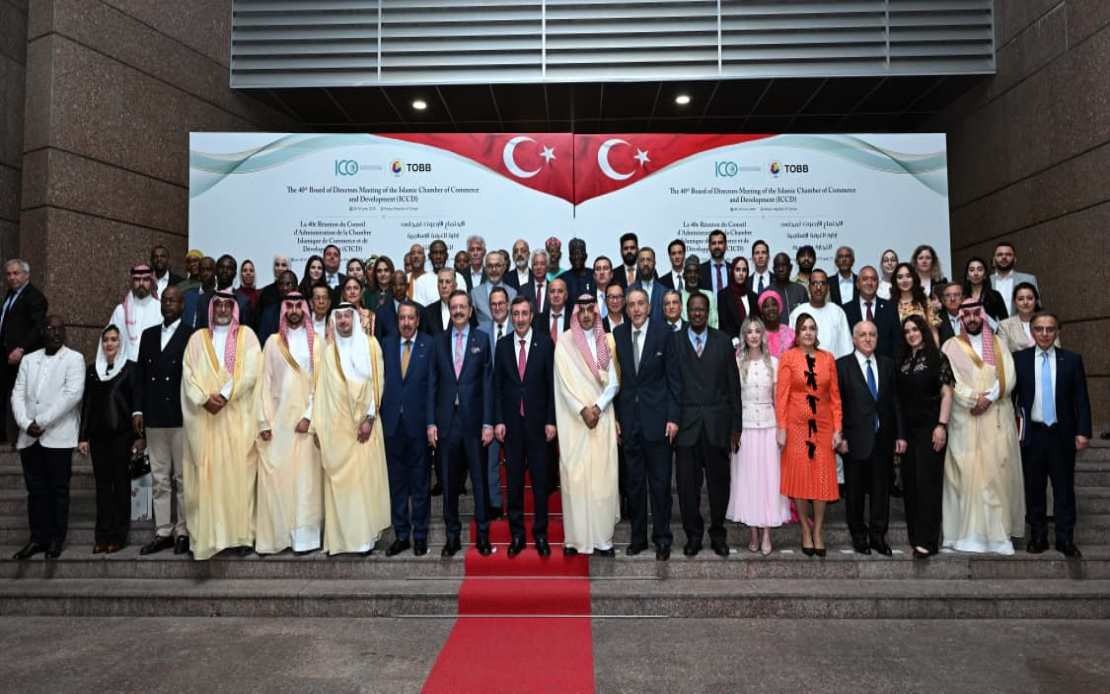
Saudi Arabia has renewed its commitment to deepening economic partnerships with major Muslim-majority nations, singling out Malaysia and Indonesia as key partners in an emerging vision for integrated Islamic commerce. The appeal came from Abdullah Saleh Kamel, who chairs both the Federation of Saudi Chambers and the Islamic Chamber of Commerce and Development, during high-level discussions in Ankara this week.
Kamel's remarks emerged from the 40th Board of Directors Meeting and 72nd Finance Committee Meeting of the ICCD in the Turkish capital, underscoring the importance Saudi Arabia places on the international business federation. The Kingdom's backing of the ICCD since its founding reflects a broader strategic interest in positioning itself as a leading economic force within the Islamic world, an objective that extends well beyond bilateral relationships into a comprehensive network of trade and investment across Muslim economies.
The Saudi initiative carries particular resonance for Malaysia, which has long positioned itself as a bridge between the Islamic world and global commerce. Malaysian policymakers and business leaders have repeatedly emphasized the nation's capacity to serve as a hub for Islamic finance and halal trade, sectors where Malaysia maintains considerable competitive advantage. The inclusion of Malaysia alongside Indonesia in Saudi Arabia's strategic economic roadmap acknowledges both nations' significance as drivers of growth within the broader Muslim-majority economic sphere.
At the heart of the Saudi proposal lies recognition that youth unemployment and entrepreneurial opportunity remain pressing challenges across Islamic nations. Kamel explicitly highlighted youth entrepreneurship as a priority alongside sustainable agriculture, food security, and regional trade connectivity. For Malaysia, where demographic trends favour a relatively young population but job creation in high-value sectors remains uneven, this agenda aligns closely with national development objectives articulated in successive five-year plans and the country's overarching push toward high-income status.
The emphasis on private-sector growth through the ICCD framework differs markedly from traditional state-to-state economic engagement. By channelling cooperation through chambers of commerce and business federations, the approach creates direct pathways between companies across Islamic nations, potentially accelerating deal-making and investment flows without requiring formal government negotiation. This mechanism has proven effective in facilitating regional trade within Southeast Asia, where established business networks often operate independently of government protocols.
Intra-Islamic trade remains substantially underdeveloped relative to both the economic weight of Muslim-majority nations and their potential complementarities. Currently, most Muslim-majority economies conduct the preponderance of their international commerce with non-Muslim partners, suggesting considerable untapped opportunity within the Islamic economic sphere. Malaysia's established expertise in Islamic finance, its network of Islamic banking institutions, and its regulatory framework specifically designed to support halal commerce position the nation to benefit disproportionately from any meaningful expansion of intra-Islamic trade mechanisms.
The ICCD's focus on economic integration carries implications extending beyond commerce into geopolitical realignment. As Western economic dominance faces increased questioning in developing markets, and as regional powers seek alternative frameworks for cooperation, the strengthening of Islamic economic institutions offers participating nations greater strategic autonomy. For Malaysia, deeper integration with other major Muslim economies could reduce economic dependency on traditional Western trade partners while simultaneously diversifying markets and investment sources.
The organisation's planning for its golden jubilee celebration in 2027 suggests sustained ambition and institutional longevity. Rather than merely commemorating past achievements, the ICCD appears intent on using the milestone to launch new initiatives and deepen existing commitments. The timing aligns with planning horizons for Malaysia's own economic diversification strategies, suggesting potential synchronicity between Saudi-backed initiatives and Malaysian development objectives over the coming three years.
Sustainable agriculture and food security, highlighted in Kamel's remarks, deserve particular attention for Malaysian observers. Southeast Asia faces emerging pressures from climate change, demographic growth, and competing land-use demands that threaten long-term agricultural productivity. Regional cooperation on agricultural technology transfer, market integration, and supply-chain development could address these challenges while creating commercial opportunities. Saudi Arabia's experience managing resource scarcity in a demanding environment may offer valuable lessons for Southeast Asian agricultural development.
The broader economic integration that the Saudi leadership envisions requires more than rhetorical commitment. Implementation demands standardized regulatory frameworks, transparent dispute-resolution mechanisms, and substantially reduced trade barriers among participating nations. For Malaysia, this presents both opportunity and challenge. The country's relatively open economy and sophisticated regulatory institutions position it well to benefit, yet deeper integration also exposes domestic producers to increased competition from other Muslim-majority nations.
Regional trade connectivity, explicitly mentioned as a development priority, touches on infrastructure investment and logistics optimization. Malaysia's position as a major transit hub for Southeast Asian commerce gives it advantages in implementing connectivity initiatives, yet also creates incentives for other regional competitors. How Malaysian policymakers navigate this balance—leveraging comparative advantage while maintaining competitiveness—will substantially influence the nation's capacity to capture benefits from expanded Islamic economic cooperation.
The Federation of Saudi Chambers' participation in these discussions signals that Saudi Arabia views business-sector engagement as essential to deepening ties with Muslim economies. This approach recognizes that sustainable economic relationships rest ultimately on commercial viability rather than government fiat. For Malaysian enterprises, the implication is straightforward: expansion of trade and investment opportunities with Saudi Arabia and other Islamic economies depends on demonstrating competitive advantage and commercial reliability within integrated supply chains and market frameworks.

