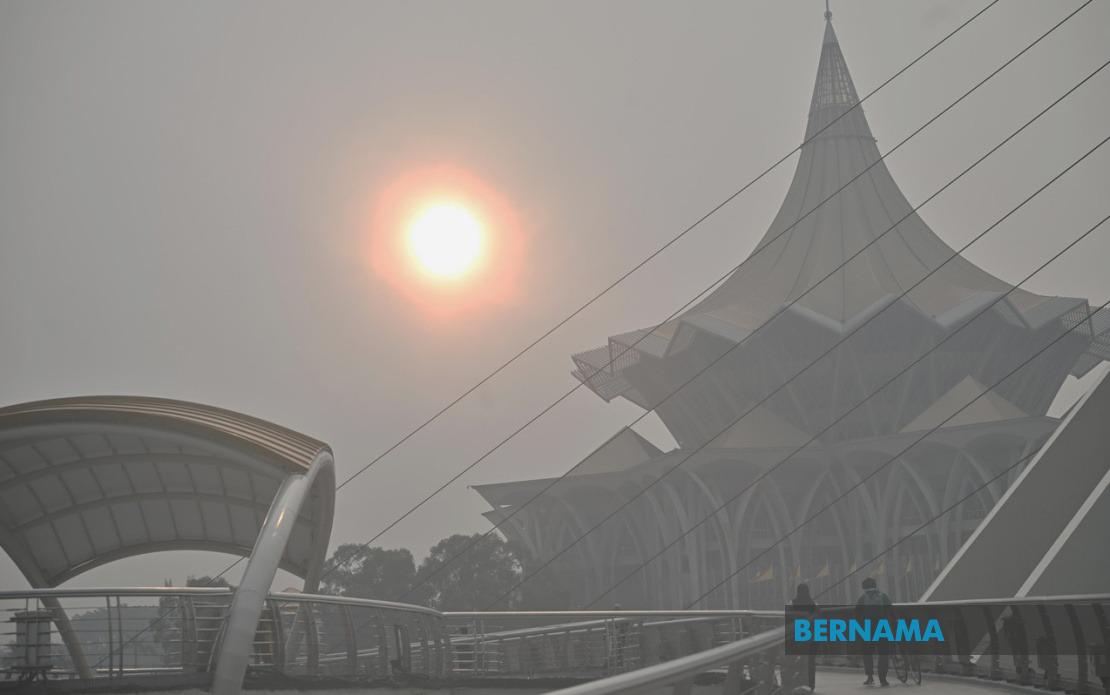
Childcare centres across Sarawak face immediate closure once air pollution levels spike to the very unhealthy threshold of 200 on the Air Pollutant Index, according to guidelines endorsed by the state's disaster management authorities. Women, Family and Community Development Minister Datuk Seri Nancy Shukri confirmed the protocol during a media briefing in Kuching, emphasizing that the action reflects a commitment to safeguarding young children from the respiratory and developmental threats posed by severe haze conditions.
The Sarawak Disaster Management Committee formally announced this closure directive on August 12, aligning childcare facilities with broader institutional shutdown measures that also encompass schools and kindergartens. Under this unified approach, the decision to implement closures falls within the purview of the Sarawak Education Department director, ensuring consistency across the education and early childhood care sectors. The framework itself derives from Malaysia's National Haze Action Plan, which establishes air quality thresholds as triggers for protective interventions affecting vulnerable populations.
Nancy emphasized that the health implications of haze exposure for children represent the primary motivation behind such preventative measures. Young children's developing respiratory systems and their typically higher activity levels during outdoor play make them particularly susceptible to air quality deterioration. Beyond immediate physical health concerns, prolonged exposure to hazardous air quality can trigger broader developmental complications and chronic respiratory issues that extend well beyond the period of acute pollution episodes. The minister's framing of the issue centered on preventing both direct health damage and the consequential disruptions haze-induced closures impose on family arrangements.
The geographic scope of this policy currently remains bounded to Sarawak, though Nancy indicated potential expansion should atmospheric conditions deteriorate significantly across other Malaysian states. Any future implementation in additional jurisdictions would follow analogous protocols, with respective state governments and relevant environmental authorities determining timing and scope of closures. This decentralized approach acknowledges the variation in air quality patterns across Malaysia's diverse geography and the need for localized decision-making authority. The minister cautioned that any proliferation of such measures would operate under transparent official directives from state administrations to minimize public confusion regarding enforcement and duration.
The implementation of childcare centre closures creates practical challenges for working parents who depend on these facilities for childminding while pursuing employment. Nancy acknowledged this tension but clarified that responsibility for addressing parental concerns and managing disruption falls primarily to state governments operating under their constitutionally defined jurisdiction over educational and childcare matters. This delineation of responsibility reflects Malaysia's federal structure, which reserves certain policy domains to the state level. However, the absence of coordinated childcare contingency planning—such as emergency leave provisions or alternative supervision arrangements—suggests a gap between policy implementation and practical family support mechanisms.
The Air Pollutant Index framework that triggers these closures reflects graduated risk categories, with 200 marking the transition into very unhealthy territory. At this level, air quality poses substantial health risks even to generally healthy populations, making it an appropriate threshold for shuttering facilities where vulnerable young children congregate indoors with limited ability to self-advocate regarding their health concerns. The decision to set the closure trigger at 200 rather than 150 (the "unhealthy" classification) represents a more conservative approach, accepting some exposure risk to minimize disruption while maintaining a clear safety boundary.
Sarawak's vulnerability to haze episodes derives from its geographic proximity to major peatland areas in neighboring Kalimantan, Indonesia, where agricultural burning and uncontrolled fires generate substantial transboundary smoke. During peak fire seasons, particularly in August and September, the state experiences recurrent episodes of hazardous air quality that can persist for weeks. Previous years have witnessed multiple instances where schools and public facilities shut down due to API readings exceeding critical thresholds. This pattern of recurrence makes the formalization of closure protocols a practical necessity rather than merely theoretical precaution.
The policy's emphasis on immediate implementation upon reaching the 200 threshold reflects recognition that air quality deterioration can occur rapidly and unpredictably during haze events. Rather than implementing gradual restrictions based on trending data, the approach prioritizes swift protective action once a specific hazard level materializes. This binary decision-making structure simplifies administrative procedures and eliminates uncertainty about when facilities must close, though it also prevents more nuanced responses that might allow partial operations under controlled conditions.
For childcare operators, the closure directive introduces operational and financial uncertainty, as facilities generating no revenue during mandatory closure periods face ongoing fixed costs including staff compensation and facility maintenance. Some childcare operators may offset these losses through alternative service arrangements or modified operations, but the policy framework as articulated does not address such contingencies explicitly. The concentration of closure authority within education department directorates similarly excludes private childcare sector stakeholders from policy development, potentially creating blind spots regarding implementation practicality.
The broader Malaysian context includes the country's recurring struggles with transboundary haze and the corresponding absence of comprehensive regional enforcement mechanisms to prevent fires in neighboring jurisdictions. While domestic air quality response protocols like Sarawak's closure directive represent reasonable protective measures for citizens within Malaysia's borders, they address consequences rather than root causes. The persistence of recurring haze episodes affecting Malaysian populations underscores the need for sustained diplomatic and cooperative environmental management frameworks with Indonesia, particularly regarding peatland protection and fire prevention in Kalimantan.
Looking forward, the Sarawak government may consider supplementary measures to address the childcare service disruption problem, such as establishing emergency alternative supervision arrangements, providing emergency leave allowances to working parents during closure periods, or implementing government-subsidized childcare coverage during haze episodes. Such complementary policies would acknowledge that closure directives, while protecting individual child health, create genuine hardship for working families lacking alternatives. The experience of managing repeated haze-related closures provides a foundation for developing more comprehensive, family-centered responses that protect both children's immediate wellbeing and parents' economic stability.

