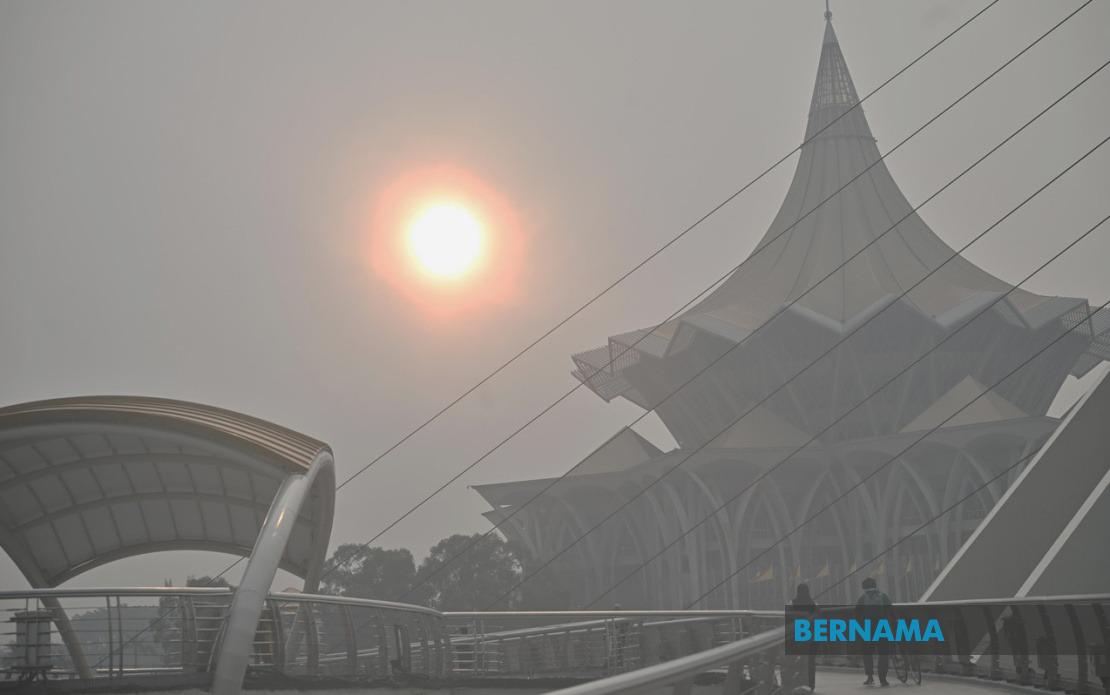
The Sarawak Education Department has instructed nearly 600 schools to shut their doors for two consecutive days as the state grapples with an intensifying spell of oppressive heat and critically low humidity levels. The temporary closure, which commenced in August, encompasses 509 primary institutions serving 107,590 children and 82 secondary schools with 89,733 students spread across ten District Education Offices, representing a significant disruption to classroom instruction affecting roughly 197,000 young learners across the state.
The geographical spread of affected schools underscores the widespread nature of Sarawak's climatic stress. The ten impacted districts—Kuching, Padawan, Bau, Lundu, Samarahan, Simunjan, Serian, Sri Aman, Lubok Antu and Betong—paint a picture of a state experiencing synchronized environmental pressure from the coast to the interior. This coordinated closure decision reflects mounting recognition among policymakers that heat-related public health risks, particularly for vulnerable school-age populations, warrant preventative intervention rather than reactive crisis management.
Beyond the immediate concerns of student comfort and heat exhaustion, the underlying meteorological situation presents more sinister dimensions for Sarawak's ecological future. The Sarawak State Disaster Management Committee has intensified its surveillance protocols, acknowledging that sustained high temperatures coupled with abnormally low precipitation create a tinderbox environment where forest and peatland fires become increasingly probable. Peatlands, which store vast quantities of carbon and regulate regional water cycles, face particular vulnerability during such episodes, potentially triggering cascading environmental damage affecting populations far beyond Sarawak's borders.
Air quality readings across the state have deteriorated to hazardous levels, with nine locations registering unhealthy Air Pollutant Index values as of early afternoon measurements. Kuching recorded 191 API points, while Serian peaked at 195, Lundu reached 180, Lubok Antu and Kuching both hit 191, Samarahan showed 175, Sri Aman registered 178, Sarikei measured 154, and Sibu indicated 108. These figures suggest that atmospheric conditions are already degraded, likely from agricultural burning practices, industrial emissions concentration during stagnant air masses, or dust mobilisation in the absence of moisture to settle particulates.
The decision to close schools represents a pragmatic acknowledgment of heat stress consequences that extend beyond simple discomfort. High temperatures impair cognitive function, reduce concentration span, and exacerbate existing respiratory conditions—considerations that render normal classroom operations inadvisable when thermal conditions peak. For students with asthma or other respiratory vulnerabilities, air quality indices in the unhealthy range pose genuine medical risks that justify precautionary measures.
Water supply pressures compound the environmental picture, adding another dimension to official concern. The combination of elevated evaporation rates, reduced precipitation recharge, and sustained demand on municipal and agricultural water systems creates potential shortages that could impact everything from household consumption to irrigation for food production. Sarawak, despite its reputation for abundant rainfall, can experience acute water stress when precipitation patterns shift decisively, particularly affecting populations dependent on reservoir systems designed around historical hydrological norms.
The state's disaster management apparatus has escalated preventative and preparatory protocols in high-risk areas, implementing enhanced monitoring regimes for potential fire ignition sources, conducting community outreach regarding fire safety protocols, and positioning emergency response resources strategically across vulnerable zones. This multi-layered approach recognises that merely closing schools addresses only one symptom of a more comprehensive environmental emergency demanding coordinated governmental response across multiple agencies and jurisdictions.
For Malaysian policymakers and environmental observers, Sarawak's current crisis offers instructive lessons about climate variability's real-world impacts on institutional operations and public welfare. While individual weather episodes resist definitive attribution to long-term climate change trends, the frequency and intensity of such extreme conditions have prompted serious scientific and policy discussions about whether Southeast Asia's monsoon patterns are undergoing sustained alteration. Malaysia's equatorial and tropical location renders it susceptible to rainfall pattern disruptions that could ultimately affect agricultural productivity, water security, and public health across the peninsula and East Malaysia alike.
The closure decision also raises questions about the preparedness of educational facilities and emergency response systems for climate-related disruptions. As extreme weather events become increasingly common across the region, schools may require enhanced infrastructure—improved ventilation systems, emergency cooling protocols, and integrated air quality monitoring—to maintain educational continuity while safeguarding student welfare during adverse atmospheric conditions.
Sarawak's experience underscores the interconnectedness of environmental factors shaping modern governance challenges. Heat waves, air quality degradation, fire risk elevation, and water supply pressures do not operate independently but rather reinforce one another through complex feedback mechanisms. Addressing such compound crises demands integrated policy approaches that transcend traditional sectoral boundaries, requiring cooperation among education, environmental, disaster management, and public health authorities. The school closures, while immediately affecting student schedules, represent merely the visible manifestation of deeper systemic stresses that Sarawak and the broader Southeast Asian region will increasingly confront.

