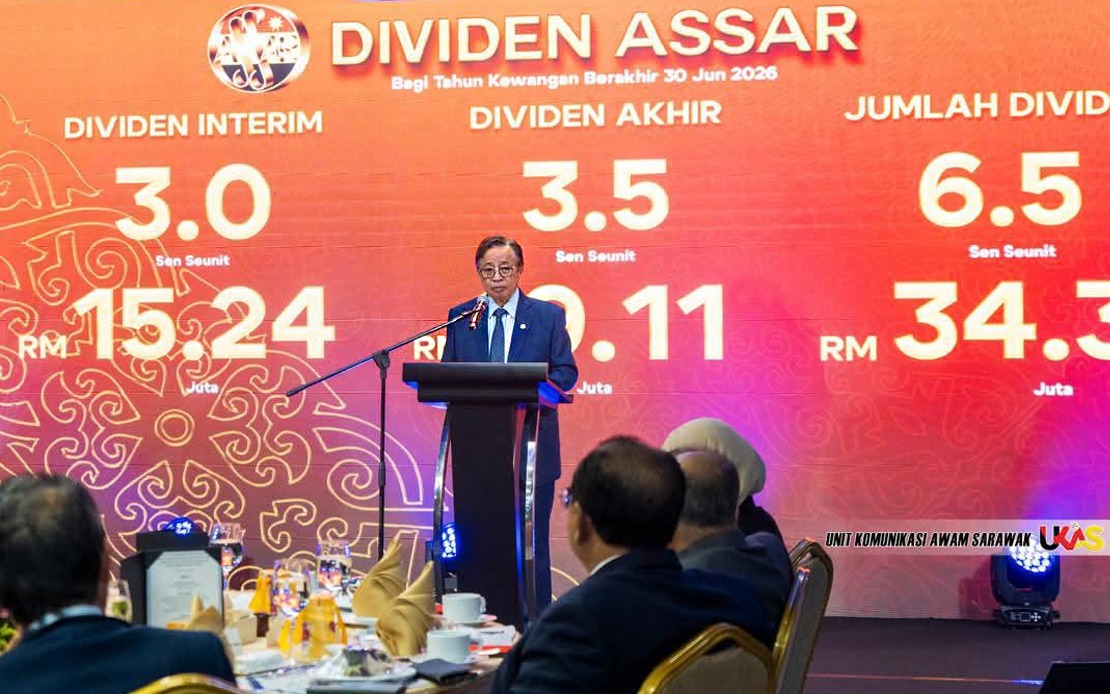
Sarawak's state government is weighing a significant expansion of its Amanah Saham Sarawak (ASSAR) investment platform, potentially opening the scheme to non-Bumiputera residents through a parallel fund structure. Premier Tan Sri Abang Johari Tun Openg revealed the initiative at the ASSAR dividend announcement ceremony for the financial year ending June 30, 2026, signalling a shift towards broader wealth-sharing mechanisms within the state's investment ecosystem.
The proposed new fund, tentatively called ASSAR 2, would operate alongside the existing ASSAR structure while maintaining separate identities suited to their respective investor bases. This two-track approach reflects growing recognition that inclusive economic participation can strengthen both individual wealth accumulation and state-level capital formation. The expansion requires careful review by the ASSAR board and management team to ensure the initiative meets regulatory standards and operational requirements before proceeding to implementation.
Abang Johari indicated that the state government would examine models already in use by established investment vehicles such as Permodalan Nasional Berhad (PNB), drawing on their experience managing funds across different investor categories. PNB's track record in managing Amanah Saham Nasional (ASN) and other public investment schemes offers valuable blueprints for structuring ASSAR 2 effectively. This benchmarking approach demonstrates a pragmatic intent to avoid reinventing established systems while tailoring them to Sarawak's specific economic and demographic context.
Currently, ASSAR operates exclusively for the Bumiputera community, reflecting historical policies designed to build wealth among indigenous and Malay populations. The investment scheme has proven effective in channelling savings and creating accessible pathways to equity participation for Bumiputera Sarawakians. However, the proposed expansion suggests the state government recognizes that excluding non-Bumiputera residents from similar investment opportunities may represent untapped potential for aggregate capital mobilization and economic inclusion.
Abang Johari framed the initiative within the broader context of the Sarawak government's commitment to inclusive economic development. By widening access to state investment vehicles, the government aims to ensure that prosperity from economic growth benefits a larger cross-section of the population. This approach acknowledges that sustained state development requires harnessing the productive capacity and financial participation of all communities within Sarawak, regardless of ethnic or indigenous classification.
The timing of this proposal aligns with robust growth in Sarawak's economy, creating conditions favourable for expanding investment participation. With the state economy performing well, attracting additional domestic capital through ASSAR 2 could amplify available funds for state-level investments while providing non-Bumiputera investors with accessible, government-backed savings mechanisms. This dual benefit—increased capital pools and broader wealth-building opportunities—underpins the government's rationale for the expansion.
The financial implications for Sarawak could be substantial. By opening participation to the non-Bumiputera population, ASSAR 2 could accumulate significant additional funds for deployment across state infrastructure, business development, and economic initiatives. Greater capital availability would enhance the state government's flexibility in funding priority projects while reducing dependency on federal allocations or external borrowing. For individual investors, ASSAR 2 would provide a familiar, professionally managed savings vehicle with historical returns comparable to ASSAR.
Implementing ASSAR 2 would also address long-standing concerns about equitable access to wealth-building instruments. While affirmative action policies targeting Bumiputera populations remain important, creating parallel structures for non-Bumiputera residents demonstrates recognition that inclusive growth strengthens overall economic resilience. This approach avoids dismantling existing Bumiputera protections while expanding opportunity—a delicate balance that requires careful policy design and transparent communication.
The proposal carries implications beyond Sarawak. As Southeast Asia's states and countries grapple with balancing targeted economic support with broader inclusion, Sarawak's experience may offer lessons for managing multi-community investment frameworks. Other Malaysian states facing similar demographic compositions might consider analogous structures if ASSAR 2 demonstrates operational success and delivers promised benefits to participants.
Board and management review will be crucial in determining feasibility and structuring details. Key considerations include separate fund management, distinct dividend mechanisms, investment mandates tailored to each investor base, and governance arrangements that protect both schemes' integrity. The review process also provides opportunity to assess tax implications, regulatory compliance requirements, and administrative costs associated with operating dual structures.
Abang Johari's announcement reflects strategic thinking about Sarawak's economic future. Rather than viewing inclusive investment access as incompatible with Bumiputera-focused policies, the government presents them as complementary approaches serving distinct but equally important objectives. This framework potentially appeals to diverse constituencies—strengthening Bumiputera wealth-building while extending opportunity to other communities.
The proposal's success ultimately depends on whether ASSAR 2 attracts sufficient participation and delivers competitive returns. Market conditions, investment performance, and public confidence in government-backed schemes will determine uptake among non-Bumiputera investors. If implemented effectively, ASSAR 2 could become a model for inclusive state investment policies that balance equity objectives with inclusive economic development.

