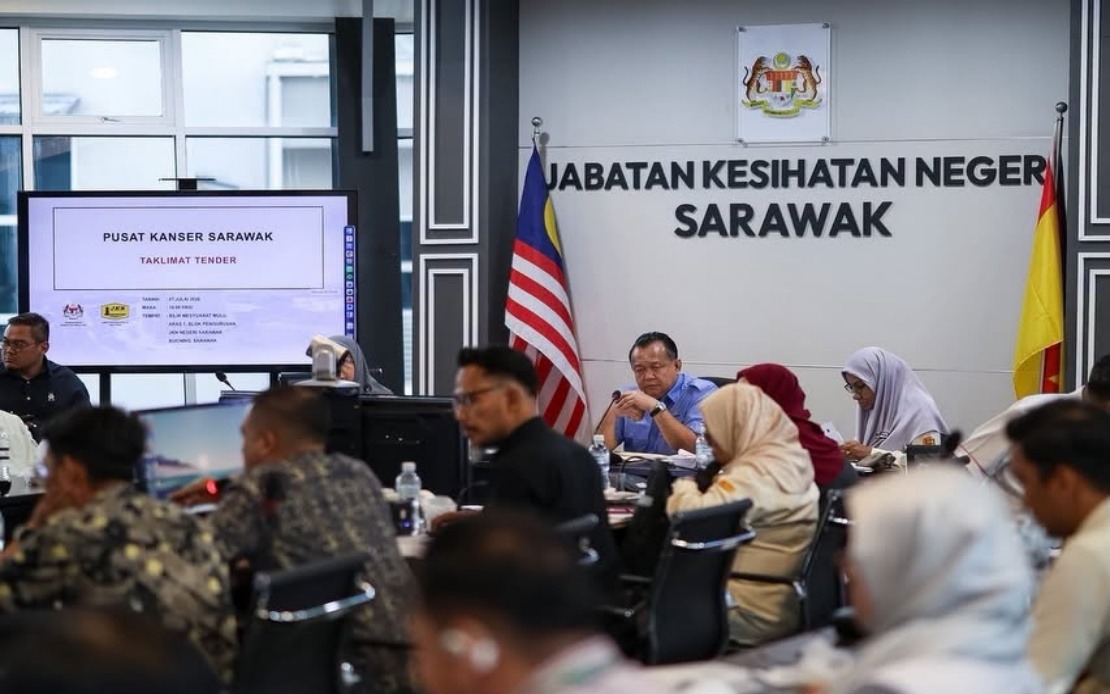
Construction of Sarawak's ambitious RM1 billion Cancer Centre in Kota Samarahan is expected to commence in January 2027, following the formal issuance of a Letter of Acceptance to the winning contractor, according to Works Minister Datuk Seri Alexander Nanta Linggi. The declaration underscores the state government's commitment to expanding its healthcare infrastructure and addressing cancer treatment capacity in a region where such specialist services remain limited.
The project is currently navigating the design-and-build procurement process, a delivery model increasingly favoured by Malaysian public authorities for large infrastructure ventures. Ten construction firms have already cleared the pre-qualification stage, a competitive filtering mechanism that assesses bidders' financial capacity, technical expertise, track record, and safety compliance. These pre-qualified contractors attended a comprehensive project briefing to digest technical requirements and specifications before formulating their financial and technical proposals.
The tendering timeline reflects a structured approach to acquiring proposals. Contractors will have approximately three months to develop detailed submissions that balance technical innovation with cost efficiency. This window allows bidders sufficient time to engage specialist consultants, refine designs within Health Ministry guidelines, and prepare realistic construction schedules and resource allocations. Once all proposals are received, the evaluation phase will commence, involving detailed assessment of design quality, buildability, project management methodology, and financial viability.
Nanta outlined an ambitious but achievable completion framework during his site visit. The successful contractor will shoulder responsibility for both design and construction phases, completing all work within 60 months, or five years. Beyond construction, a two-year Defects Liability Period will follow, during which the contractor remains accountable for addressing any structural or technical deficiencies that emerge. This extended quality assurance phase is standard practice in major healthcare facility development, ensuring the building performs to specification before final handover to the Sarawak Health Department.
The facility itself represents a significant upgrade to Sarawak's oncology services. The 310-bed cancer centre will occupy a 10.9-hectare site adjacent to the existing Sarawak Heart Centre in Kota Samarahan, creating a concentrated medical precinct that leverages shared infrastructure and clinical expertise. The dual facility approach enables resource efficiency whilst establishing Sarawak as a regional cancer treatment hub, potentially attracting patients from neighbouring jurisdictions within Borneo.
Operational scope encompasses both ambulatory and inpatient services, reflecting modern cancer care delivery models that emphasise outpatient chemotherapy and radiotherapy wherever appropriate. This mixed-service configuration allows the centre to manage acute cancer admissions whilst simultaneously serving patients requiring intensive day treatments or monitoring. The outpatient capacity is particularly valuable for a state with dispersed population centres, reducing travel burden for patients requiring frequent monitoring or treatment cycles.
Design specifications must satisfy stringent Health Ministry requirements whilst incorporating contemporary architectural and clinical best practices. Modern cancer centres increasingly integrate patient support spaces, family accommodation, research facilities, and simulation laboratories alongside clinical treatment areas. The design-build procurement model empowers contractors to propose innovative solutions meeting these requirements, potentially yielding better outcomes than rigid traditional design specifications.
Financial arrangements reflect a pragmatic approach to state budget management. The Sarawak government has earmarked RM1 billion for the project, with reimbursement mechanisms to be agreed through established channels. This allocation mechanism suggests coordination with federal authorities, likely involving development grants or infrastructure financing arrangements. The actual project cost is anticipated to exceed the allocated RM1 billion, reflecting the complexity and specification demands of modern specialized healthcare facilities. Cost overruns in comparable projects regionally are not uncommon, necessitating contingency planning and phased implementation strategies if financial constraints materialise.
The Kota Samarahan location, approximately 30 kilometres south of Kuching, positions the cancer centre within the state capital's expanded metropolitan area. Accessibility remains a critical consideration for cancer patients, particularly those requiring regular treatment cycles over extended periods. The proximity to Kuching's airport, accommodations, and other supporting infrastructure enhances the site's strategic value for patients travelling from rural Sarawak or neighbouring Malaysian states.
This project carries significance beyond Sarawak's borders. Malaysia's broader healthcare development strategy increasingly emphasises strengthening state-level capacity in specialized fields, reducing patient referral burden to Peninsular Malaysia. A world-class cancer centre in Sarawak could establish the state as a medical tourism destination, complementing Kuching's growing reputation as a convention and wellness tourism hub.
The January 2027 commencement timeline aligns with medium-term state development planning cycles. Early 2027 construction start enables potential service commencement by 2032-2033, positioning the facility within Sarawak's development roadmap. This timeframe also allows sufficient lead time for clinical training programmes, equipment procurement, and operational framework development before opening.
The transparent disclosure of project parameters—bed capacity, site dimensions, cost estimates, and timelines—reflects improving governance standards in major public procurement. Regular stakeholder communications throughout the tender and construction phases will be essential for managing community expectations and addressing local concerns regarding environmental impact, construction traffic, and eventual healthcare service delivery.
As Malaysia's healthcare system faces mounting demand from an ageing population and rising cancer incidence rates, distributed regional capacity development becomes strategically important. Sarawak's cancer centre represents a substantial commitment to equitable healthcare access, acknowledging that quality cancer care should not remain concentrated in Peninsular urban centres.

