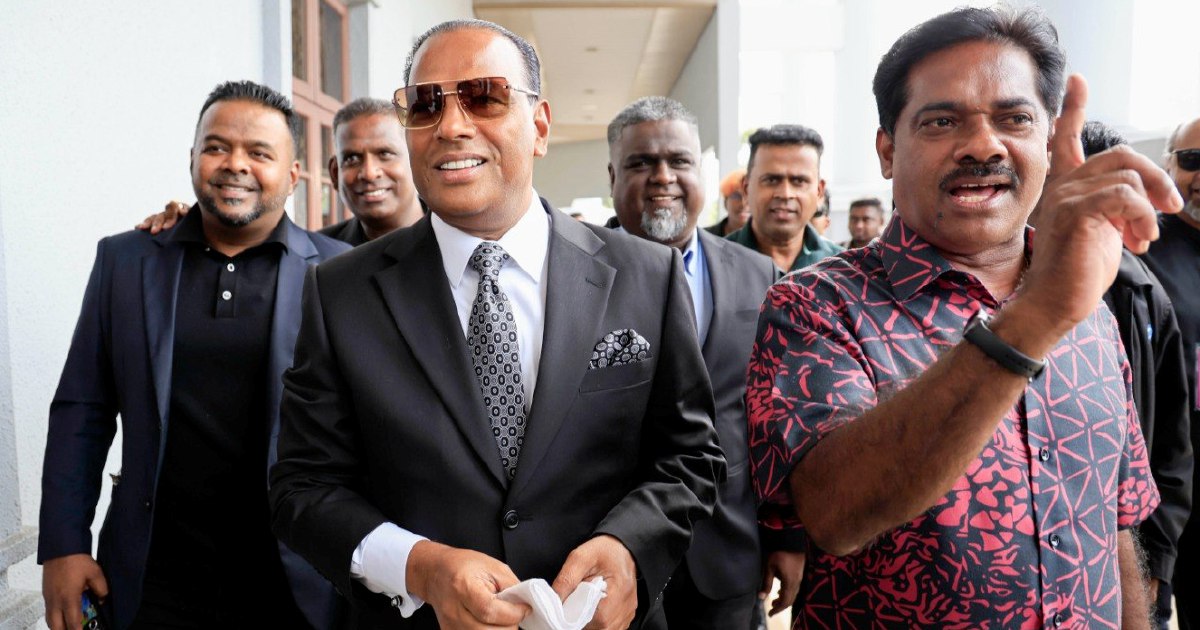
Datuk Seri M. Saravanan, who previously held the portfolio of Human Resources minister, has strongly rejected three separate charges of accepting bribes totalling RM1.097 million, dismissing the allegations as what he terms a "wild accusation." The former minister's categorical denial represents his initial public response to the legal action, setting the stage for what appears to be a protracted legal contest over the charges brought against him.
The specificity of the amount—RM1.097 million—suggests a detailed investigation and documentation of alleged financial transactions. Such precision in financial allegations typically indicates that authorities believe they have traced particular transactions or payments, though the exact nature of these alleged bribes and the purported recipients or circumstances remain central points of contention.
Saravanan's characterization of the charges as "wild" carries a particular rhetorical weight in the Malaysian political and legal landscape. By using this language, he is attempting to frame the accusations as not merely incorrect but as fundamentally baseless and perhaps even malicious. This framing often accompanies high-profile corruption cases involving public figures, where the accused frequently challenge both the evidence and the motivations behind the prosecution.
The involvement of a former minister in corruption allegations continues a pattern seen in Malaysian politics and administration where individuals who once held significant executive power subsequently face legal scrutiny. The Human Resources ministry handles crucial portfolios including worker welfare, employment standards, and labour relations, making the credibility of individuals in this position particularly sensitive for public confidence in government institutions.
The number of charges—three distinct counts—indicates that prosecutors believe they have identified multiple separate incidents of alleged bribery rather than a single transaction. This multiplicity can affect the severity of potential penalties if a conviction were to occur, as courts may consider it evidence of a pattern of behavior rather than isolated lapses in judgment.
Corruption allegations at the ministerial level carry significant implications beyond the individual concerned. They affect public perception of institutional integrity and can influence how citizens regard government transparency and accountability mechanisms. In Malaysia's context, where anti-corruption efforts have gained prominence through the Malaysian Anti-Corruption Commission and related agencies, high-profile cases involving former office-holders attract substantial public attention and scrutiny.
The alleged bribery amount of RM1.097 million represents a substantial sum in the Malaysian context, suggesting transactions of considerable economic significance. Such figures typically point to business dealings, procurement matters, or other administrative decisions where substantial financial stakes could provide motivation for illicit payments.
Saravanan's defence strategy of flat denial is a common initial approach in corruption cases, though the ultimate outcome will likely depend on evidence presented during trial proceedings. The credibility of witnesses, documentation of transactions, and testimony from individuals allegedly involved in these payments will become critical in determining the case's trajectory.
For Malaysian observers and regional analysts monitoring governance standards in Southeast Asia, such cases serve as important indicators of whether institutional accountability mechanisms are functioning effectively. The manner in which authorities investigate, prosecute, and adjudicate corruption charges involving former high-ranking officials can influence confidence in the independence and impartiality of Malaysia's legal system.
The timing and circumstances surrounding the charges against Saravanan may also be subject to interpretation by various political and civil society stakeholders. In contexts where governance questions intersect with political dynamics, understanding the full investigative background becomes important for assessing the legitimacy and independence of enforcement actions.
The case will likely proceed through Malaysia's court system, where the burden of proof rests with prosecutors to establish guilt beyond reasonable doubt. Saravanan's defence will presumably present counter-evidence and challenge the prosecution's narrative during trial hearings. The evidentiary stage will be crucial in determining whether the allegations can be substantiated or whether, as Saravanan suggests, they prove unfounded.
Beyond the immediate legal proceedings, this case underscores broader questions about corporate governance, public accountability, and the mechanisms through which Malaysia addresses allegations of high-level corruption. The eventual outcome may carry implications for how similar cases are pursued and what standards of evidence are required to establish bribery charges involving public officials.
As the case unfolds, attention will likely focus on the specific evidence prosecutors present, the defence's counter-arguments, and the judiciary's interpretation of applicable laws. For the wider Malaysian public and international observers of Southeast Asian governance, the proceedings will offer insights into how the country's institutions respond to corruption allegations at senior levels of administration.

