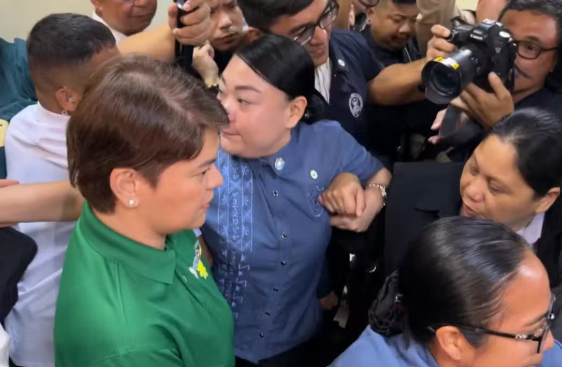
The impeachment trial of Philippine Vice President Sara Duterte entered a new phase on Tuesday as she arrived at the Senate for meetings with her legal team, reaffirming her combative stance toward the proceedings with rhetoric evoking William Ernest Henley's famous poem about perseverance in adversity. Speaking briefly to reporters upon her arrival, Duterte declared that "in this bloodbath and bludgeoning, I will be bloodied but unbowed," a phrase that directly echoes the 19th-century work "Invictus" and its central theme of refusing defeat despite overwhelming hardship. The statement underscores her determination to contest the charges she faces, even as the trial promises to consume much of the Philippine political calendar through early 2027.
Duterte's latest invocation of the "bloodbath" metaphor represents a continuation of language she first employed publicly in May 2025, when she indicated a willingness—even eagerness—to proceed with the impeachment process. That earlier statement puzzled many observers and drew sharp criticism from her political opponents, who noted the apparent contradiction between her stated acceptance of the trial and her subsequent absence from much of the House proceedings that preceded the Senate phase. Her spotty attendance at the impeachment hearings in both 2025 and 2026 led critics to question her sincerity in embracing the trial framework, a tension that her latest remarks do nothing to resolve.
The charges against Duterte span four distinct Articles of Impeachment, each carrying potentially severe consequences including removal from office and permanent disqualification from holding public position. The first article alleges misappropriation of substantial sums from two government sources: P612.5 million in confidential funds from the Office of the Vice President itself, combined with P112.5 million from the Department of Education, totalling approximately P725 million in questioned expenditures. Such allegations of large-scale financial irregularities form the factual foundation of the most serious charges and carry implications for how public resources are managed at the highest levels of government.
Article II shifts focus to personal financial accountability, charging Duterte with failure to accurately declare her assets in official Statements of Assets, Liabilities and Net Worth across the 2022 to 2024 period, combined with allegations of unexplained wealth accumulation and refusal to divest from business interests despite conflict-of-interest concerns. These charges target the transparency and ethical standards expected of senior government officials, matters that resonate beyond the Philippines as regional governments grapple with strengthening anti-corruption frameworks. The allegations suggest a pattern of non-compliance with disclosure requirements rather than isolated administrative oversights.
Article III introduces procurement-related misconduct, specifically implicating Department of Education officials in alleged bribery arrangements and irregular bidding processes. This article potentially extends accountability beyond the Vice President herself to other government actors, raising questions about institutional safeguards within the education bureaucracy. The involvement of the DepEd, which oversees the nation's largest public agency managing resources for millions of students, amplifies concerns about the reach and impact of any misconduct.
Perhaps the most serious charge appears in Article IV, which alleges that Duterte made threats against the life of President Ferdinand Marcos Jr., his wife Liza Araneta-Marcos, and former House Speaker Martin Romualdez. While less detailed in the public record, assassination threats directed at the head of state represent an extraordinary escalation in political confrontation and strike at the foundation of constitutional governance. The inclusion of this charge signals that the impeachment proceedings involve more than policy disagreements or administrative disputes.
The structural framework governing the trial reflects constitutional provisions designed to ensure due process while maintaining high standards for conviction. Under the 1987 Philippine Constitution, conviction requires the affirmative votes of at least two-thirds of all senator-judges hearing the case, a threshold that demands substantial consensus rather than bare majorities. This supermajority requirement means that Duterte's defence needs to persuade only enough senators to prevent the two-thirds threshold from being reached, a more mathematically achievable objective than securing outright acquittal.
The projected 92-day duration of the trial carries implications for Philippine governance extending well into 2027, effectively consuming significant Senate floor time during a critical period of the Marcos administration's midterm. The temporal stretch of impeachment proceedings at this scale inevitably affects legislative productivity and political attention, potentially delaying other government initiatives and budgetary matters requiring Senate approval. For regional observers, the trial demonstrates how constitutional mechanisms for accountability in presidential systems can create extended periods of political tension and institutional distraction.
Duterte's choice of language—invoking literary imagery of resilience rather than conventional legal arguments—suggests a political rather than narrowly juridical approach to her defence. The reference to "Invictus," with its famous lines about unconquerable spirits regardless of circumstance, frames her legal jeopardy as a test of personal fortitude rather than a question of factual guilt or innocence. This rhetorical strategy may resonate with her political base but may prove less persuasive to senator-judges evaluating documentary evidence and testimony regarding the specific allegations.
The impeachment trial unfolds amid broader questions about institutional checks on executive power in Southeast Asia, where concerns about presidential accountability remain salient across the region. The Philippines' willingness to pursue impeachment of a sitting Vice President demonstrates the strength of its constitutional framework, though observers note that the trial's ultimate outcome will significantly influence the precedent for future accountability measures. Should conviction succeed, it would underscore the viability of impeachment as a genuine constraint on executive excess; conversely, acquittal might suggest vulnerability in the mechanism itself.
As proceedings continue, Duterte's insistence on her eventual vindication despite the "bludgeoning" she anticipates reflects her assessment that political and legal circumstances favour her survival in office. Her confidence may rest partly on the mathematical realities of Senate composition and the two-thirds requirement, or it may reflect private communications with senator-judges regarding their likely votes. The weeks and months ahead will test whether her defiant rhetoric translates into favourable outcomes when senators formally vote on the articles against her.

