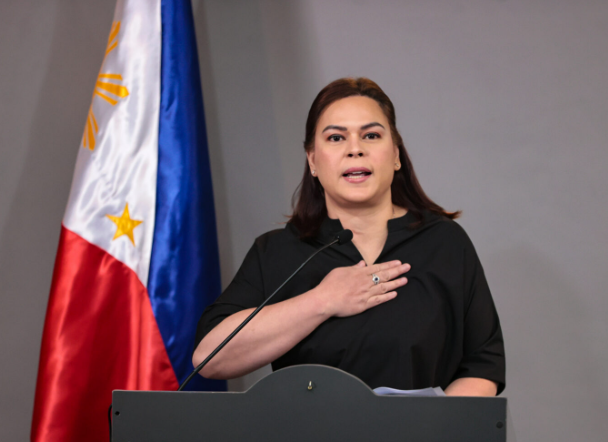
Vice President Sara Duterte has escalated her public criticism of President Ferdinand Marcos Jr.'s government, characterizing the tens of thousands who assembled along Epifanio de los Santos Avenue as evidence of mounting national discontent. Speaking on Tuesday, June 30, she framed the gathering as a manifestation of what she termed a "growing sentiment" that has been building since early 2024, positioning herself as a consistent voice articulating concerns shared across Filipino society. This intervention places the vice president directly at odds with the administration's narrative and suggests a widening fissure between the two highest officials in the land.
The immediate trigger for Duterte's comments was a mass gathering by members of the Iglesia ni Cristo, a major Filipino religious organisation with substantial political influence. The INC group voiced opposition to what they characterised as selective application of the justice system and the distortion of legal processes, specifically in relation to a plunder complaint filed against Senator Rodante Marcoleta. Their presence on Edsa—the iconic avenue synonymous with Filipino political mobilisation and democratic expression—carries symbolic weight that extends beyond the immediate grievance, signalling broader apprehension about the direction of governance and institutional integrity.
Duterte's assessment of the Marcos administration centres on a critique of executive competence across multiple dimensions of national concern. She identified poor governance as the defining characteristic of the current administration and highlighted its perceived inability to grapple effectively with the country's most pressing challenges. This framing shifts debate away from partisan politics toward questions of governmental effectiveness, a rhetorical strategy that may resonate with ordinary citizens struggling with everyday economic pressures.
Economic hardship emerged as a central theme in Duterte's indictment of current government performance. She pointed to the lived experiences of Filipinos confronting accelerating inflation, precarious employment conditions, and the mounting expense of basic necessities. Rather than acknowledging systemic pressures or international economic factors, Duterte attributed these difficulties to administrative failure, suggesting that effective leadership could mitigate widespread suffering. This emphasis on material conditions rather than ideological differences makes her critique potentially more persuasive to economically stressed voters.
Beyond economic performance, Duterte articulated a more fundamental concern regarding democratic governance and institutional health. She contended that the Marcos administration has responded to criticism not through substantive policy adjustments but through the suppression of dissenting voices. Those questioning alleged corruption within the presidential palace, evaluating administrative performance, or raising concerns about presidential conduct face what she characterised as intimidation designed to chill legitimate political discourse. This accusation strikes at the core of democratic legitimacy and institutional trust.
The vice president expanded her critique to encompass what she portrayed as a pattern of governmental hostility toward free expression. She argued that criticism of government actions, questioning of administrative decisions, and allegations directed at the president have been met with pressure tactics that undermine the democratic space essential to accountable governance. These mechanisms operate under the guise of pursuing accountability, according to Duterte, but function primarily to eliminate inconvenient political voices and suppress scrutiny of executive power.
Duterte framed the underlying issue as transcending conventional partisan competition. She contended that the matter concerns not merely political advantage but rather the integrity and standing of the Philippine state itself. The government's apparent willingness to suppress democratic expression, she suggested, delegitimises the very institutions it is constitutionally bound to protect and preserve. This rhetorical elevation—transforming factional dispute into a question about national character and institutional survival—potentially expands the audience for her message beyond her immediate political supporters.
The accumulation of economic grievance, democratic anxiety, and institutional concern that Duterte articulated reflects structural challenges facing the Marcos administration at the midpoint of his six-year term. With inflation affecting ordinary purchasing power, unemployment concerns persisting despite official statistics, and public perceptions of administrative competence appearing to decline, the government faces a credibility crisis that extends beyond opposition rhetoric. The fact that a major religious organisation felt compelled to mobilise public presence to defend what it characterised as legal principles suggests that institutional trust has eroded beyond the usual opposition constituencies.
Duterte's intervention occurs against the backdrop of her own impeachment by the House of Representatives, initiated over alleged threats against the president and his spouse, unexplained personal wealth accumulation, and claimed misuse of confidential government funds. The Senate Impeachment Court was scheduled to commence her trial on July 6, placing her public attacks on Marcos within a context of mutual institutional conflict. Her willingness to escalate confrontation despite facing serious charges suggests either confidence in political support or calculation that the crisis demands her vocal opposition regardless of personal legal jeopardy.
For Southeast Asian observers, the Philippine situation illustrates the challenges facing regional democracies when tension between executive and legislative branches intensifies. The deployment of impeachment as a political weapon, the role of religious organisations in mobilising political expression, and the underlying economic pressures driving public discontent reflect patterns visible elsewhere in the region. The question of whether democratic institutions can manage such conflicts through constitutional means or whether they will devolve into mutual recrimination remains unresolved, with implications extending beyond Manila to regional democratic stability.

