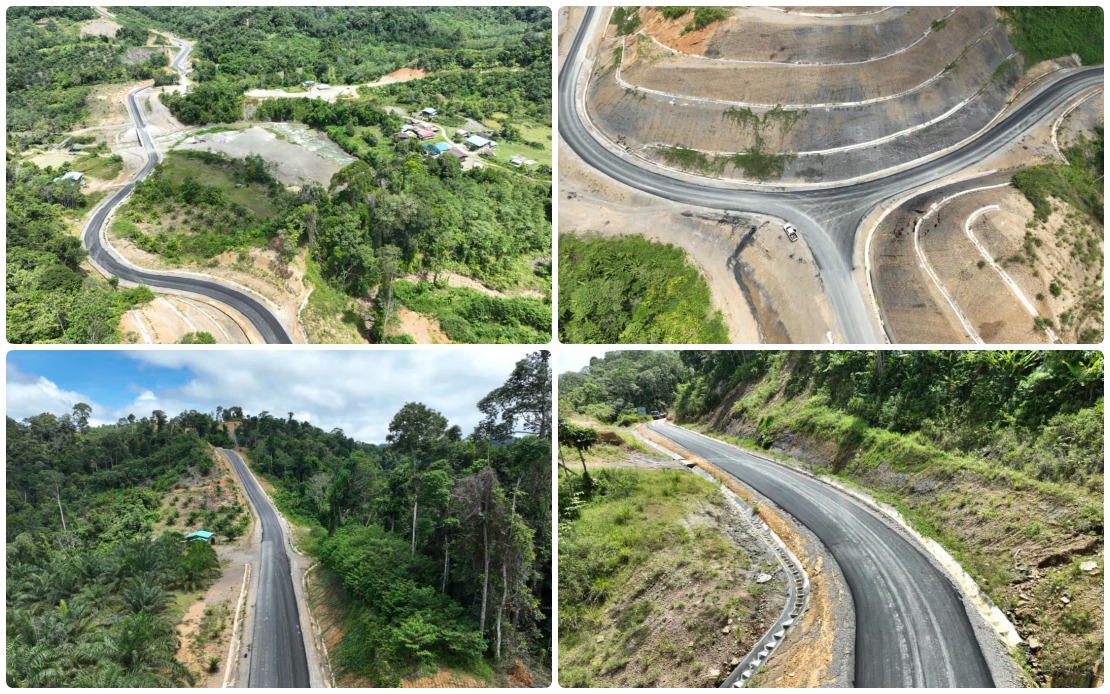
The paving of the Sapulut-Salong-Pagalungan-Pensiangan road has reached Pensiangan town, marking a significant milestone in Sabah's ongoing infrastructure development efforts. This completion substantially reduces journey times for residents across the interior region and addresses long-standing accessibility challenges that have historically isolated these communities from urban centres and economic opportunities. The project represents a tangible realisation of electoral commitments made by Datuk Seri Arthur Joseph Kurup, the Member of Parliament for Pensiangan and Minister of Natural Resources and Environmental Sustainability, who has championed infrastructure improvements as central to regional transformation.
The impact of improved road conditions extends far beyond simple convenience metrics. Previously, the journey from Keningau to Pensiangan town required more than six hours, a figure that ballooned dramatically during adverse weather when travellers faced genuine risk of becoming stranded. The road's current condition now enables the same journey to be completed in just three hours under normal circumstances, fundamentally altering the calculus for professionals considering relocation to remote areas. Teachers, medical doctors, and nursing staff can now realistically commute or establish themselves in these towns, addressing critical human capital gaps that have perpetually hampered development in Sabah's interior regions.
The transformation is visually apparent even in superficial indicators. Where Pensiangan town previously saw predominantly water-based transport with boats dominating the landscape, modern road access has catalysed a visible shift toward vehicular traffic. The proliferation of parked cars throughout the town reflects not merely improved infrastructure but a psychological and economic shift in how residents and outsiders perceive accessibility and opportunity. This symbolic change masks deeper structural improvements in supply chains, service provision, and business viability that only emerge when transport times fall below critical thresholds.
Kurup's observation that younger residents are returning to develop agricultural land and contribute to local economic generation points toward a demographic reversal that infrastructure alone cannot typically achieve. Rural flight has plagued Malaysia's interior regions for decades, as young people migrate to cities seeking employment and educational opportunities. The road project, by reducing isolation and enabling commuting possibilities, creates conditions where agricultural ventures and small businesses become economically viable without necessitating permanent urban relocation. This preservation and invigoration of rural populations carries implications for social stability, cultural continuity, and the distribution of economic development across Sabah.
The Sapulut-Pensiangan achievement represents only the initial phase of a more comprehensive master development plan. The planned Phase Four extension toward the Kalimantan border introduces cross-border economic dimensions that could position the Pensiangan constituency as a regional hub rather than a peripheral area. Border development zones have historically generated significant economic activity in Southeast Asia when properly integrated with infrastructure, regulations, and bilateral cooperation frameworks. The prospect of enhanced tourism and trade flows across the Indonesia-Malaysia border creates commercial opportunities spanning agriculture, handicrafts, and services that currently remain largely untapped due to accessibility limitations.
Complementary infrastructure projects underscore the systematic approach embedded in Kurup's development vision. The completed Jalan Sinaron-Linayukan road, the ongoing Tiulon-Simbuan youth scheme road, and the Sapulut coffee processing facility collectively address production bottlenecks and value-chain deficiencies that plague rural commodity sectors. These projects move beyond connectivity toward building productive capacity within local communities. The Sapulut coffee industry, in particular, represents an effort to capture higher-margin agricultural segments rather than relying on commodity-price-dependent crops.
Port and transport facility upgrades at Pangalanan Salong reflect recognition that river transport remains economically viable for certain goods and passenger flows in Sabah's geography. The jetty improvements complement road development rather than competing with it, acknowledging that comprehensive regional access requires multi-modal transport infrastructure. Similarly, the agricultural collection centres and tamu markets directly address marketing and distribution challenges that farmers face in remote locations. These facilities reduce post-harvest losses and enable farmers to access broader markets without excessive middleman involvement that erodes profitability.
Digital connectivity upgrades throughout the district represent a parallel infrastructure dimension that road access alone cannot provide. Telephone and internet improvements extend economic opportunity beyond physical goods toward services, information-based businesses, and remote work possibilities. For younger residents considering whether to remain in or return to rural communities, digital connectivity often proves as determinative as physical road access when evaluating livelihood prospects. Educational opportunities, online commerce, and digital services collectively require reliable telecommunications infrastructure that many Sabah interior regions have historically lacked.
The proposed immigration and customs complex at the Kalimantan border crossing, currently navigating approval processes, indicates deliberate planning to formalise and facilitate cross-border commerce. Properly designed customs facilities can reduce transaction times and bureaucratic friction that currently deter traders. Border infrastructure of this type typically requires coordination among multiple agencies and international agreements, making its progress subject to factors beyond the minister's direct control. Nevertheless, its inclusion in the development plan suggests serious intent to transform Pensiangan from a peripheral interior location toward a structured border-development zone.
The completion of the first Sixth Form Centre for Nabawan district at Sekolah Menengah Kebangsaan Nabawan addresses an educational gap that has forced talented students to relocate to Kota Kinabalu for upper secondary schooling. Educational infrastructure retention in rural areas helps preserve local talent pools and reduces barriers to tertiary education for families of limited means. The accumulation of these complementary projects—roads, markets, port facilities, processing infrastructure, telecommunications, customs facilities, and educational institutions—suggests a development model that recognises remote regions cannot be effectively transformed through singular infrastructure projects but require integrated approaches addressing multiple economic and social constraints simultaneously.
For Malaysian policymakers and development practitioners, the Sapulut-Pensiangan project offers lessons in political commitment to interior development and systematic infrastructure integration. The three-hour reduction in journey time exemplifies how targeted road investment can produce tangible quality-of-life improvements within a five-year implementation window. The project's success may inform similar initiatives in other Malaysian interior regions facing comparable accessibility challenges, from Peninsular Malaysia's interior to Sarawak's remote constituencies. The challenge for future phases involves ensuring that complementary services, investments, and administrative support continue matching the pace of physical infrastructure development to convert accessibility gains into sustained economic benefits.

