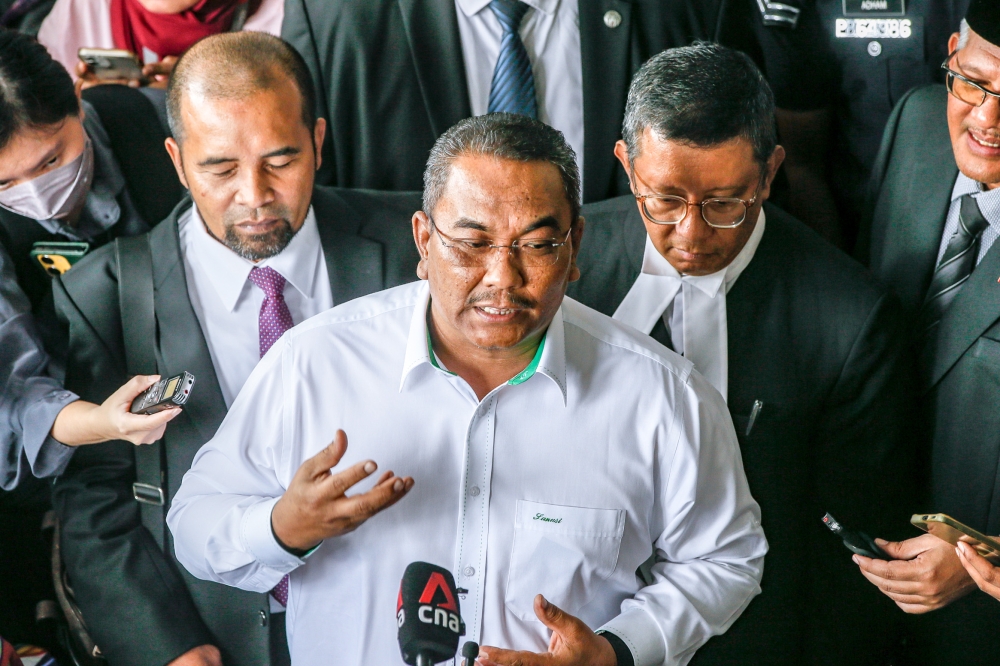
Kedah's chief administrator Muhammad Sanusi Md Nor has escalated political tensions in the state by serving formal legal notices on three individuals, including senior Democratic Action Party official Nga Kor Ming, over allegations that they misrepresented his public statements. The action, announced from Alor Star, underscores the increasingly litigious nature of Malaysian politics and reflects deepening rifts between coalition partners in what has been a contentious period for Peninsular governance.
The letters of demand represent a significant escalation beyond typical political sparring, moving disputes from parliamentary rhetoric into formal legal territory. By resorting to this mechanism, Sanusi is signalling that he views the alleged distortions as sufficiently damaging to his reputation and standing to warrant documented legal remedies. This approach has become more common among Malaysian politicians seeking to establish a paper trail for potential future court action, while simultaneously applying public pressure on recipients to comply with demands for retraction and apology.
Nga Kor Ming, who holds the influential position of DAP secretary-general, has long been a prominent voice in Chinese-majority urban constituencies and party strategy discussions. His inclusion among the recipients suggests the dispute touches on substantive matters of party policy or coalition governance rather than minor interpretive disagreements. The timing and targeting of the DAP leadership point to deeper fissures within the federal and state coalitions that have held power since 2022.
The substance of the alleged distortions, while not fully detailed in the initial announcement, appears to centre on Sanusi's positions on matters that the recipients interpreted or presented differently in public forums. Such disputes frequently involve statements on religious policy, development priorities, fiscal management, or coalition dynamics—areas where even minor rhetorical variations can be weaponised for political advantage. In Kedah's context, where communal sensitivities run high and electoral mathematics remain delicate, such alleged misrepresentations carry particular weight.
Letters of demand serve multiple strategic purposes in Malaysian political contests. They create legal documentation that supports future defamation or other civil claims, establish that the subject had formal notice of objections, and generate public attention to grievances without yet committing to costly litigation. For recipients, they create pressure to backtrack, issue clarifications, or withdraw statements—actions that themselves become fodder for further political messaging. The dynamic often benefits the issuer more than the recipient, regardless of legal merit.
For Southeast Asian observers, this development illustrates how formal legal mechanisms increasingly interface with political competition across the region. Malaysia's relatively mature legal system means that politicians regularly exploit libel, defamation, and related statutes as political tools. This has consequences for media freedom and political discourse, as journalists and commentators must constantly weigh reporting on political disputes against the risk of legal action. The pattern has intensified over the past decade as political polarisation has deepened.
The inclusion of two additional recipients beyond Nga Kor Ming suggests a coordinated narrative or campaign that Sanusi believes requires a comprehensive legal response. These individuals may include other DAP figures, political operatives, or media personalities who repeated or amplified the alleged distortions. Targeting multiple parties simultaneously increases pressure on all involved to provide consistent retractions and prevents them from coordinating unified legal defence strategies.
From a Kedah-specific angle, this dispute raises questions about coalition stability in a state where PAS-led governance has sometimes coexisted uneasily with DAP's urban base and policy preferences. Previous tensions over development priorities, religious administration, and fiscal allocations have occasionally boiled over into public disputes. This latest action may reflect accumulated grievances rather than a single incident, with the legal demand serving as a formal expression of frustration with DAP's public positioning.
The broader Malaysian context matters significantly. Coalition governments at both federal and state levels remain fragile constructions dependent on managing diverse partners with competing agendas. When senior politicians resort to legal action against their own coalition allies, it signals either a breakdown in internal dispute resolution mechanisms or a calculated political calculation that public confrontation serves more useful purposes than private negotiation. Either interpretation suggests institutional weakness.
Responses from the DAP and the named recipients will shape the trajectory of this dispute. Compliance—issuing retractions or apologies—would constitute a political defeat but might contain legal exposure. Defiance would escalate tensions and increase probability of actual court proceedings, but would appeal to activists and loyal supporters who view the demands as bullying. A middle path of technical clarification without full retraction represents another possibility, allowing both sides to claim vindication.
For Malaysian readers and regional observers, this incident encapsulates recurring patterns in contemporary Malaysian politics: coalition partners using legal mechanisms as political weapons, the blurred boundaries between legitimate dispute and strategic harassment, and the ongoing challenge of maintaining functional governance when partners regard each other with suspicion. How Kedah's political actors navigate this situation will offer lessons for other contested coalition arrangements across the region facing similar pressures and temptations toward legal confrontation rather than political accommodation.

