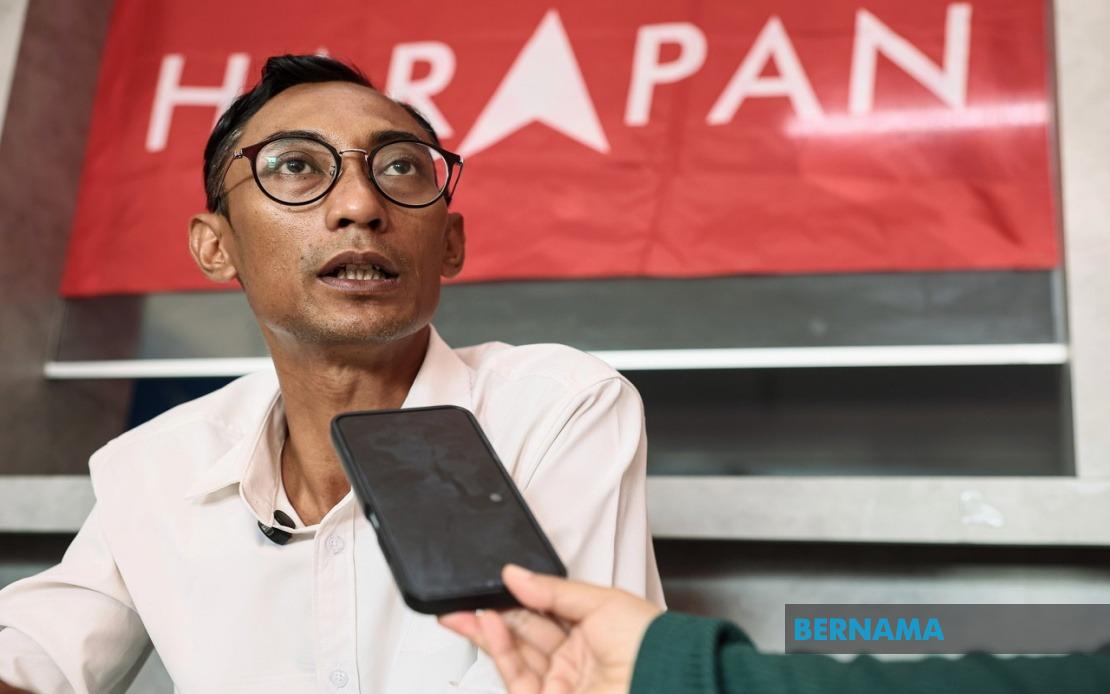
Pakatan Harapan candidate Saiful Nizam Samat is banking on a central message of amplifying Endau's interests at the federal level as he intensifies efforts ahead of Saturday's Johor state election. His 'Suara Endau ke Putrajaya' (Endau's Voice to Putrajaya) campaign emphasises that stronger communication channels between the constituency and Putrajaya will unlock faster coordination of development initiatives and tangible improvements for residents. The strategic focus reflects a calculated choice: rather than positioning himself within broader urban constituencies, Saiful Nizam has zeroed in on the specific grievance that local voices often get lost in the shuffle between state and national government machinery.
The candidate's reasoning for this targeted approach reveals practical political arithmetic. In comments to Bernama, he explained that candidates from constituencies such as Iskandar Puteri or Kota Iskandar might secure broader platforms but lack the singular focus needed to champion Endau's particular development agenda. By concentrating on a smaller, more cohesive voter base and building direct alignment with federal authorities, Saiful Nizam argues he can cut through bureaucratic layers and expedite projects that matter most to constituents. This represents a departure from the typical opposition playbook of challenging government inefficiency; instead, it positions PH as a more efficient interlocutor between local and national power structures.
First-week grassroots reception has provided encouraging signals for the PH campaign. Saiful Nizam reported that voter response across Endau's demographic spectrum—from young people to elderly residents—has been markedly positive. The breadth of appeal across age groups suggests that his message of pragmatic representation is resonating beyond traditional opposition strongholds. This cross-generational traction could prove decisive in a four-cornered contest where vote fragmentation often determines outcomes. The early enthusiasm also indicates that voters in Endau may be receptive to arguments about effective governance rather than purely oppositional messaging.
To amplify his message, Saiful Nizam's campaign team has deployed a dual-channel strategy combining conventional street-level canvassing with digital engagement. A specially composed campaign theme song—deliberately crafted to be light-hearted and memorable—targets younger voters who might otherwise tune out traditional political messaging. This multimedia approach recognises the heterogeneous information consumption patterns of modern electorates, particularly in constituencies with significant youth populations. The song serves a dual function: it establishes brand recall while signalling that the campaign is contemporary and attuned to generational preferences rather than reliant on tired political clichés.
Planned campaign activities highlight the granular focus on local representation. Saiful Nizam's schedule includes visits to polling districts and Orang Asli settlements, demonstrating particular attention to marginalised communities whose development needs often lack political salience at state and federal levels. Indigenous communities, which form a significant portion of Endau's electorate, have historically experienced under-representation in development planning. By explicitly targeting these areas, the PH candidate is signalling that amplified constituency voice means listening to those whose concerns are typically marginalised even within local politics.
The Endau contest presents a complex electoral landscape. Saiful Nizam faces incumbent Barisan Nasional representative Alwiyah Talib, who has held the seat for two terms and carries the advantage of demonstrated constituency service experience. Beyond this primary two-way race, Perikatan Nasional's Hasnul Hakimi Hussien and Parti Orang Asli Malaysia's Jati Awang fragment the opposition vote, creating a four-way split that could benefit either the better-organised or more effective grassroots operation. Rather than dwelling on formidable incumbent advantages, Saiful Nizam has chosen to project confidence in his campaign machinery and the materiality of his commitments to voters.
A significant strategic decision involves mobilising diaspora voters. Saiful Nizam has appealed to Endau residents working outside the constituency—in Singapore, the Klang Valley, and other regions—to return home for polling day. This appeal reflects the reality that many Malaysian constituencies lose voting participation to urban migration and cross-border employment. Whether such voters respond to patriotic calls to return remains uncertain, but the effort indicates recognition that Endau's electoral mathematics depend partly on non-resident participation. The Singapore dimension is particularly notable, given the substantial cross-border workforce between Johor and the city-state.
The timing of the campaign creates compressed conditions for voter engagement. With only days remaining before Saturday's poll, the pace of activities intensifies considerably. Early voting on July 7 will provide preliminary signals about voter turnout and sentiment, though mail-in mechanisms and early participation patterns differ substantially from election day results. This compression means that campaigns must efficiently convert voter contact into actual ballot commitment, making digital amplification and organised ground operations all the more critical to ultimate performance.
The broader context of Johor state politics frames this individual constituency battle. As Malaysia's second-most populous state and a traditional BN stronghold, Johor elections carry symbolic weight for national coalition politics. PH's performance in seats like Endau contributes to the broader narrative about opposition traction in traditionally conservative areas. A strong showing by Saiful Nizam would signal that anti-establishment messaging is penetrating demographically diverse rural and semi-rural constituencies, while a loss would reinforce perceptions that BN retains resilient grassroots support in Johor.
The candidate's emphasis on pragmatic delivery over ideological messaging reflects broader strategic calculations within PH regarding regional penetration. Rather than leading with anti-corruption narratives or governance reform that play well in urban constituencies, the Endau campaign centres on direct service benefits and improved federal-local coordination. This localism strategy acknowledges that rural and small-town voters may prioritise tangible infrastructure improvements and development projects over systemic governance questions. Whether this represents effective adaptation or dilution of opposition messaging remains contested among political analysts.
Saiful Nizam's decision to appeal to voters on grounds of realistic commitments rather than transformative change also signals maturation within PH's regional approach. Having govern federally and in several states, PH's candidates increasingly run as managers of existing systems rather than revolutionary challengers. In Endau, this translates to positioning the party as a more competent handler of state-federal relations, with less emphasis on dismantling incumbent networks and more emphasis on making them work better for ordinary residents. This pivot reflects both pragmatism and necessity, as voters increasingly evaluate opposition parties on delivery capacity rather than oppositional credentials alone.

