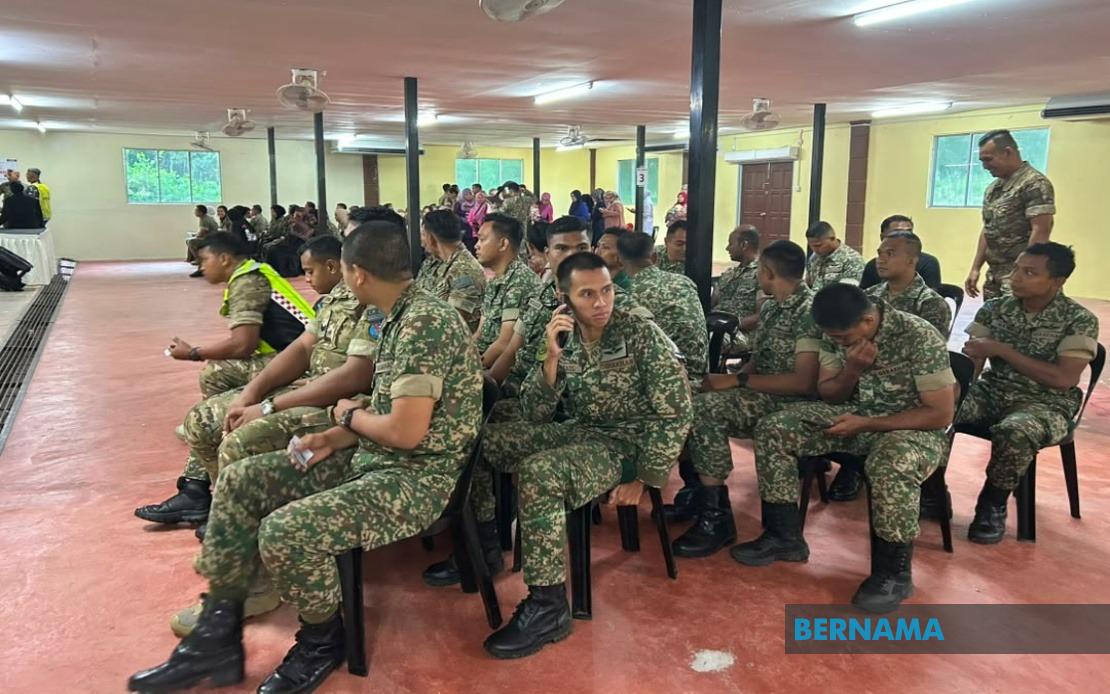
Early voting for the 16th Johor State Election commenced on July 7 with both governing and opposition coalitions making appeals to the first cohort of voters to prioritize democratic principles. Home Minister Datuk Seri Saifuddin Nasution Ismail and Defence Minister Datuk Seri Mohamed Khaled Nordin separately addressed the electorate through social media platforms, underscoring the significance of the day's proceedings. The two Cabinet members were among the highest-ranking officials to weigh in publicly during the early voting phase, reflecting the importance accorded to this segment of the election cycle.
The early voting process specifically engaged security sector personnel who, due to operational demands, required alternative arrangements to cast ballots before the general election. A total of 24,751 eligible voters participated, comprising 12,041 members of the Malaysian Armed Forces and their spouses alongside 12,710 police officers and their families. This composition highlighted how electoral systems must accommodate those responsible for maintaining order and security, a practical necessity that many democracies confront during voting periods. The participation of both military and police constituencies in staggered voting reflected efforts to balance democratic participation with institutional continuity.
Saifuddin Nasution, speaking in his capacity as both Home Minister and Pakatan Harapan secretary-general, framed the exercise as an opportunity for voters to demonstrate civic maturity. His message emphasized that casting ballots represented more than a transactional political act but rather an affirmation of commitment to democratic norms. He specifically called upon the opposition coalition's campaign machinery to sustain engagement with constituents throughout the remaining campaign window, advocating for substantive dialogue rather than divisive rhetoric. This approach suggested a deliberate strategy by PH to cultivate an image of institutional responsibility while simultaneously mobilizing electoral support.
Defence Minister Mohamed Khaled concentrated his appeal on outcomes, contending that early voters bore collective responsibility for ensuring Johor's continued development trajectory. His framing implicitly connected individual voting decisions to state-level governance outcomes, suggesting that the election represented not merely a selection between competing parties but a choice between competing visions for provincial advancement. This reasoning, whether persuasive or not, reflected a common political narrative in Malaysian elections where incumbents often conflate their tenure with progress itself.
Menteri Besar Datuk Onn Hafiz Ghazi, leading the Barisan Nasional slate, similarly mobilized the early voting moment for coalition messaging. He urged voters to endorse BN candidates as guarantors of stability, infrastructure development, and public service delivery. The invocation of these three pillars represented a conventional governing narrative: established institutions deliver results, while alternatives pose risks. Such messaging typically resonates among security sector voters who maintain direct stakes in institutional stability and resource allocation.
The logistical framework supporting early voting demonstrated state capacity and democratic infrastructure. Sixty-four voting centres across Johor opened at 8 am, with staggered closing times between noon and 6 pm accommodating different voter densities and geographic dispersal. This arrangement required coordination among election officials, venue management, and security arrangements—practical orchestration that, while routine to observers, represents fundamental democratic machinery. The smooth operation of such systems often determines public confidence in electoral credibility, particularly among professional voters accustomed to institutional precision.
The 16th Johor State Election itself encompassed 56 seats contested by 172 candidates distributed between PH and BN, with general polling scheduled for Saturday. Both coalitions fielded comprehensive slates, indicating serious competition across geographic and demographic constituencies. The decision by both major blocs to contest all available seats signaled confidence in their respective platforms and organizational capacity, though it also meant no significant contested space remained for independent or minor-party candidates. This binary framing characterized contemporary Malaysian electoral politics at state level.
Johor's significance within Malaysian federalism and regional geopolitics added weight to this electoral moment. As the nation's southernmost state and home to substantial manufacturing, port operations, and cross-border commerce with Singapore, provincial governance possessed implications extending beyond strictly state-level considerations. Economic performance, infrastructure maintenance, and cross-border coordination capabilities affected not only Johorians but also national supply chains and regional stability. Ministers' public engagement with early voting reflected awareness of these broader stakes.
The timing of early voting, preceding general polling by several days, served administrative and operational purposes but also generated political momentum. The media coverage surrounding early voting activities provided opposition and government parties with multiple opportunities for messaging before the decisive Saturday ballot. For voters, the staggered process meant results would gradually emerge and potentially influence remaining voters' calculations, though official result announcement typically followed complete polling completion. This temporal dimension added strategic layers to campaign calculations.

