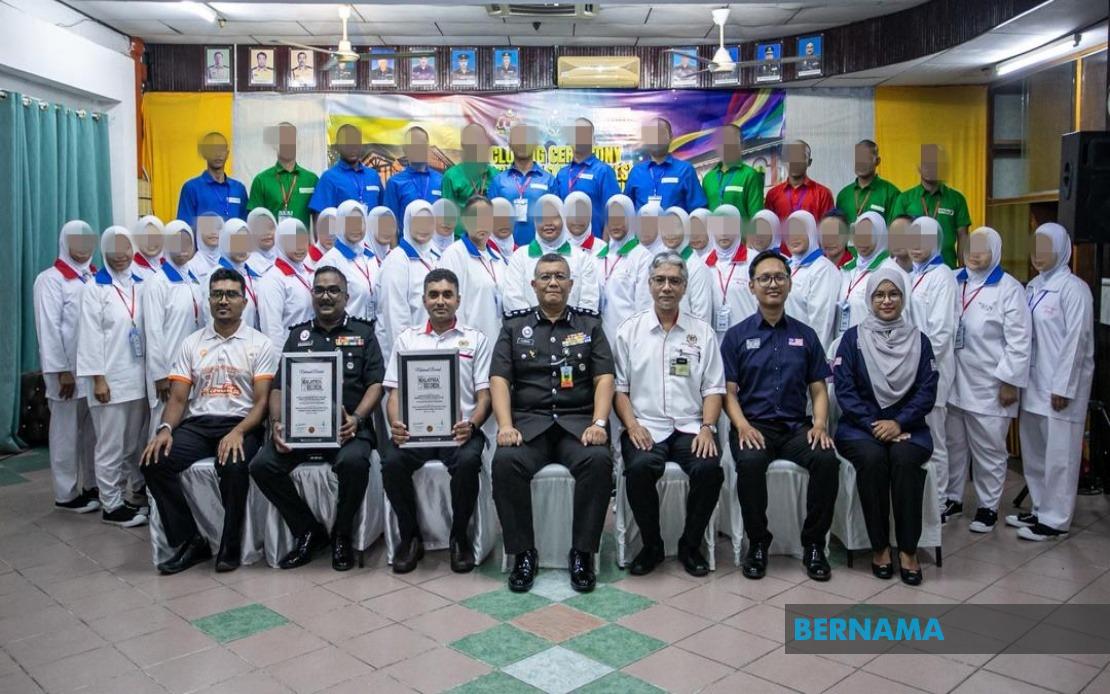
Home Minister Datuk Seri Saifuddin Nasution Ismail has extended congratulations to the Malaysian Prisons Department following a significant achievement by the Batu Gajah Correctional Centre. The institution has been recognised by the Malaysia Book of Records for organising and conducting a comprehensive Basic Life Support and Automated External Defibrillator training course that trained 42 inmates in emergency medical response procedures.
The recognition underscores a broader shift in how Malaysia's penal system approaches its fundamental mission. Rather than limiting itself to custodial functions, the Prisons Department has increasingly embraced the concept of rehabilitation as a central pillar of its operations. This distinction between punishment and reformation represents a conceptual evolution in correctional philosophy that has implications across the Southeast Asian region, where many nations grapple with balancing public safety with inmate welfare and social reintegration.
According to Saifuddin's statement released through Facebook, the training initiative demonstrates that correctional institutions can serve dual purposes: maintaining security while simultaneously equipping individuals with marketable skills and personal development. The 42 inmates who completed the BLS and AED training have acquired qualifications that carry recognised value beyond the prison walls, thereby enhancing their prospects for meaningful employment upon release.
Beyond the technical competencies imparted through formal training, the programme appears designed to cultivate deeper personal transformation. Saifuddin emphasised that participants have been instilled with humanitarian values, discipline, responsibility and self-confidence. These soft skills arguably represent more transformative outcomes than technical certifications alone, as they address attitudinal and behavioural dimensions that often determine whether formerly incarcerated individuals successfully reintegrate into society or reoffend.
The Home Minister articulated the philosophical foundation underpinning this approach, stating that rehabilitation rather than punishment remains the core principle guiding the Prisons Department. This principle reflects international best practices in correctional science, where evidence increasingly demonstrates that purely punitive systems generate higher recidivism rates and fail to address root causes of criminal behaviour. Malaysia's articulation of this philosophy suggests alignment with progressive correctional models increasingly adopted across developed democracies.
For Malaysian society, the implications of this rehabilitative approach extend well beyond individual inmates. The successful reintegration of formerly incarcerated persons reduces the likelihood of repeat offences, thereby decreasing victimisation and associated social costs. Communities that welcome back productive, skilled members rather than hardened repeat offenders experience measurable improvements in social cohesion and economic activity.
The Batu Gajah initiative also reflects growing recognition that incarcerated populations often represent untapped human capital. Many individuals in correctional facilities come from disadvantaged backgrounds characterised by limited educational and vocational opportunities. Prisons can function as platforms for skills acquisition that would otherwise remain inaccessible to these populations. The BLS and AED training exemplifies this potential, transforming inmates into individuals capable of performing life-saving interventions that benefit broader society.
Saifuddin's call for expansion of similar high-impact programmes indicates governmental commitment to scaling these rehabilitation initiatives across the prison system. This scaling presents both opportunities and challenges. Expanding such programmes requires substantial resource allocation, qualified instructors, appropriate facilities, and logistical coordination. However, the long-term savings in reduced incarceration costs and crime prevention arguably justify these investments.
The Malaysia Book of Records recognition serves an important symbolic function beyond the specific achievement. Public acknowledgement of prison-based rehabilitation initiatives helps reshape societal perceptions of incarcerated individuals and the penal system itself. In many societies, including Malaysia, stigma surrounding incarceration often impedes successful reintegration even after individuals have served their sentences. By highlighting constructive prison programmes, recognition initiatives help counter these prejudices and create space for more compassionate public discourse around criminal justice reform.
For Southeast Asian nations facing similar challenges of prison overcrowding, recidivism, and social reintegration, Malaysia's experience with structured rehabilitation programmes offers valuable lessons. The region's rapid economic development and urbanisation have created pressures on criminal justice systems across multiple countries. Programmes that address inmate skill development and personal transformation while serving correctional objectives represent scalable solutions worthy of regional attention and potential adaptation.
The success of the Batu Gajah initiative also highlights the importance of institutional innovation within government agencies. Rather than accepting conventional limitations of correctional facilities, the Prisons Department has proactively developed programming that simultaneously advances public health, inmate development, and rehabilitation objectives. This integrated approach maximises institutional resources while multiplying social benefits.
Moving forward, the challenge lies in ensuring that recognition of such programmes translates into sustained, adequately funded implementation across Malaysia's entire correctional system. The transition from flagship initiatives at individual facilities to system-wide adoption requires political will, budgetary commitment, and partnership with external organisations capable of providing training and certification. Saifuddin's public endorsement suggests governmental support exists for this expansion.

