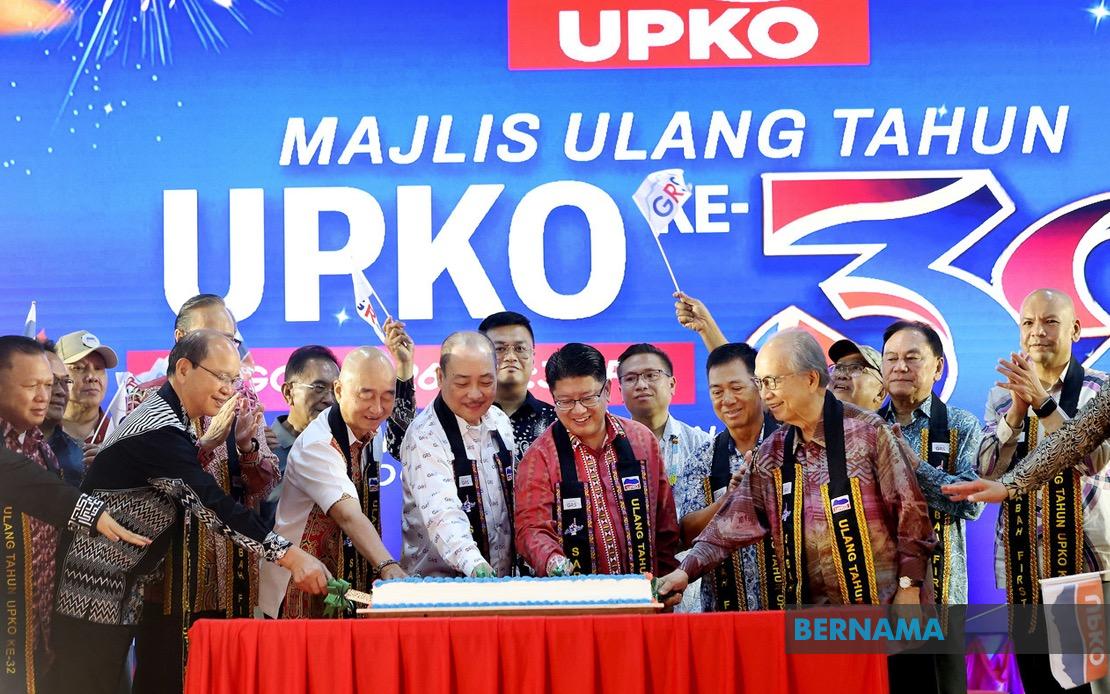
Chief Minister Datuk Seri Hajiji Noor has pledged that Sabah will direct all revenue received from the Federal Government back to its citizens through a combination of incentives, welfare assistance, and development initiatives. Speaking at the 32nd anniversary celebration of the United Progressive Kinabalu Organisation and the opening of the 17th UPKO Triennial Delegates Conference in Kota Kinabalu, Hajiji outlined the state government's commitment to ensuring that federal allocations translate into tangible benefits for ordinary Sabahans.
At the heart of this commitment lies the recent increase in the interim special grant payment to RM1.5 billion, a decision made by Prime Minister Datuk Seri Anwar Ibrahim that Hajiji described as welcome and significant. The enhancement represents a substantial injection of resources into the state's coffers, and Hajiji made clear that these funds would not be diverted to administrative overhead or bureaucratic expansion but would instead flow directly into projects that improve living standards across Sabah's diverse communities.
The allocation will be deployed across multiple strategic areas that address longstanding infrastructure deficits in the state. Road construction and bridge development feature prominently in the spending plans, reflecting recognition that connectivity remains a challenge in parts of Sabah where geography has traditionally limited accessibility. Beyond transportation networks, the state government plans to leverage these funds to strengthen utilities that have sometimes proven inadequate in meeting demand across dispersed settlements. Improvements to water supply and electricity distribution will ensure that even remote areas benefit from the federal investment, narrowing the development gap between urban and rural Sabah.
The Rumah Mesra Sabah Maju Jaya housing programme represents another key beneficiary of the increased allocation. This initiative directly addresses housing affordability and availability, concerns that resonate across Malaysian states competing for skilled labour and seeking to improve quality of life for middle and lower-income families. By expanding the number of units constructed, the state government sends a signal that it prioritises accessible shelter as a fundamental entitlement rather than a commodity available only to the wealthy. Complementing this effort is the Sentuhan Kasih Rakyat programme, colloquially known as SYUKUR, which channels assistance to vulnerable populations including the elderly, disabled, and economically disadvantaged.
Hajiji's rhetoric emphasises a direct line between federal transfers and citizen welfare, a positioning that carries political weight in Sabah's competitive electoral environment. By explicitly committing to return funds "in various forms," the Chief Minister acknowledges that welfare demands extend beyond physical infrastructure to encompass immediate financial support and targeted assistance programmes. This multifaceted approach recognises that development encompasses both long-term asset creation and short-term poverty alleviation.
The state government's own revenue collection efforts provide additional context for understanding Sabah's financial management trajectory. According to Hajiji, annual collections have been maintained at RM7 billion since 2022, with expectations to increase to RM8 billion in the current year. This demonstrates growing internal resource mobilisation capacity, suggesting that Sabah is not entirely dependent on federal allocations but is building complementary revenue streams through improved tax administration and economic activity. The target of RM8 billion represents a meaningful increment that, combined with federal support, expands the development envelope available to state authorities.
The Chief Minister's emphasis on economic resilience speaks to broader concerns about Sabah's vulnerability to external shocks. He noted that the state government has sustained its economic expansion despite domestic and global challenges, a claim that positions Sabah as a stable investment destination. In the context of Southeast Asia's competitive landscape for foreign direct investment and skilled migration, such messaging carries strategic importance. Countries and regions perceived as economically unstable struggle to attract capital and talent, whereas those projecting stability and growth potential maintain competitive advantage in attracting both.
Sabah's designation as a strategic investment destination reflects deliberate state positioning in regional economic hierarchies. The state possesses natural resources, geographic proximity to growth markets in the Philippines and Indonesia, and increasingly developed infrastructure that could support manufacturing and service-sector expansion. However, realising this potential requires sustained investment in human capital, institutional capacity, and physical infrastructure—precisely the domains targeted by the interim special grant and state revenue deployment outlined by Hajiji.
For Malaysian observers, Sabah's approach to federal allocations offers lessons about intergovernmental relations and public finance management. The state faces the perennial challenge of balancing development ambitions against budget constraints, a tension that federal transfers help alleviate but do not eliminate. By publicly committing to transparent deployment of federal funds toward citizen benefit, Hajiji attempts to build political trust and legitimacy, crucial resources in a state where electoral competition remains intense and voter preferences often hinge on perceived delivery of material benefits.
The timing of Hajiji's statements reflects broader efforts to consolidate support ahead of electoral cycles, both state and federal. In Malaysian political culture, announcements of increased allocations and expanded welfare programmes often carry implicit campaign messaging, signalling to constituents that their elected representatives have secured resources and remain focused on their welfare. This calculation is particularly salient in Sabah, where developmental disparities relative to peninsular Malaysia remain pronounced and where communities across the state harbour strong expectations that government must continuously demonstrate tangible commitment to improving their circumstances.
Looking forward, the realisation of these promises will depend on implementation capacity, which remains variable across Malaysian state governments. Successful delivery of housing units, completed infrastructure projects, and functional welfare programmes will strengthen Hajiji's political position and validate the governance approach he has articulated. Conversely, delays, cost overruns, or quality compromises in these initiatives could undermine public confidence and provide opposition political forces with credible criticism.
The broader implication of Sabah's approach extends to questions about federal-state relations and resource distribution across Malaysia. By securing increased interim grants and committing to transparent, citizen-focused deployment of these resources, Sabah engages in negotiation and bargaining that shapes national resource allocation patterns. Other states observing Sabah's success in securing federal support may adjust their own advocacy strategies, potentially intensifying competition for allocations. This dynamic, while sometimes creating tensions in intergovernmental relations, ultimately reinforces pressure on federal authorities to maintain consistent resource distribution and equitable treatment of states across the federation.

