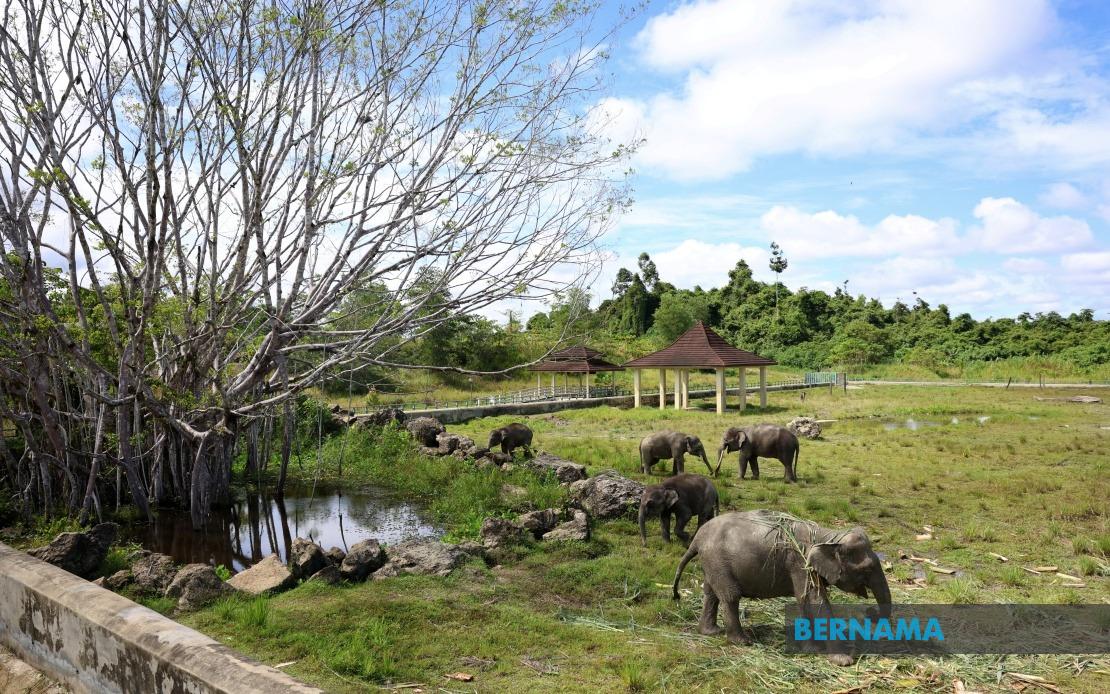
Sabah is exploring the possibility of establishing elephant sanctuaries beyond Tawau, should an initial pilot programme demonstrate its effectiveness in mitigating the escalating tensions between wildlife and rural communities across the state. Speaking in the Sabah State Legislative Assembly, Datuk Dr Andi Md Shamsureezal, the assistant minister overseeing tourism, culture and environment matters, outlined the government's cautious but optimistic approach to tackling one of the region's most persistent environmental and agricultural challenges. The Tawau sanctuary concept represents a strategic shift toward long-term solutions rather than reactive damage control, positioning Sabah alongside other Southeast Asian jurisdictions grappling with similar conservation dilemmas.
The sanctuary proposal, which drew specific support from Datuk Seri Mohd Shafie Apdal during legislative proceedings, encompasses a dual-purpose framework designed to serve both conservation and economic objectives. By designating protected areas for wildlife, the state government envisions facilities that simultaneously function as tourism attractions, potentially generating revenue while reducing human-elephant encounters in agricultural zones. This integrated approach reflects growing recognition that conservation efforts in developing economies must demonstrate tangible returns to gain sustained political and public backing, a principle increasingly evident throughout Borneo's wildlife management initiatives.
Current assessment efforts involve collaborative coordination between Sabah's Tourism, Culture and Environment Ministry and the Sabah Wildlife Department, alongside input from other governmental bodies with relevant jurisdiction. This multi-agency framework acknowledges that wildlife conflict transcends departmental boundaries and requires synchronized policy implementation. The deliberative pace signals that officials are conducting genuine feasibility studies rather than rushing implementation, a necessary precaution given the significant fiscal and logistical commitments sanctuary operations demand.
The underlying motivation for sanctuary expansion stems from mounting agricultural losses affecting rural livelihoods throughout the state. Arunarnsin Taib's parliamentary inquiry highlighted farmer concerns regarding crop destruction and economic hardship caused by Bornean elephants, wild boars, monkeys and other species. These conflicts represent more than statistical environmental issues—they directly undermine the economic security of vulnerable rural populations who depend on subsistence and commercial farming, particularly in districts where alternative income sources remain limited. Without addressing these grievances, conservation initiatives risk alienating the very communities whose cooperation proves essential for long-term wildlife protection.
Authentic conflict mitigation demands sophistication beyond reactive culling or capture-and-relocation strategies. The government's articulated position explicitly rejects translocation as a comprehensive solution, recognizing that relocating problem animals merely displaces conflicts geographically without addressing causal factors driving human-wildlife encounters. This reasoning reflects lessons learned across Southeast Asia and globally, where translocated wildlife frequently returns to original territories or creates new conflicts in recipient areas, ultimately wasting resources while perpetuating the underlying problem.
The state's implementation framework incorporates multiple concurrent strategies tailored to specific species and local ecological contexts. Elephant ranger teams, comprising trained members drawn from affected communities, represent a particularly promising community-engagement mechanism. By employing local residents as frontline monitors and responders, the government builds economic incentives for coexistence while generating employment in rural areas. This localized workforce understands territorial patterns, animal behaviour and settlement vulnerabilities far better than external experts, enhancing operational effectiveness whilst deepening community investment in conservation outcomes.
Satellite collar technology deployed on selected elephants exemplifies the technological dimension of modern wildlife management. Real-time tracking systems enable authorities to issue advance warnings to at-risk communities, allowing farmers and residents to implement protective measures or evacuate threatened assets before encounters occur. This predictive capability transforms human-wildlife conflict from an unpredictable hazard into a managed risk, fundamentally altering the cost-benefit calculus for rural populations evaluating whether coexistence with wildlife is feasible. Malaysian readers will recognize parallels with similar technology applications in other conservation contexts across the region.
Wild boar management presents distinctive challenges compared to elephant conservation. The government's measured approach, explicitly grounded in legal frameworks, risk assessments and community complaints, suggests authorities are attempting to balance ecological management with humane practices and transparent decision-making. This transparent methodology proves crucial for maintaining legitimacy, particularly when management measures involve culling or population control—controversial practices requiring robust justification and public communication.
Monkey population control initiatives introduce public health considerations into wildlife management calculations. The government's linkage between population reduction and zoonotic disease mitigation demonstrates how conservation transcends traditional environmental protection, intersecting with epidemiological concerns and human welfare. Southeast Asia's vulnerability to zoonotic spillovers, highlighted repeatedly during recent pandemics, makes this multidimensional risk-management approach increasingly relevant for Malaysian policymakers and administrators.
The pilot sanctuary concept's potential expansion hinges on demonstrating measurable success across multiple dimensions: reducing documented human-wildlife conflict incidents, minimizing economic losses to affected farming communities, maintaining or improving elephant population health, and generating sustainable tourism revenue. Establishing clear success metrics and transparent monitoring protocols will prove essential for determining whether the Tawau model justifies statewide implementation. The approach also offers potential instructional value for other Malaysian states and neighbouring jurisdictions facing comparable conservation pressures with limited financial resources.
Successful implementation requires sustained political commitment and adequate budgetary allocation over multi-year timeframes, typically extending beyond single legislative terms. The government's current exploratory phase should establish institutional frameworks capable of surviving political transitions, ensuring policy continuity regardless of electoral outcomes. This institutional persistence presents a significant governance challenge throughout Southeast Asia, where conservation initiatives frequently falter when political circumstances shift.
The sanctuary expansion proposal ultimately reflects Sabah's sophisticated understanding that contemporary wildlife conservation demands integration with rural development, livelihood security and community engagement. Rather than presenting conservation and human welfare as competing objectives, the sanctuary model attempts synthesis—protecting elephants and other species whilst improving economic opportunities and risk management for rural populations. If the Tawau pilot achieves these multifaceted goals, expansion across Sabah's districts could establish a replicable template for Southeast Asian wildlife management, demonstrating how economically stressed governments can advance conservation without sacrificing rural development imperatives.

