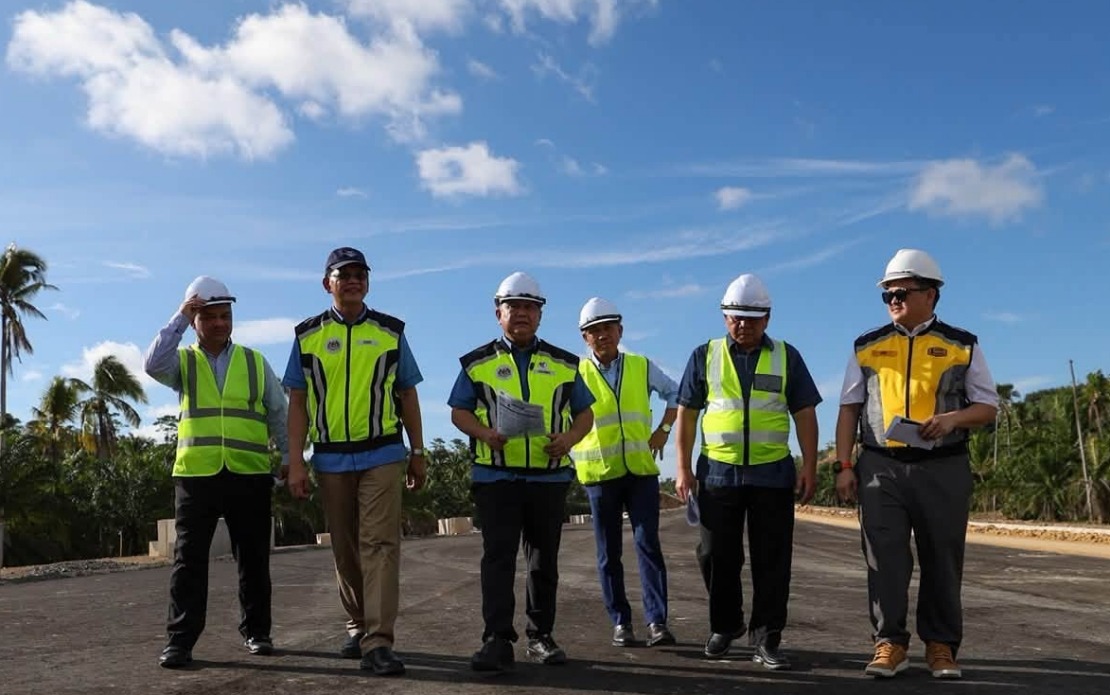
The construction contractor behind the Sabah Pan Borneo Highway Work Package 11 has submitted a comprehensive recovery plan to manage the 32-day delay that has accumulated on the ambitious infrastructure project. Works Minister Datuk Seri Alexander Nanta Linggi disclosed the development on July 20, indicating that project stakeholders are taking active steps to bring the 7.3-kilometre Rampayan Laut-Sarang alignment back on schedule ahead of its contractual completion target of September 29, 2026.
The RM167.48 million segment represents a critical portion of the broader Pan Borneo Highway initiative, which aims to modernise connectivity across Sabah and Sarawak. As of June 25, the alignment had achieved 61.76 per cent physical progress, though it remained 4.35 per cent behind the original construction schedule. The recovery plan framework seeks to reduce the accumulated delay to just 14 days by August 2026, a significant compression that would require accelerated work rates and enhanced coordination among multiple parties involved in execution.
Nanta's public commitment to monitoring the recovery measures reflects the political significance attached to the Pan Borneo Highway, a flagship infrastructure initiative that has faced various implementation challenges since its inception. The Works Ministry, working alongside the Sabah Public Works Department, the project consultant, and the contractor, has committed to closely tracking progress against the recovery milestones to ensure the project delivers as promised. This multi-agency oversight structure underscores the complexity of managing large-scale highway construction in Sabah's challenging terrain and institutional environment.
The delays encountered so far have not stemmed from simple resource constraints or poor planning alone. Instead, the contractor and government have identified specific bottlenecks relating to utility coordination—a persistent issue in Malaysian infrastructure projects. Sabah Electricity Sdn Bhd, the state water authority JANS, and telecommunications provider Celcom Timur Sabah have had to relocate existing lines and facilities to clear the highway corridor. Additionally, land acquisition complications have further impeded progress, highlighting how property rights issues can cascade through project timelines even when funding and technical capacity are adequate.
The recovery plan's success will depend critically on whether the various utility providers and land authorities can accelerate their own workflows without compromising safety or service reliability. In Malaysian infrastructure contexts, such coordination challenges often expose gaps between different government entities and private operators, each with their own timelines and priorities. Nanta's emphasis on "proactive and integrated" problem-solving suggests awareness that siloed approaches have contributed to delays and that cultural change in stakeholder collaboration will be necessary.
Beyond the immediate construction timeline, the Rampayan Laut-Sarang alignment carries substantial strategic value for Sabah's development. By shortening travel distances to Simpang Mengayau and Kudat by up to 30 kilometres, the highway will trim journey times by 30 to 60 minutes—a meaningful reduction that improves livability and economic efficiency. For residents and businesses in northern Sabah, such gains compound into measurable improvements in quality of life and operational costs over time.
The project also aligns with broader development frameworks that position northern Sabah as a tourism destination. The alignment will enhance access to the Tourism Belt and support implementation of the Northern Sabah Coastal Tourism Master Plan, a longer-term vision to diversify the region's economy beyond traditional sectors. Improved transport infrastructure is foundational to tourism development, as it reduces friction in visitor movement and opens previously isolated areas to economic activity. The highway thus represents not merely a transport link but a catalyst for regional transformation.
For the local communities in the affected areas, completion of the highway is expected to generate indirect economic benefits through employment in tourism and related services, enhanced business opportunities for enterprises serving through traffic, and improved access to markets and services. Nanta's framing of the project emphasises these community-level gains, positioning the infrastructure as a development tool rather than merely a transport engineering challenge. This narrative reflects how contemporary infrastructure policy in Malaysia increasingly incorporates social and economic inclusion alongside technical delivery.
The quality and safety dimensions that Nanta stressed are equally important. Large-scale highway projects have faced criticism in Malaysia when shortcuts on construction standards create long-term maintenance burdens or safety hazards. The minister's commitment to delivering the project "to the highest standards of quality, safety and integrity" signals awareness of public expectations and the reputational stakes involved in major government initiatives. In Sabah, where geographic constraints and weather patterns create demanding construction conditions, maintaining standards becomes even more critical.
The recovery plan now becomes a test case for how Malaysian infrastructure agencies manage schedule compression. Accelerating work typically requires additional resources, overtime, and intensified management—each carrying cost and fatigue implications. Whether the contractor can meet the August 2026 milestone without quality degradation or safety incidents will offer important lessons for other delayed infrastructure projects across Malaysia and the region. The Pan Borneo Highway has already absorbed considerable political and financial investment; successful delivery on the revised timeline would validate the project's underlying conception.
Looking forward, the September 2026 target remains achievable but will require sustained commitment from all parties. For Malaysian readers and businesses with interests in Sabah, the progress updates will signal broader trends in infrastructure delivery capability and government coordination effectiveness. The recovery plan's implementation over the next 14 months will provide concrete evidence of whether coordination mechanisms established at federal and state levels can overcome the structural challenges that have historically delayed large projects in East Malaysia.

