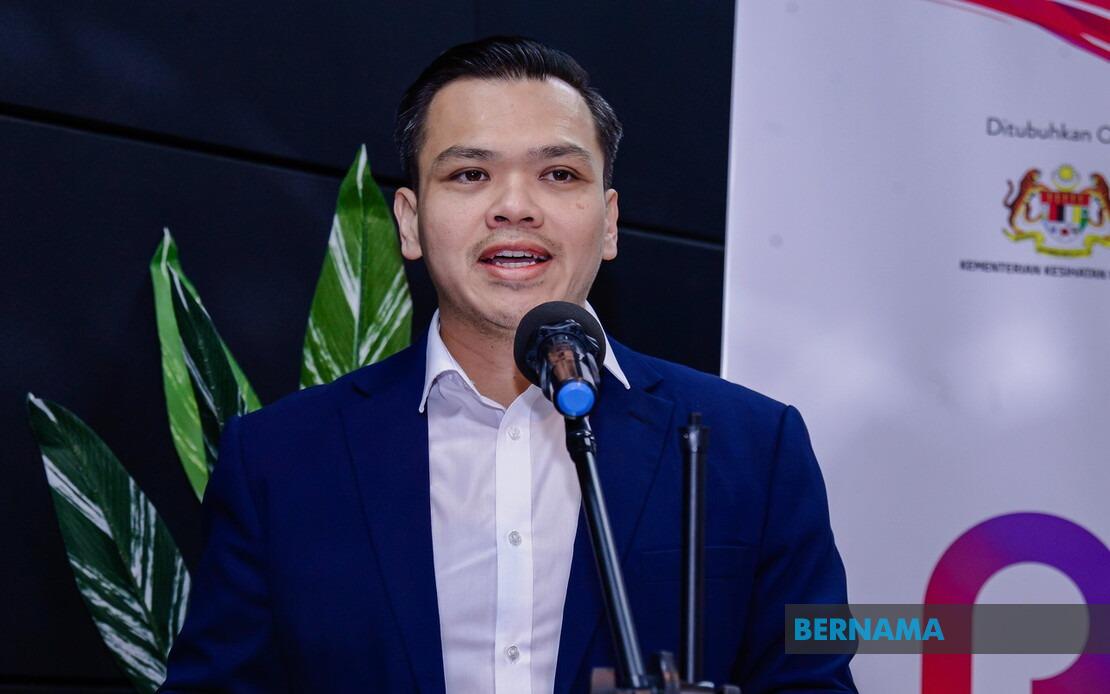
Sabah is ramping up efforts to deliver free health checks to economically disadvantaged residents through a newly unveiled scheme that prioritises reaching people in remote and underserved communities. The PeKa B40 Catalyst Sabah 2026 programme represents a shift towards ground-level engagement, moving beyond traditional hospital-centred approaches to embed screening services within the fabric of local neighbourhoods and villages across the state.
The scale of unmet need remains striking. According to ProtectHealth chief executive officer Hazwan Najib, approximately 544,000 individuals in Sabah qualify for PeKa B40 benefits under the Rahmah Cash Contribution scheme for 2026's first quarter. However, only 165,230 have undergone health assessments, leaving 378,770 residents without screening. This 30.37 per cent coverage rate underscores why the state health authorities determined that a structural overhaul was necessary to meet programme objectives.
The timing is significant for Malaysia's broader healthcare equity agenda. As the nation grapples with widening disparities in health outcomes between urban and rural populations, Sabah faces particular challenges rooted in geography and infrastructure. Scattered across the state are communities separated by dense rainforest, mountainous terrain, and extensive coastlines, making conventional service delivery models inefficient and inaccessible. Hazwan emphasised that early detection mechanisms become meaningless if vulnerable populations cannot reach them, underscoring why the initiative prioritises geographical barriers alongside information gaps.
At the heart of PeKa B40 Catalyst Sabah 2026 lies a networked ecosystem approach. The programme activates what officials call the PeKa B40 Community Access Network, or CAN Sabah, which weaves together government health clinics, private medical practitioners, non-governmental organisations, religious bodies, village volunteers, and community leaders into a unified referral and awareness system. Rather than expecting low-income families to navigate bureaucratic channels independently, the network positions trusted local figures—mosque leaders, village headmen, commercial merchants—as information conduits and engagement facilitators.
This grassroots mobilisation strategy acknowledges a fundamental reality often overlooked in top-down health policy: marginalised communities rely on social trust networks rather than institutional authority. By embedding health information within existing relationship structures, the programme sidesteps the credibility deficits that government health messaging sometimes encounters in communities that feel overlooked by mainstream institutions. Information dissemination becomes reciprocal rather than extractive.
Complementing the community network is the Program GP Angkat, which formalises cooperative relationships between government-run Klinik Kesihatan facilities and private general practitioner clinics participating in the scheme. Through structured role-sharing and joint outreach activities, the model leverages both sectors' comparative advantages. Government clinics provide subsidised infrastructure and reach, while private practitioners contribute clinical expertise and often maintain stronger relationships within middle and upper-working-class neighbourhoods. Best practice exchange between sectors reduces duplication and strengthens overall service quality.
Performance accountability underpins the initiative through the PeKa B40 30-Day Screening Olympics Sabah 2026, a competitive monitoring framework that tracks screening volumes, achievement against targets, and implementation progress via real-time dashboards. By introducing gamified performance metrics and transparent benchmarking between facilities, the scheme aims to sustain momentum beyond initial launch enthusiasm. Public health programmes often lose pace once novelty fades; continuous performance visibility creates structural incentives for sustained engagement.
The PeKa B40 Sabah Pinnacle Award component, though briefly mentioned, likely functions as a recognition mechanism to celebrate high-performing facilities and community partners, further reinforcing cultural commitment to the screening agenda. Recognition-based incentives can prove particularly effective in health sector contexts where financial pressures constrain facility budgets and staff morale fluctuates.
For Malaysian policymakers observing Sabah's model, the initiative offers lessons relevant across Southeast Asia's developing healthcare systems. The emphasis on community embeddedness rather than centralised service delivery reflects lessons learned from decades of health campaigns that achieved structural coverage without corresponding behavioural change. Simply increasing facility capacity fails if target populations lack information, trust, or perceived relevance. Sabah's approach reverses this logic by treating communities as active partners rather than passive recipients.
The programme also carries implications for Malaysia's larger aspirations around healthcare equity within the Sustainable Development Goals framework. By explicitly targeting low-income groups and geographically marginalised populations, PeKa B40 Catalyst Sabah 2026 operationalises the principle of health as a right rather than a commodity. Early detection through accessible screening potentially redirects trajectories toward preventive rather than curative care, reducing catastrophic health expenditures that disproportionately impoverish vulnerable households.
Success will depend on execution rigour. The initiative's reliance on volunteer networks and NGO partnerships requires sustained resource allocation beyond initial launch phases. Political attention fades, budgets contract, and community leaders shift priorities. Maintaining engagement across 544,000 eligible residents scattered across challenging terrain demands institutional discipline and genuine commitment from both state health authorities and participating private sector partners.
Sabah's experience over coming months will illuminate whether community-embedded models can achieve screening coverage rates competitive with conventional approaches while simultaneously building social capital and health literacy. If successful, the framework could inform similar efforts across Malaysia's less-developed regions and inform broader Southeast Asian health system design discussions.

