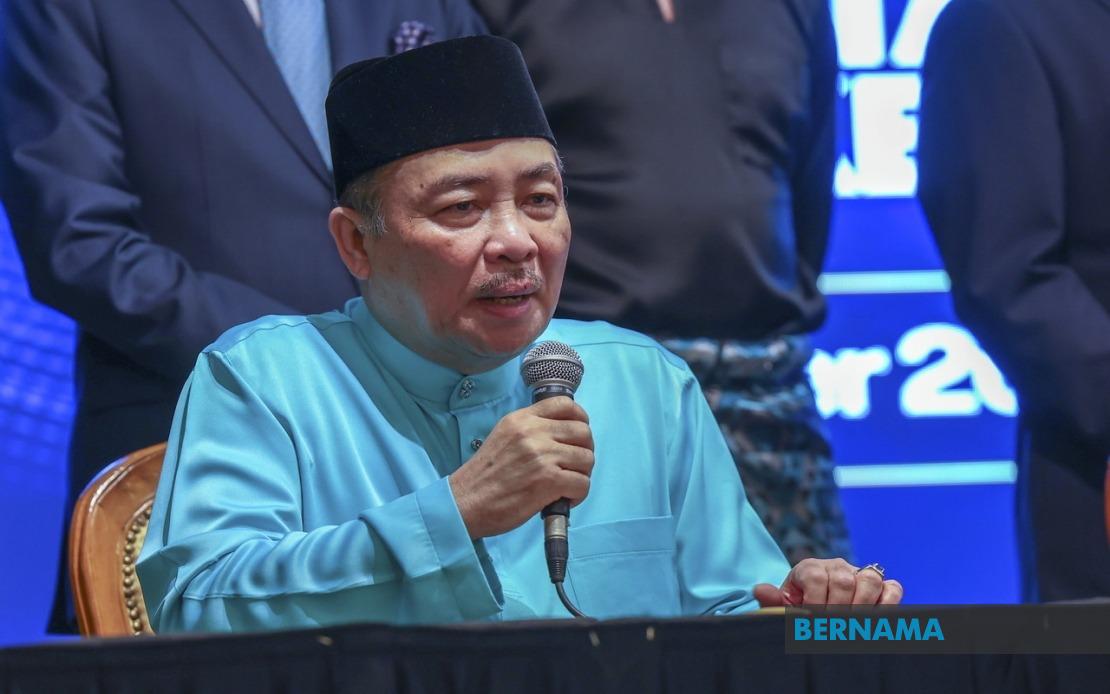
The Sabah state government is substantially expanding its educational support infrastructure through a RM100 million scholarship allocation aimed at both sustaining assistance for existing beneficiaries and welcoming new cohorts of learners. Chief Minister Datuk Seri Hajiji Noor announced this commitment as part of the government's broader strategy to strengthen human capital development across the Malaysian east coast state. The scholarship programme, known as Sabah State Government Scholarship (BKNS), will now support an expanded pool of 13,389 students while simultaneously opening doors for 2,182 additional scholars entering the system this academic year.
The decision reflects a deliberate policy pivot toward prioritising science, technology, engineering and mathematics disciplines, areas where Sabah recognises critical skills gaps in its regional economy. By channelling substantial resources into STEM education, the state government is responding to both domestic workforce requirements and the increasingly technical nature of sectors driving economic growth throughout Southeast Asia. This focus demonstrates an understanding that traditional educational models alone cannot adequately prepare students for the rapid technological transformation reshaping job markets across the region.
Beyond the flagship BKNS programme, Sabah has constructed a comprehensive support ecosystem comprising multiple assistance initiatives introduced since 2021. These complementary schemes address different financial barriers students and families encounter. The Higher Education Institution Registration Cash Assistance (BUDI) targets administrative costs at university entry points, while Special Examination Cash Assistance (BAKTI) alleviates expenses associated with crucial qualification assessments. Recognising the digital divide as a critical barrier to equitable learning opportunities, the Ihsan Computer Assistance (BAIK) initiative distributes technology resources to students lacking home access to computers and internet connectivity.
Transport costs represent another substantial burden for students, particularly those from rural areas seeking opportunities in urban centres. The Sabah Student Flight Ticket Assistance (GRS-SUBFLY) programme acknowledges the geographic realities of Sabah's dispersed settlement patterns and addresses the considerable financial strain of inter-regional travel. Complementing these targeted schemes, the State Higher Education Student Contribution (SENTOSA) provides direct financial support to help manage the cumulative costs of tertiary education. Together, these programmes create what amounts to a holistic financial safety net, reducing the likelihood that capable students abandon educational pursuits due to economic hardship.
Hajiji's public positioning of education as foundational to state development reflects a conviction that human capital accumulation offers the most sustainable pathway to long-term competitive advantage. His emphasis on producing graduates who are not merely knowledgeable but specifically skilled, competitive and creative suggests recognition that Sabah must differentiate itself within regional and global talent markets. This language choice signals awareness that technical competence alone, without accompanying adaptive and innovative capacities, represents insufficient preparation for the accelerating pace of economic change.
The Chief Minister explicitly identified three strategic sectors requiring intensified focus: oil, gas and energy; Technical and Vocational Education and Training (TVET); and Artificial Intelligence. The prominence granted to energy sector development reflects Sabah's continued dependence on petroleum revenues, an industry facing both transformation pressures and long-term sustainability questions. By encouraging student engagement with energy sectors, the government aims to ensure local communities benefit from extraction and processing activities rather than exporting raw materials while importing skilled labour. This approach carries obvious economic logic but also addresses legitimate grievances about resource disparities between resource-rich states and the peninsula.
The deliberate inclusion of TVET reflects a significant policy shift, acknowledging that university degree pathways alone cannot address workforce development requirements. Many Southeast Asian economies, including Malaysia, have historically undervalued vocational training despite its proven capacity to generate employment opportunities aligned with immediate labour market needs. Sabah's amplified commitment to this sector suggests recognition that not all students benefit from traditional academic trajectories, and that alternative pathways deserve equal institutional support and social prestige.
The spotlight trained on Artificial Intelligence represents forward-looking policy positioning. As AI capabilities accelerate across sectors from agriculture to financial services, early educational investment positions Sabah to participate in emerging opportunities rather than facing displacement. Early exposure to AI fundamentals in secondary education, coupled with specialised tertiary programmes, can create a cadre of graduates capable of deploying these technologies contextually within local settings rather than merely consuming imported solutions.
The financial commitment itself merits contextualisation within Sabah's broader budgetary constraints. As an oil and gas-producing state, Sabah's revenues fluctuate with commodity prices, creating inherent budgetary volatility. Allocating over RM100 million annually to scholarships represents a substantial claim on resources, particularly given competing development priorities in healthcare, infrastructure and social welfare. This investment choice implicitly reveals state leadership priorities and suggests confidence that educational spending generates returns exceeding alternative allocations.
For Malaysian education policy observers, Sabah's approach offers a model of differentiated regional strategy. Rather than attempting to replicate peninsula-centric policies, the state has constructed interventions responsive to its specific geographic, economic and demographic characteristics. This localised customisation stands in contrast to more centralised national approaches and demonstrates how devolved education governance, within appropriate constitutional boundaries, can generate contextually appropriate solutions.
The expansion of scholarship beneficiaries from existing cohorts to 13,389 total recipients, alongside 2,182 new additions, suggests programme maturation and proven institutional capacity. These are not speculative pilot initiatives but established systems demonstrating sustained state commitment. For students in Sabah, this expansion provides tangible evidence that educational aspirations need not yield to financial constraints, a message carrying particular resonance in families where no previous generation has pursued higher education.
Looking forward, the success of these initiatives depends substantially on outcome tracking beyond mere enrolment metrics. Completion rates, graduate employment outcomes, and longitudinal income data would indicate whether scholarship investments translate into genuine economic mobility and skill development. The next phase of policy evaluation should examine whether scholarship recipients disproportionately concentrate in particular sectors or whether the system successfully channels students across the full spectrum of identified priority fields. Such analysis would inform whether current resource allocations require adjustment and whether educational inputs genuinely map to workforce output requirements.

