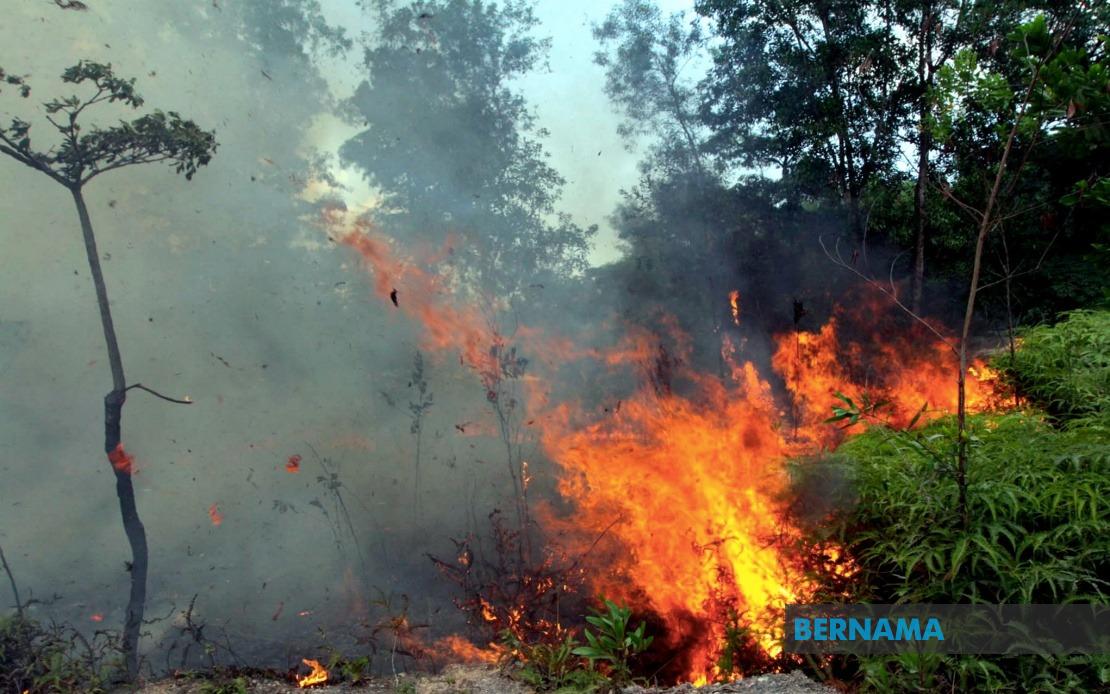
The Sabah Fire and Rescue Department has escalated warnings against open burning activities as transboundary haze originating from forest fires in Indonesia's Kalimantan region begins affecting air quality across northern Borneo. The department's director Mohd Pisar Aziz attributed the deteriorating conditions to southerly and central winds carrying thick smoke plumes toward Sabah, with visibility and air quality markedly compromised in populated areas including the state capital and surrounding districts.
Meteorological patterns are amplifying the haze crisis. The prevailing wind systems channeling smoke from Indonesia's drought-affected regions have created conditions where atmospheric pollution is concentrating over Sabah rather than dispersing. Kalimantan's forest fires, exacerbated by seasonal dry conditions, have become a recurring regional challenge that directly impacts Malaysia's eastern states. The combination of cross-border smoke and locally elevated temperatures creates a compounding environmental hazard that demands coordinated prevention efforts.
Current air quality measurements reflected moderate pollution levels across Sabah when authorities issued their advisory. Kota Kinabalu recorded the highest Air Pollutant Index reading at 83, while Politeknik Kota Kinabalu measured 81 and Kimanis reached 76 on the APIMS system. Although these figures remained within the moderate band, Mohd Pisar cautioned that vulnerable populations warrant heightened vigilance regardless of numerical classifications, emphasizing that asthma sufferers, young children, and elderly residents face disproportionate health risks.
The department implemented formal open-burning restrictions in specific districts meeting official criteria. Both Keningau and Pitas had experienced seven consecutive rainless days through August 10, satisfying the regulatory threshold for enforcement. The ban encompasses the burning of household refuse, dried vegetation, garden trimmings, construction debris, and any other materials capable of releasing harmful emissions that would compound the regional haze accumulation. This regulatory response reflects recognition that local burning activities, however individually modest, collectively worsen air quality during periods of transboundary pollution.
The public health implications extend beyond immediate respiratory discomfort. Prolonged exposure to haze-laden air increases risks for cardiovascular complications, particularly among individuals with pre-existing conditions. Sabah's tropical climate, combined with seasonal weather patterns, creates windows where regional air quality becomes especially vulnerable to external pollution sources. The Malaysian government's perspective on this recurring phenomenon has shifted toward emphasizing prevention of local fire sources, acknowledging that while transboundary haze remains beyond domestic control, preventing unnecessary local burning represents a concrete mitigation strategy.
Authorities recommended specific behavioral modifications to minimize haze exposure. Residents were advised to restrict outdoor activities during peak heat hours between 11 am and 4 pm, maintain adequate hydration to support respiratory system function, and utilize protective face masks when venturing into visibly affected areas. These recommendations reflect standard public health protocols for haze episodes but carry particular weight given the anticipated persistence of smoke drifting from neighboring regions. Maintaining electrical infrastructure in optimal condition also forms part of the prevention strategy, as faulty wiring poses fire initiation risks during dry conditions.
Cigarette disposal practices emerged as a secondary focus area, highlighting how seemingly minor daily habits accumulate into significant fire hazard during low-humidity periods. The department specifically cautioned against casual discarding of burning cigarette butts, particularly in vegetation-adjacent locations where immediate ignition becomes possible. This emphasis reflects documented cases where carelessly disposed smoking materials have triggered fires during dry seasons, subsequently contributing to air quality degradation across broader geographic areas.
Community reporting mechanisms form the operational backbone of fire prevention efforts. The Fire and Rescue Department activated its emergency hotline at 999 for rapid response to observed fires or suspicious activities, encouraging residents to immediately report potential incidents rather than waiting for professional discovery. This distributed surveillance approach transforms the general population into active participants in regional air quality management, recognizing that rapid fire detection and suppression remain far more effective than attempting to manage established fires and their atmospheric consequences.
For Malaysian observers, this situation underscores the persistent challenge of transboundary environmental governance in Southeast Asia. Sabah's experience mirrors similar struggles across the region where prevailing weather systems regularly transport pollution across political boundaries, creating situations where one nation's environmental management practices directly impact neighboring jurisdictions. Indonesia's forest fire control remains inadequate despite international pressure and domestic policy frameworks, leaving affected Malaysian states to emphasize prevention of local emission sources as their primary actionable response. The underlying structural problem—inadequate enforcement of Indonesian land-use regulations and fire prevention protocols—persists beyond Malaysia's direct influence, making regional cooperation initiatives increasingly critical for sustained improvement.

