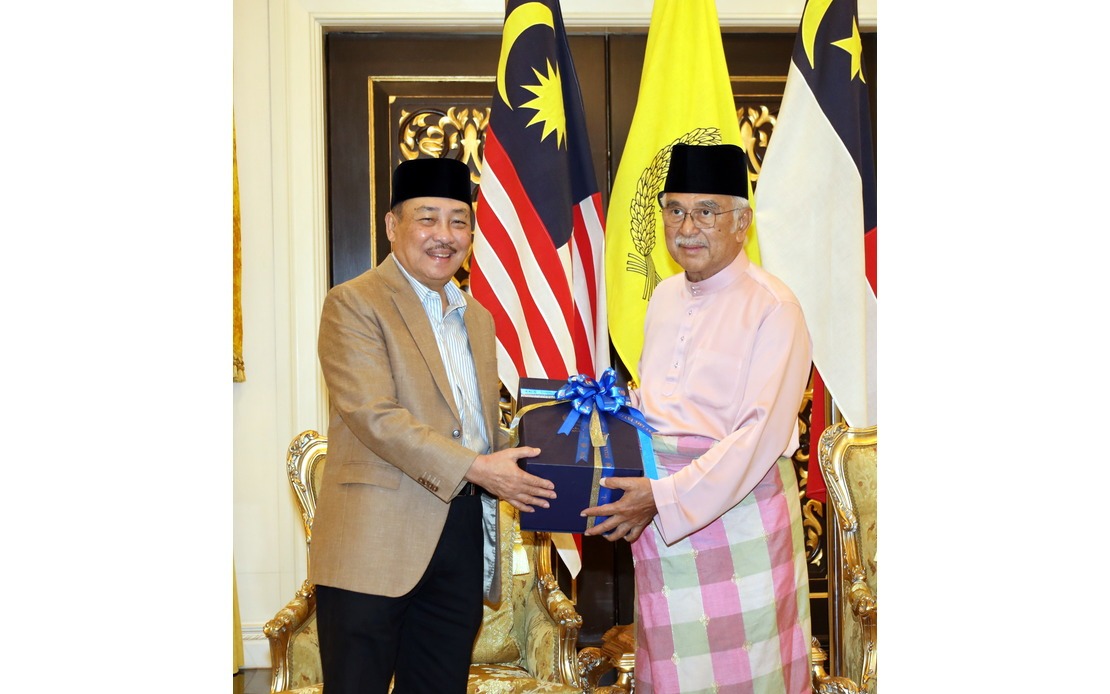
Sabah Chief Minister Datuk Seri Hajiji Noor has reinforced political and diplomatic bonds between the northern Borneo state and peninsular Malaysia through a formal courtesy visit to Melaka's Yang Dipertua Negeri Tun Dr Mohd Ali Mohd Rustam. The engagement, held at Istana Melaka in Bukit Beruang, represents part of an ongoing pattern of inter-state consultation among Malaysia's leadership that seeks to align regional development priorities and foster collaborative governance across the federation.
The meeting brought together two significant figures within Malaysia's federal framework, with Hajiji arriving alongside a substantive delegation that reflected the seriousness with which Sabah's administration approaches the engagement. The entourage included representatives from critical portfolio areas, indicating that discussions extended beyond ceremonial pleasantries into substantive policy matters affecting both constituencies. Sabah Rural Development Minister Datuk Rubin Balang, Agriculture, Fisheries and Food Industry Minister Datuk Jamawi Jaafar, and Nominated Member of the Sabah State Legislative Assembly Datuk Mohd Razali Mohd Razi accompanied the Chief Minister during the approximately 3.35 pm reception.
Such bilateral visits between state leaders carry particular significance within Malaysia's constitutional framework, where individual state governments maintain substantial autonomy over economic development, agricultural policy, and resource management. For Sabah, which has long sought to leverage its vast natural resources and geographic position while navigating complex federal-state relationships, engagement with other state leaders provides opportunities to build coalitions around shared interests and coordinate positions on matters that benefit from cross-state cooperation.
The discussions centred on matters deemed mutually beneficial to both jurisdictions, though the specific details of substantive negotiations remain undisclosed. The deliberate invocation of "mutual interest" in official statements suggests that both governments identified concrete areas for collaboration, whether in resource sharing, infrastructure development, trade facilitation, or alignment on national policy matters requiring state-level input. Such visits often precede formal agreements or cooperative frameworks that may take months to operationalise.
Melaka's role as a peninsular gateway state makes it strategically important for East Malaysian engagement with the federal government and other western states. The state has increasingly positioned itself as a commercial hub and investment destination, making inter-state dialogue particularly valuable for states like Sabah seeking to establish supply chains, coordinate logistics, or develop joint ventures. The presence of agricultural and rural development ministers in Hajiji's delegation hints at potential collaboration in these sectors, where scale economies and regional coordination could unlock mutual benefits.
Inter-state courtesy calls within Malaysian politics serve multiple functions beyond immediate policy outcomes. They signal to federal authorities and the broader political establishment that individual states remain engaged and cooperative within the federation's framework, a particularly important message for Sabah given historical tensions over revenue sharing and resource autonomy. These high-level visits also provide platforms for state leaders to address shared concerns, whether pertaining to federal support for development initiatives, fair allocation of development funds, or consultation on policies affecting state interests.
The ceremonial dimension—including the afternoon tea reception hosted by Tun Mohd Ali—reflects diplomatic protocols that underpin Malaysia's federal system. Such formalities, whilst sometimes appearing purely symbolic, reinforce the principle that state governments engage as respected partners with comparable status rather than subordinate administrative units. For Sabah's leadership, which operates at considerable geographic distance from federal capitals and has historically felt marginalised in national decision-making processes, these protocols affirm recognition of the state's standing.
The timing of such visits occasionally aligns with broader political developments or policy announcements at the federal level, though the available information does not specify whether this visit coincided with particular initiatives. Nonetheless, the regular cadence of high-level state-to-state engagement ensures that regional interests maintain visibility within Malaysia's political ecosystem, preventing any single state's concerns from being overlooked during national policy formulation.
For observers in Southeast Asia monitoring Malaysian federalism, such interactions illustrate how the country's thirteen states remain active political entities despite the centre's gravitational pull. Unlike more centralised systems, Malaysia's constitutional arrangement preserves meaningful state authority and provides frameworks for inter-state cooperation that exist partially independent of federal mediation. These mechanisms allow states to pursue coordinated positions and develop bilateral relationships that advance regional prosperity.
The composition of Hajiji's delegation, weighted toward economic portfolio holders, particularly underscores the substantive nature of such visits in contemporary Malaysian politics. State-level ministers responsible for agriculture, rural development, and food security represent precisely the sectors where Sabah possesses competitive advantages and where regional collaboration could enhance overall sector performance across Malaysia. Similar visits likely generated discussion of best practices, resource complementarities, and potential joint initiatives.
Moving forward, whether this courtesy call translates into formal cooperative frameworks or joint development projects will likely become apparent through announcements from either state government's official channels. The visit affirms that bilateral state engagement remains an important feature of Malaysia's political landscape, complementing and sometimes preceding federal-level coordination. For Sabah particularly, maintaining active relationships with diverse state governments across the peninsula strengthens the state's voice in national deliberations and creates opportunities for strategic partnerships that may not always be available through federal mechanisms alone.

