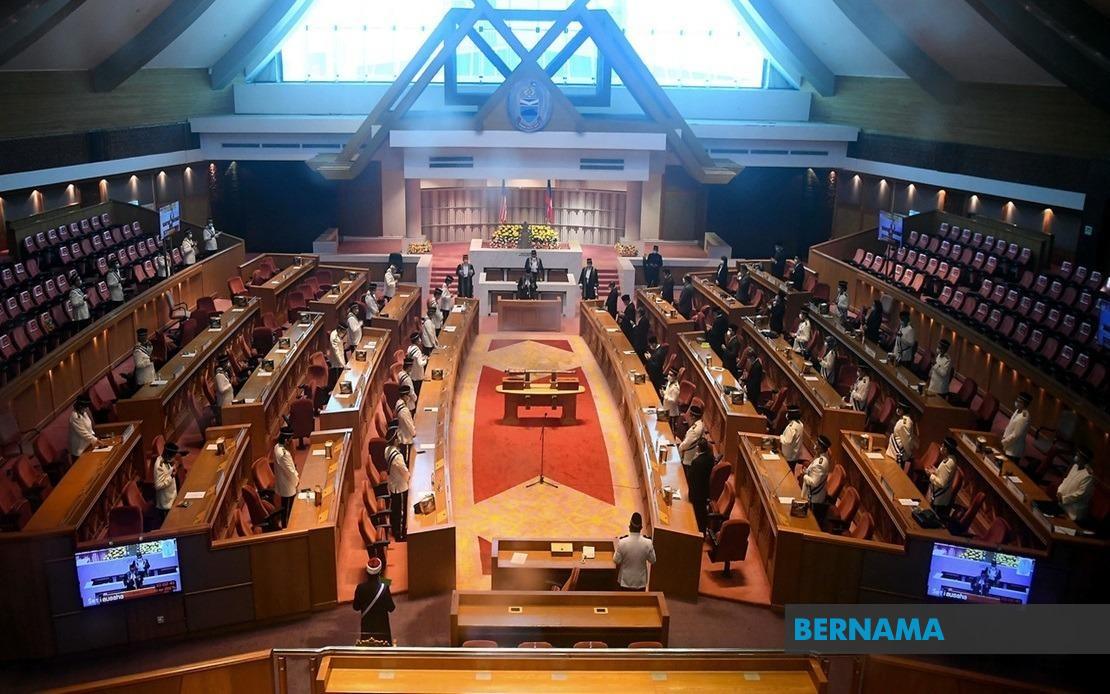
Sabah's water sector faces a significant challenge that mirrors struggles across Southeast Asia: nearly 60 per cent of treated water disappears before reaching consumers' taps. The state's non-revenue water rate stood at 59.6 per cent last year, a figure the Sabah Water Department aims to halve to 45 per cent by the end of this decade, as revealed during state legislative assembly proceedings in Kota Kinabalu on July 23. This ambitious target reflects growing recognition that water security and financial sustainability in the utilities sector cannot be decoupled from physical system performance and operational rigour.
Non-revenue water—water lost through leakage, theft, and metering failures—represents a substantial drag on utility finances and service reliability. For Sabah, the 59.6 per cent rate means that of every litre treated and pumped into the distribution network, nearly three-fifths never generate income or reach intended users. Assistant Minister of Works and Utilities Datuk Limus Jury outlined a comprehensive intervention strategy during his response to appointed assemblyman Datuk Chin Shu Ying, signalling the seriousness with which the state government views the problem. The approach extends beyond quick fixes to address the systemic roots of water loss through integrated operational oversight, criminal enforcement against illegal connections, and capital-intensive infrastructure renewal.
The Sabah Water Department's response strategy encompasses multiple concurrent initiatives designed to operate at different scales and timeframes. Critical pipeline replacement ranks among the most expensive interventions but offers the greatest long-term payoff, addressing the physical decay that characterises ageing distribution networks across the region. Alongside this capital programme, JAS is systematically upgrading consumer metering infrastructure, replacing faulty meters and all units exceeding seven years in service life. These parallel efforts target both the supply side—reducing water loss from the network itself—and the demand side, ensuring accurate billing and identifying consumption anomalies that signal leakage or tampering.
Pressure management represents another dimension of the comprehensive approach. By controlling water pressure within optimal ranges across different network segments, utilities reduce stress on pipelines and fittings, minimising ruptures and seepage. This technique, widely adopted across water-stressed regions from the Middle East to Asia-Pacific, requires investment in pressure reduction valves and monitoring infrastructure but yields substantial returns through reduced physical losses. Complementing these measures, JAS has deployed proactive leak detection and repair capabilities, moving away from reactive modes where leaks are addressed only after customer complaints to systematic identification of losses before they become major breaks.
Federal and state cooperation structures the implementation roadmap. Under the 13th Malaysia Plan framework, the federal government is funding a holistic non-revenue water programme encompassing 18 districts, while the state government extends coverage to 12 additional districts, collectively addressing 30 districts across Sabah. This division of financial responsibility distributes the burden appropriately while ensuring comprehensive coverage. The scope of coordination reflects understanding that water loss reduction requires sustained, well-resourced programmes rather than episodic interventions dependent on available budgets.
The NRW Rehabilitation, Monitoring and Maintenance Active Leakage Control Project represents the most intensive component, focusing on three major urban and semi-urban districts where population density and consumer concentration justify the elevated investment per capita. Kota Kinabalu's leakage control initiative commenced on September 28, 2022, with expected completion on September 28 of the current year, targeting reduction of 10 million litres daily. The project's timeline—spanning exactly one year—reflects the compressed nature of major infrastructure overhauls and the political imperative to demonstrate progress within election cycles or administrative terms.
The parallel initiatives in Tawau and Lahad Datu, both launched on February 19, 2024, follow an extended implementation schedule extending to February 19, 2027. These three-year programmes target daily losses of 14 million litres and 10 million litres respectively, indicating that Lahad Datu and Kota Kinabalu experience comparable loss intensities while Tawau's larger figure likely reflects either worse network conditions or greater absolute water throughput. Collectively, the three targeted districts stand to recover 34 million litres daily—a volume equivalent to serving tens of thousands of additional households without expanding water supply infrastructure.
For Malaysian policymakers and regional observers, Sabah's initiative offers instructive lessons about water sector governance. The state's commitment to transparency—disclosing a high non-revenue water rate that many utilities would prefer to obscure—creates accountability and enables comparative benchmarking. The reduction target of 45 per cent by 2030 remains ambitious but attainable; comparable Asian utilities have achieved similar or better rates through sustained programmes, suggesting the goal reflects realistic assessment rather than political posturing.
The financial implications extend beyond operational efficiency. Non-revenue water reduction increases revenue available for reinvestment, improves cost recovery ratios that determine utility financial health, and reduces the need for expensive supply augmentation projects. For Sabah, where growing population and economic development will intensify water demand, loss reduction offers a less capital-intensive pathway to meeting service expansion commitments than constructing new dams or treatment plants. This efficiency gain proves particularly valuable in a regional context where many authorities face constrained budgets and competing claims on development expenditure.
Implementation risks remain substantial. Complex pipeline networks in tropical climates deteriorate rapidly, underground infrastructure creates detection and access challenges, and consumer compliance with anti-theft measures requires sustained public engagement. Staff retention in technical roles, particularly in smaller districts where Sabah's programme extends, presents persistent challenges across utilities. Procurement delays and contractor performance issues have historically undermined similar programmes across Southeast Asia, and vigilance will be required to maintain timeline adherence.
The strategic timing of these investments aligns with broader climate and demographic pressures reshaping water security across the region. Sabah's relatively water-abundant endowment contrasts sharply with scarcity challenges facing much of mainland and maritime Southeast Asia, yet even well-resourced utilities cannot afford indefinite water loss. By addressing non-revenue water now, Sabah positions itself to manage future constraints through efficiency rather than rationing or supply conflicts. The programmes underscore recognition that water security fundamentally depends on treating existing supplies as precious resources requiring careful stewardship, not abundance to be squandered through neglect.

