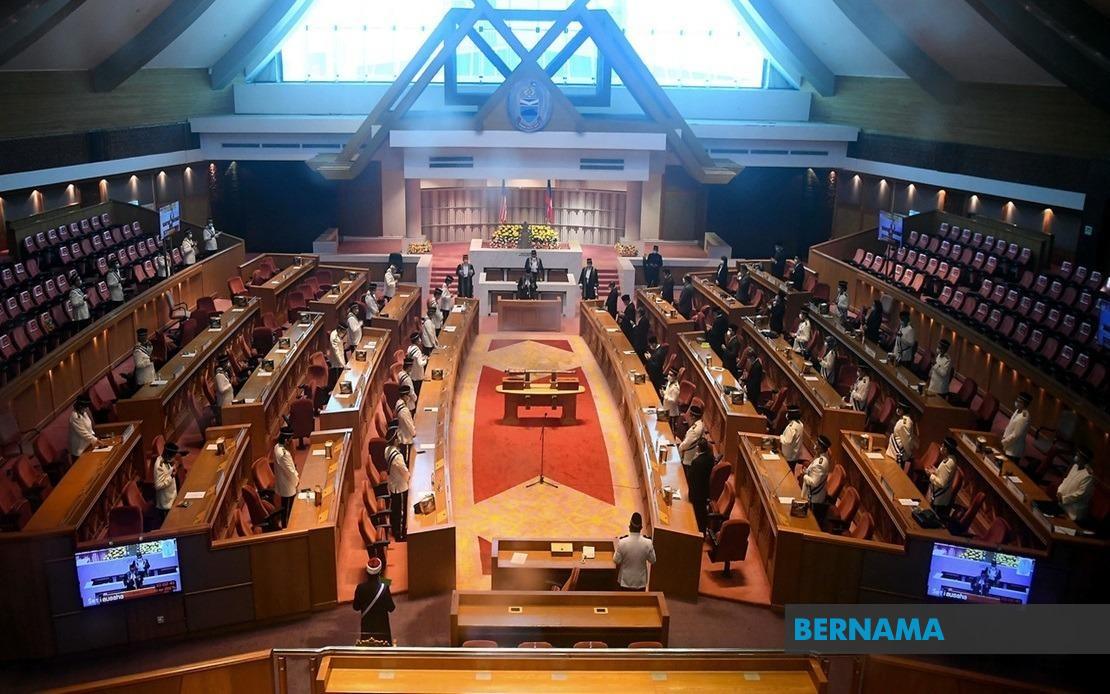
The Sabah State Legislative Assembly has endorsed the Sabah Ports Authority (Amendment) Bill 2026, bringing legislative clarity to administrative changes implemented when the state restructured its cabinet portfolios in December 2025. Deputy Chief Minister III Datuk Ewon Benedick, who doubles as Minister of Industrial Development, Entrepreneurship and Transport, introduced the bill to a full chamber in Kota Kinabalu on July 22, with Deputy Speaker Datuk Al Hambra Tun Juhar overseeing proceedings. The measure weathered scrutiny from six assemblymen during debate before securing passage, signalling broad parliamentary consensus on the administrative realignment.
At its core, the amendment addresses a functional gap created when the state government transferred port-related responsibilities from one ministry to another. Previously, the Sabah Ministry of Public Works and Utilities held jurisdiction over port affairs; this authority now rests with Ewon's newly configured portfolio focused on industrial development, entrepreneurship and transport. The shift reflected Sabah's policy pivot towards viewing ports as economic development engines rather than purely public infrastructure matters, aligning port oversight with broader industrialisation objectives and entrepreneurial development initiatives.
The legislative amendment specifically revises the Sabah Ports Authority Enactment 1981, a foundational statute that had grown misaligned with contemporary government structures. The principal technical issue centred on outdated terminology within Section 2 of the enactment, which defined the term "Minister" in relation to communications and public works portfolios. This definition had become obsolete following the December 3, 2025 restructuring, creating potential legal ambiguity about which minister wielded authority over the Sabah Ports Authority and its operations.
Ewon emphasised during the sitting that the amendment poses no budgetary burden on the state exchequer, a reassurance likely welcomed by assemblymen concerned with fiscal discipline. The bill contains no provisions requiring additional expenditure, nor does it reallocate existing budget allocations between ministries. This fiscal neutrality removes potential impediments to passage and suggests the amendment represents administrative efficiency rather than substantive policy expansion.
Crucially, the legislation preserves the operational integrity of the Sabah Ports Authority itself. The amendment leaves untouched the authority's underlying policies, operational functions, and statutory powers, meaning port operations continue uninterrupted by the ministerial reshuffle. This stability is essential for maritime commerce and industrial activity dependent on predictable port governance. Shipping lines, cargo operators and businesses reliant on port facilities face no disruption to service standards or administrative procedures.
A transitional provision embedded in the bill addresses a practical concern: decisions, approvals and administrative actions undertaken by the minister previously responsible for port affairs retain full legal validity despite the portfolio transfer. This backward-looking protection ensures that contracts, licenses, permits and other ministerial determinations made under the old structure remain enforceable and unambiguous. Without such a provision, questions might arise about the legal standing of actions taken during the interim period, potentially creating litigation risks and administrative confusion.
The amendment reflects Sabah's evolving economic strategy under its restructured cabinet framework. By clustering port affairs with industrial development and entrepreneurship rather than public works, the state signals that port development serves as a strategic lever for attracting investment, facilitating trade and building industrial capacity. This repositioning aligns with broader Southeast Asian trends viewing strategic infrastructure through a developmental rather than maintenance lens, with ports understood as nodes in supply chains and economic corridors rather than purely logistical facilities.
For Malaysian observers, the Sabah precedent illustrates how states navigate administrative realignment while maintaining legal continuity. The amendment demonstrates careful legislative drafting designed to implement policy changes without creating ambiguity or legal vulnerability. Such precision becomes increasingly important as Malaysian states experiment with organisational restructuring to respond to changing economic circumstances and priorities.
The passage of this bill also underscores the state assembly's role in validating executive decisions through legislative form. While cabinet restructuring falls within the Chief Minister's prerogative, translating those changes into amended statutory frameworks requires assembly endorsement. The multi-day debate involving six assemblymen suggests this process involved substantive review rather than rubber-stamping, with legislators probing the implications and confirming the amendment's technical sufficiency.
Looking forward, the amendment positions Sabah's port sector within a ministerial structure explicitly designed to harmonise maritime infrastructure with industrial and entrepreneurial development. This integration may facilitate coordinated policy development linking port investment, industrial estate development and business support services. The structural coherence could yield synergies impossible when port affairs fragmented across different ministry silos focused on public works versus economic development.

