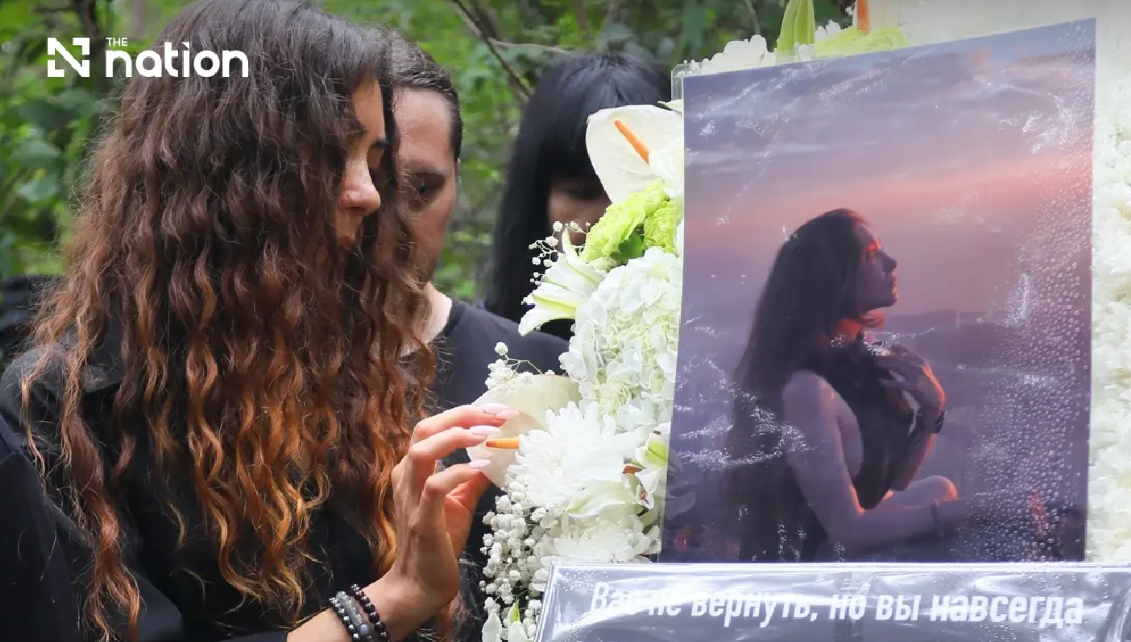
An emotional ceremony in Chon Buri province on Thursday brought together Thai and international mourners to honour five people allegedly murdered by the same assailants, with the mother of two Russian victims publicly thanking the Thai community for its compassion during their family's devastating loss. Sharina Nazimova, who raised her children Diana and Roman alone, presided over the Buddhist rite held in Huai Yai subdistrict where the siblings were discovered. The gathering included provincial officials, police representatives, civil servants, and numerous members of the public who had followed the tragic case closely.
The memorial service, conducted according to Buddhist traditions, represented a final farewell for the victims. Monks chanted prayers and performed merit-making ceremonies intended to benefit the deceased, while mourners stood in silent tribute, their hands joined in prayer. The spiritual framework of the service provided a space for collective grieving, drawing together people from different backgrounds united by the shock of these crimes and a shared desire for justice. Both Thai and foreign attendees paid their respects, acknowledging the interconnected nature of this tragedy that crossed national boundaries.
Floral tributes dominated the physical landscape of remembrance. White carnations, lilies, and roses lay scattered around the memorial site, their pale petals symbolising purity, respect, and peaceful passage from life. These flowers carried particular significance in the context of mourning rituals, offering a visual representation of the hopes that the deceased might find tranquility. The choice of white blooms reflected both Buddhist and broader international funeral customs, creating a common language of grief that transcended cultural differences.
Among the personal touches that characterised the ceremony was a small but deeply meaningful gesture: a cup of coffee placed at the memorial alongside the flowers. Diana's family positioned her favourite beverage as a lasting remembrance, a tactile connection to daily life and intimate family memories. Such gestures often prove more moving than grand displays because they capture the specific details that define individual lives—the ordinary habits and preferences that made Diana unique. Observers noted that this personal tribute visibly affected many attendees, reminding them that behind the headlines lay real people with genuine personalities and cherished routines.
Nazimova's emotional response throughout the ceremony underscored the raw anguish that accompanies unexpected violent loss. Tears flowed as she acknowledged the support extended by Thai society, government bodies, and law enforcement officials. Her gratitude was not perfunctory but appeared deeply felt, reaching beyond conventional expressions to reflect genuine appreciation for the assistance her family had received. Relatives, friends, and sympathetic strangers provided comfort as she publicly grieved her children, their presence serving as visible affirmation that the family had not endured their suffering in isolation.
The broader significance of Nazimova's expressions of thanks lay in how they characterised Thai institutional and public responses to the case. She specifically commended police officers, government agencies, and volunteer workers, suggesting a coordinated and earnest effort to assist the family while pursuing the alleged perpetrators. In the context of international crime cases, such acknowledgments matter significantly, as they influence perceptions about how host nations treat foreign victims and their relatives. Thailand's visible engagement in supporting the grieving family during legal proceedings may contribute to how such incidents are perceived by international audiences and potential tourists.
Diana and Roman's conversion to Buddhism added another dimension to their mother's grief and the nature of their memorial. The family's practice of this faith shaped how they mourned, selecting Buddhist rituals that might have reflected choices the siblings themselves had made. This spiritual framework provided both comfort and structure during an incomprehensibly painful period, offering established traditions through which raw emotion could be expressed and processed. The presence of monks and the performance of traditional ceremonies honoured not only the deceased but also their chosen path of faith.
The investigation that preceded this memorial had centred on two suspects arrested at the end of July. Thana "Pong" Kerdthong, 43, and Thongchai "Thong" Srinil, 39, were apprehended in Wang Sombun district of Sa Kaeo province following a manhunt. Police alleged that the men encountered the siblings beside a road, falsely identified themselves as law enforcement officers, then restrained and transported them to a wooded area. According to investigators, the apparent motivation was simple theft—the suspects allegedly targeted Diana and Roman's motorcycle, a value proposition that resulted in five deaths.
The investigation expanded significantly after the suspects led police to burial sites. Initial discoveries of the Russian siblings were followed by the uncovering of remains belonging to a Thai family of three, suggesting the pair may have committed multiple murders or that their alleged crimes formed part of a larger pattern of violence. This discovery transformed the understanding of the incident from an isolated tragedy into something more systematic, raising troubling questions about whether authorities had overlooked previous suspicious deaths or disappearances.
Police investigations remained incomplete at the time of the memorial service, with officers still processing conflicting statements provided by the two suspects. The men had offered differing accounts of events, and investigators acknowledged that their versions had not been fully accepted and continued to be checked against forensic evidence and other investigative findings. This ongoing verification process meant that definitive clarity about exactly what occurred remained elusive, even as a formal memorial was held. The uncertainty surrounding details did not diminish the absolute reality of five deaths, but it did signal that the justice process would likely extend considerably into the future.
The convergence of these elements—grieving family members, international attendees, Thai officials, spiritual ceremonies, and ongoing criminal investigation—created a complex tableau reflecting modern realities of cross-border crime and transnational mourning. The case demonstrated how violence could instantly connect strangers from different nations through shared humanitarian concern. It also illustrated the extensive resources and coordination required to address such incidents, from initial investigations through memorial services and ultimately to legal proceedings that would determine accountability and provide some measure of closure to devastated families.

