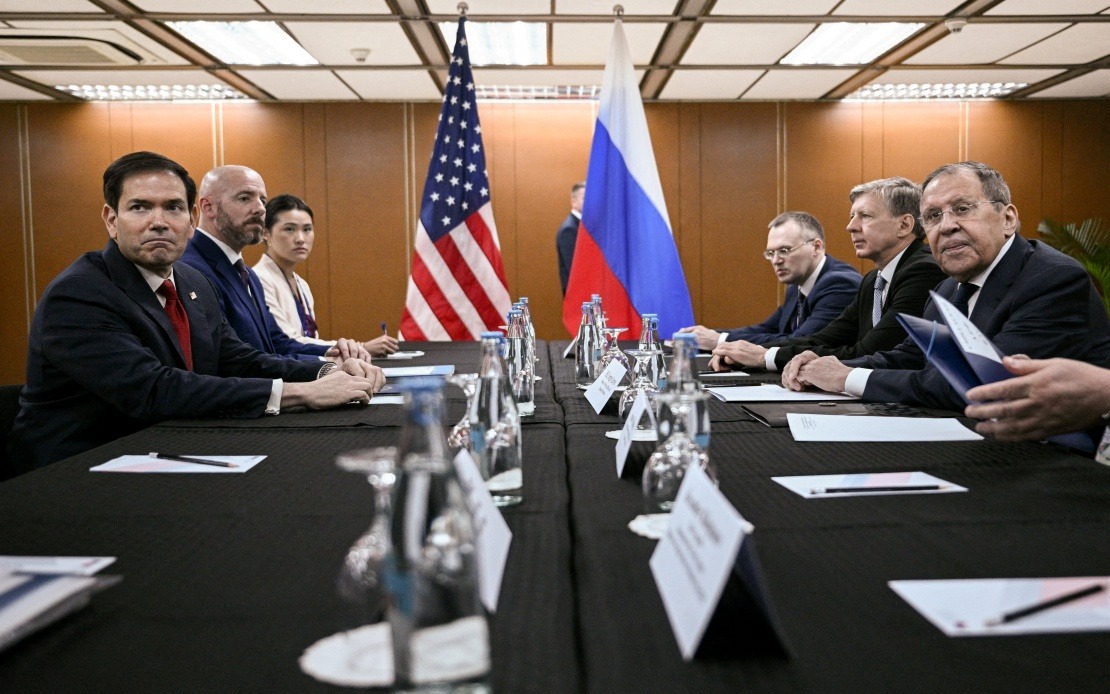
Russian Foreign Minister Sergey Lavrov and United States Secretary of State Marco Rubio have struck an agreement to preserve diplomatic channels between their respective foreign ministries, with particular emphasis on cooperation within multilateral forums. The accord, reached following their meeting in Manila on Thursday, represents a modest but potentially significant step toward preventing complete diplomatic isolation between the two major powers despite their profound disagreements on multiple fronts.
The commitment to sustain contacts within the framework of international organisations carries particular weight given the deteriorating bilateral relationship and ongoing geopolitical conflicts. By anchoring their dialogue to established multilateral platforms—such as the United Nations and other global institutions—both nations appear intent on avoiding a total breakdown of communication while stopping short of normalising broader relations. This approach allows Moscow and Washington to maintain some degree of engagement without appearing to concede ground on their respective positions regarding Ukraine, sanctions, or other contentious issues.
Beyond the general commitment to maintain channels, the two foreign ministers also addressed the practical matter of normalising working conditions for their respective diplomatic missions. Both Russia and the United States have faced significant constraints in conducting normal diplomatic operations, with staff reductions, visa complications, and operational restrictions hampering their ability to function effectively in each other's territories. Addressing these technical issues, even in limited fashion, could improve the day-to-day functionality of embassies and consulates that serve essential roles in maintaining whatever diplomatic relationships remain possible.
A particularly noteworthy element of their discussion involved space cooperation, with both officials welcoming the resumption of full-scale contacts between Roscosmos, Russia's state space agency, and NASA, the American space administration. Space exploration has historically served as a domain where Cold War adversaries found common ground, and the restoration of robust interaction between these technical agencies suggests both countries recognise the value of maintaining cooperation in areas where mutual benefit transcends political differences. Space collaboration requires sustained dialogue and joint planning, making it a potentially more durable channel for bilateral engagement than diplomatic relations alone.
The agreement also encompassed calls for developing interparliamentary exchanges and cultural ties between the two nations. Such people-to-people connections and parliamentary dialogue have traditionally served as pressure relief valves during periods of heightened tension, allowing alternative voices within governments and societies to maintain communication and understanding. The explicit emphasis on these softer forms of engagement indicates recognition that sustained contact across multiple levels—not merely between government officials—helps prevent misunderstandings and provides pathways for eventual reconciliation when political circumstances change.
For Southeast Asian observers, including Malaysian policymakers and analysts, this development offers important lessons about managing great power competition in the region. The Manila setting itself carries significance, as the Philippines chairs ASEAN and hosts ongoing dialogue with both Russia and the United States. The fact that Lavrov and Rubio chose to meet in a Southeast Asian venue demonstrates how this region remains a crucial arena where Moscow and Washington navigate their complex relationship, even amid broader strategic competition for influence across the Indo-Pacific.
The willingness of both powers to maintain diplomatic contacts through institutional frameworks reflects pragmatic recognition that complete rupture serves neither nation's interests. Russia, facing international isolation and sanctions, benefits from any opportunity to present itself as a responsible actor willing to engage through proper channels. The United States, meanwhile, maintains its position as a leading global power by demonstrating its ability to compartmentalise relations, engaging adversaries where possible while protecting vital interests. This calculated approach differs markedly from Cold War dynamics, where both superpowers maintained extensive diplomatic machinery despite existential competition.
The emphasis on international organisations as the primary venue for contact carries strategic implications that extend beyond Russia-US relations. By formalising an agreement to interact within multilateral frameworks, both nations essentially commit to respecting international law and institutional procedures, at least in principle. This approach strengthens the legitimacy of organisations like the United Nations at a moment when these bodies face questions about their relevance and effectiveness in managing great power competition.
For Malaysia and other ASEAN members, the maintenance of Russia-US diplomatic channels through international forums reinforces the possibility of managing the region's geopolitical complexities without being forced into exclusive alignments. Should Moscow and Washington prove capable of reasoned engagement even during periods of acute tension, smaller nations retain greater flexibility in their foreign policies. The resumption of space cooperation particularly demonstrates that technical and scientific domains can remain insulated from political conflicts, a principle with applications across numerous fields where Southeast Asian nations cooperate with both major powers.
The agreement to continue contacts must be viewed against the backdrop of broader Russia-US relations, which remain fraught with fundamental disagreements about international law, regional spheres of influence, and fundamental values. This narrow accord does not herald any thaw in the fundamental antagonism but rather represents a mutual decision to preserve minimal contact structures. Both nations appear to understand that allowing diplomatic channels to atrophy entirely eliminates possibilities for eventual negotiated settlements or crisis management during acute incidents.

