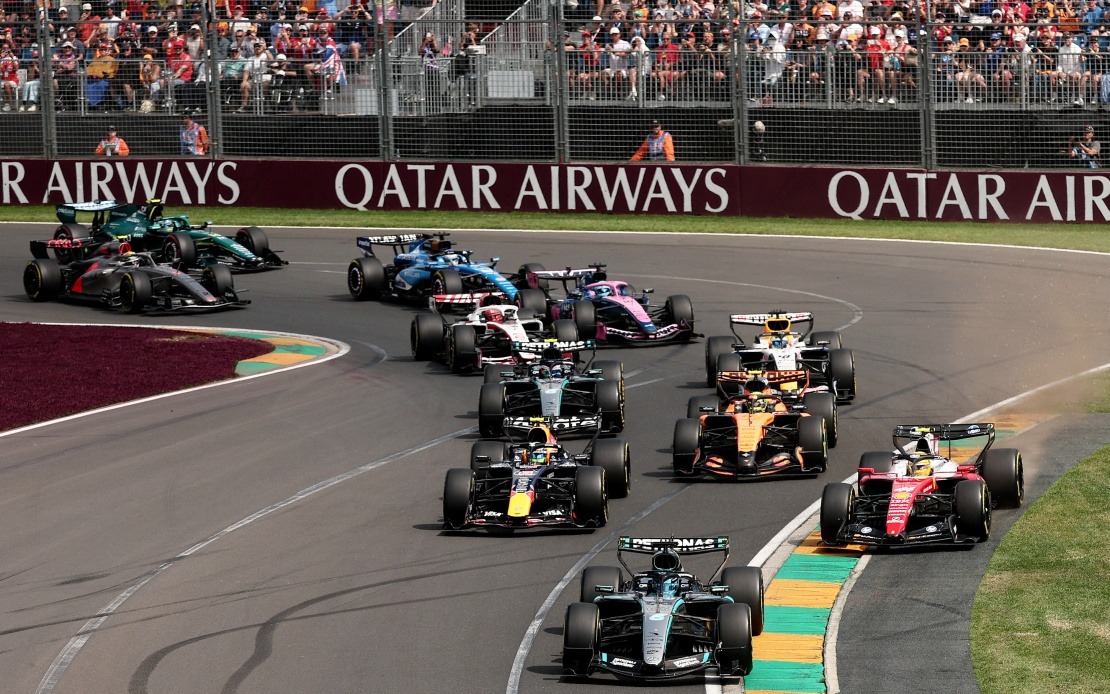
George Russell's world championship aspirations took another blow at Spa-Francorchamps following a frustrating retirement during the Belgian Grand Prix, an outcome that prompted an unfiltered tirade across team radio. The Mercedes driver's explosive outburst reflected mounting frustration as technical maladies continue to plague his season, with the 26-year-old now trailing rookie teammate Kimi Antonelli by 50 points. Antonelli's dominant performance—securing his sixth victory across ten races completed so far—underscores Mercedes' internal hierarchy shift and the urgency surrounding Russell's need to recover momentum before the summer break.
Russell's afternoon unravelled following a first-lap engine deployment issue that left him vulnerable to competitors behind, setting the stage for a subsequent collision with Lewis Hamilton that ended his race prematurely. The incident itself proved symptomatic of a broader mechanical malfunction affecting the car's energy management system. In candid radio communications that remained unbroadcast during Sunday's race, Russell expressed his exasperation, questioning the state of battery charge management on the straightaway and characterising the entire weekend as unacceptable. His raw emotional response highlighted the psychological toll of systemic reliability failures accumulating throughout the 2024 campaign.
Mercedes engineering staff had initially attributed the qualifying deficit—approximately half a second behind Antonelli—to driver technique, a diagnosis that subsequent technical analysis would thoroughly debunk. The team's investigation revealed a genuine engine-related anomaly responsible for the performance gap, not a flaw in Russell's approach. This misdiagnosis, later corrected, compounded frustration on both sides and illustrated the complexity of diagnosing issues within modern Formula 1 powertrains. The discovery came during qualifying preparation, meaning Russell had effectively carried the handicap into race day without full understanding of its source.
The underlying technical problem, as Mercedes team principal Toto Wolff explained in his post-race assessment, stemmed from insufficient energy availability for deployment heading into turn 18. This shortfall accounted for roughly half the performance differential Russell experienced relative to Antonelli, with broader reliability concerns responsible for the remainder. Wolff characterised the issue as identifiable primarily because Spa's high-speed layout demands maximum energy harvest and deployment. Paradoxically, this visibility afforded Mercedes an opportunity for remediation before the championship's next phase, though the discovery arrived too late to salvage Russell's weekend.
Wolff's remarks underscored the sophistication of contemporary hybrid powerunit architecture, where energy harvesting and deployment strategies involve intricate driver-vehicle interaction under the sport's evolving technical regulations. The Mercedes principal acknowledged that new regulatory frameworks occasionally generate unforeseen reliability challenges, normalising such difficulties whilst simultaneously committing his team to resolution. His diplomatic yet transparent response sought to contextualise Russell's evident frustration whilst maintaining organisational credibility, a delicate balance necessary when managing an elite driver experiencing consecutive setbacks.
Russell's mental and emotional state emerged as an additional concern following Spa. The driver acknowledged feeling "numb to disappointment" after accumulating mechanical failures throughout 2024, suggesting psychological fatigue beyond typical championship pressure. This emotional numbness represents a worrying development for a competitor who typically channels competitive fire into performance gains. Wolff demonstrated awareness of this psychological dimension, explicitly referencing Russell's emotional volatility whilst framing it as characteristic of elite athletes encountering adversity. The team principal's statement that "all drivers have difficult spells" attempted to normalise Russell's struggles whilst reassuring him of organisational support.
The championship mathematics grow increasingly bleak as the season progresses toward the summer break. Russell's 50-point deficit to Antonelli, the teenage Italian prodigy who has remarkably captured six victories in ten completed rounds, represents a substantial deficit against a teammate who has rapidly adapted to Formula 1's demands. Antonelli's early success challenges conventional wisdom about rookie progression and raises questions about Mercedes' competitive position relative to rivals, though resource allocation and internal team dynamics undoubtedly favour the ascending star. Russell must reverse this trajectory beginning at the Hungarian Grand Prix, the final round before the mid-season hiatus when constructors traditionally reassess strategic direction.
For Malaysian and broader Southeast Asian Formula 1 audiences, Russell's predicament illustrates the sport's unpredictable nature, where technical reliability remains as critical as driver skill in determining championship outcomes. Mercedes' internal dynamics merit close observation, as team management decisions regarding resource distribution and development focus invariably reflect leadership's championship priorities. Wolff's comments suggest continued backing for both drivers, yet performance metrics tell a different story regarding competitive parity within the team.
Russell's desperation became evident in his plea for mechanical resolution before Hungary, articulated as something akin to prayer rather than confident expectation. This psychological vulnerability, emerging after sustained technical failures, potentially undermines the mental resilience necessary for championship recovery. Conversely, adversity has historically forged determination within elite athletes; Russell's response across the remaining nine races before summer recess will substantially determine whether current struggles represent momentary setback or harbinger of a diminished season.
The Hungarian Grand Prix presents critical opportunity for Mercedes to demonstrate technical competence in addressing Spa's identified issues whilst simultaneously restoring driver confidence at an emotionally fragile moment. Engineering solutions matter less than psychological recovery; Russell requires demonstrable progress confirming that the previous weekend's failures were addressable exceptions rather than indicative of deeper systematic problems. Until Mercedes delivers competitive reliability and performance parity with Antonelli, Russell's championship campaign will remain defined by the frustration articulated across Spa's radio frequencies.

