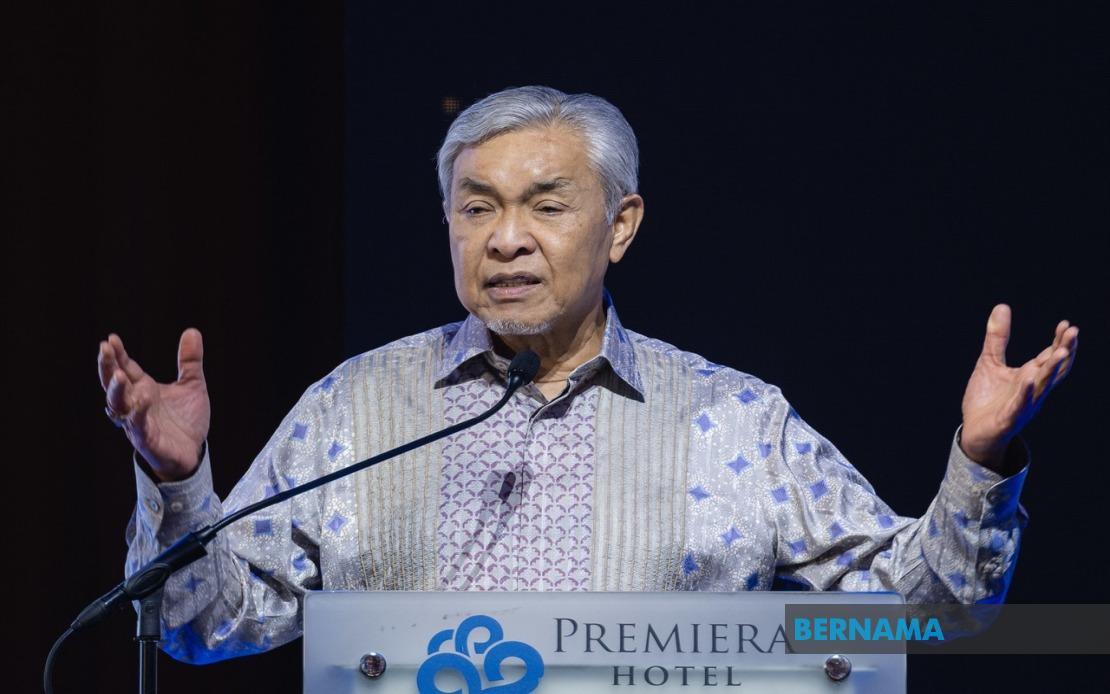
Deputy Prime Minister Datuk Seri Dr Ahmad Zahid Hamidi has signalled that infrastructure proposals for new rural roads in Sabah and Sarawak will be assessed for potential inclusion in the 2027 budget cycle. The announcement came during remarks at the Ministry of Rural and Regional Development's annual service awards ceremony, where Ahmad Zahid, who also heads the rural development portfolio, outlined the criteria for considering such projects moving forward.
The emphasis on Sabah and Sarawak reflects the persistent challenge of transport connectivity in East Malaysia's more isolated communities. Many settlements across both states remain significantly distant from commercial centres and administrative hubs, creating logistical barriers for residents seeking healthcare, education, and market access. The rural development ministry has formally designated road infrastructure as a core responsibility, tasked with bridging these geographical gaps by establishing reliable transport links between remote villages and established urban and settlement nodes.
However, Ahmad Zahid was careful to establish that any new road projects will not proceed automatically. The implementation pathway requires alignment with the rigorous standards and protocols maintained by the Ministry of Finance and the Public Works Department, meaning that approval at the cabinet level represents merely the first step in a longer administrative process. This sequential approach, he suggested, ensures fiscal discipline while maintaining technical and safety standards across all infrastructure delivery.
The deputy prime minister indicated that the Ministry of Rural and Regional Development will now engage in detailed consultations with stakeholder agencies before formalising specific project proposals. This consultation phase is essential to verify the feasibility, cost estimates, and prioritisation of candidate road initiatives. By anchoring decisions to broader stakeholder input, the ministry aims to strengthen the justification for budget allocations and reduce the risk of projects failing to deliver intended outcomes.
Beyond the specific announcement on road funding, Ahmad Zahid outlined a broader strategic reorientation for the rural development apparatus. He called for what he termed a "new discipline" within the ministry, arguing that the organisation must rigorously evaluate the effectiveness of existing programmes and make tough decisions about continuation or cessation. This signals frustration with underfocused or underperforming initiatives and a determination to redirect resources toward activities that demonstrably improve rural living standards.
The reframing reflects a more contemporary understanding of rural development itself. Ahmad Zahid articulated that infrastructure alone—roads, schools, clinics—is no longer sufficient as a development philosophy. Instead, the ministry must work to establish an integrated ecosystem within rural areas that actively generates sustainable employment and income-generating opportunities for residents. This shift acknowledges that connectivity without economic viability leaves rural communities vulnerable and dependent on external support.
As part of this philosophical repositioning, Ahmad Zahid stressed the importance of digital transformation and systemic reform within KKDW's operations. Yet he cautioned that the transition from analogue to digital systems represents only a surface-level change. The deeper necessity, he argued, lies in fostering an institutional culture characterised by decisiveness, flexibility, and genuine commitment to problem-solving. This requires staff at all levels to embrace continuous learning, pursue creative approaches to service delivery, and maintain unwavering ethical standards in their work.
The emphasis on institutional culture is particularly significant for Malaysian readers concerned with public sector effectiveness. Rural development initiatives frequently encounter implementation bottlenecks stemming not from lack of funds but from sluggish decision-making, interagency coordination failures, and insufficient local accountability. By signalling that the ministry leadership intends to drive behavioural and attitudinal change, Ahmad Zahid is positioning rural development as a priority portfolio within the current administration's reform agenda.
For Sabah and Sarawak specifically, the message provides cautious optimism but not guaranteed outcomes. Communities lobbying for new road connections will now have a defined pathway to seek inclusion in the budget preparation process, though competition for limited resources means that not all proposals will ultimately receive funding approval. The involvement of the Finance Ministry and Public Works Department in the vetting process introduces additional layers of scrutiny that could extend timelines and modify project scope.
The broader regional context matters here as well. Both Sabah and Sarawak have historically advocated for greater infrastructure investment relative to their population shares, citing the particular challenges of terrain and dispersed settlement patterns. The Pakatan Harapan and subsequent administrations have sought to address this through various initiatives, yet gaps remain. Ahmad Zahid's statement suggests that the current government continues to recognise the political and development importance of East Malaysian connectivity.
The integration of rural road development within a larger ecosystem-building framework also hints at forthcoming initiatives beyond simple infrastructure. Readers should anticipate complementary announcements regarding rural enterprise support, agricultural value-chain development, and digital access—all designed to maximise the benefit of improved physical connectivity. This holistic approach reflects international best practices in rural development but also acknowledges that Malaysian rural communities increasingly expect multimodal support rather than single-sector interventions.
The deputy prime minister's call for institutional discipline and impact-driven programming will face inevitable resistance from various quarters. Staff accustomed to established routines may resist the push for faster decision-making and greater accountability. Political considerations in Sabah and Sarawak may generate pressure to fund marginal projects regardless of economic rationale. Nevertheless, Ahmad Zahid's public commitment to these principles establishes a benchmark against which the ministry's performance can be measured over the coming months.

