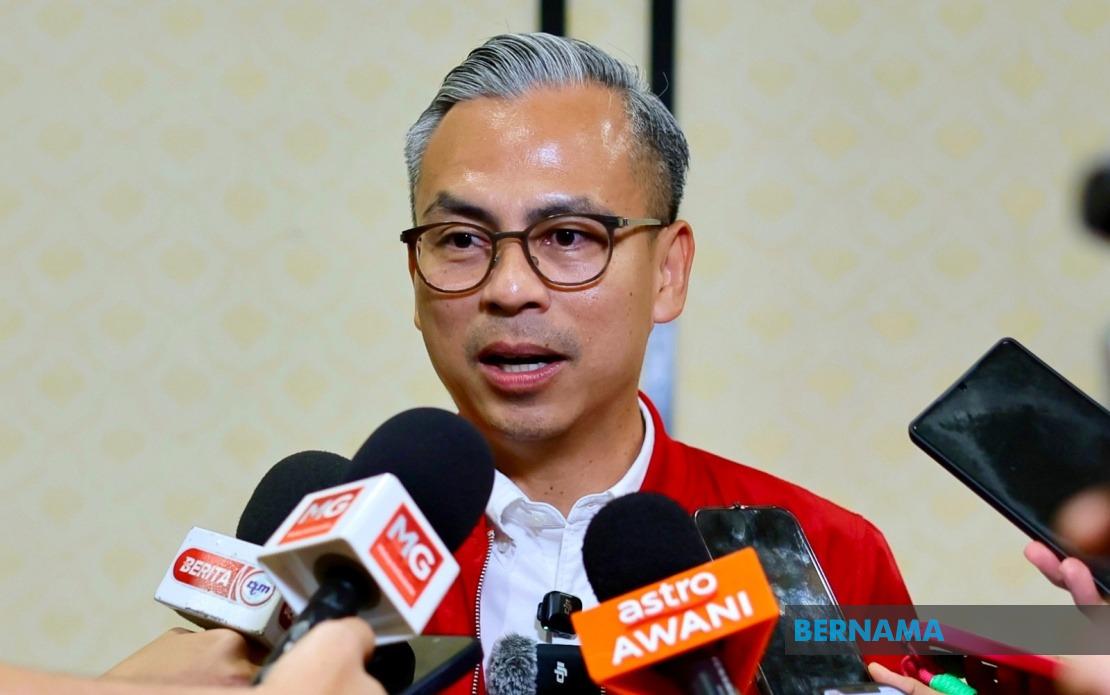
Communications Minister Datuk Fahmi Fadzil has thrown open the doors of Radio Televisyen Malaysia, the national broadcaster, as a potential venue for a televised debate between Johor Menteri Besar Datuk Onn Hafiz Ghazi and Pakatan Harapan's Puteri Wangsa candidate Dr Maszlee Malik ahead of the state election scheduled for July 11. Speaking in Muar on July 2, Fahmi indicated that RTM TV1 would be willing to host the interactive session at a time and location convenient to both parties, with Johor Bahru among the suggested options for such a meeting.
The offer represents an attempt to elevate the election discourse beyond traditional campaign rhetoric. Fahmi, who also serves as the Pakatan Harapan Communications Director, framed the proposed dialogue not as a combative political duel but as a constructive platform for exchanging substantive ideas about Johor's development trajectory and future vision. This framing attempts to sidestep partisan disagreements and focus instead on the practical matters that affect the state's residents, from economic development to infrastructure and social welfare.
Fahmi's proposal comes in response to earlier calls from certain quarters demanding that Pakatan Harapan first declare its official Menteri Besar candidate before engaging in any public debate or dialogue with the ruling coalition. The minister defended the logic of having the candidates themselves engage directly with voters rather than waiting for formal endorsements. He suggested that the willingness to confront differing viewpoints and respond to criticism with professionalism represents a crucial leadership quality that voters should consider when deciding who should steer Johor's development over the coming five years.
The minister commended Dr Maszlee for already demonstrating openness to public engagement by participating in an interactive session with 41 young people to discuss their aspirations for the state's future. This grassroots engagement format contrasts with traditional top-down campaign approaches and reflects a growing emphasis on connecting with younger voters who have distinct priorities and expectations from their leaders. The willingness to listen to youth perspectives signals a broader campaign strategy that seeks to position the candidate as accessible and responsive to emerging demographic concerns.
Johor's electoral landscape presents a complex political terrain where multiple candidates and coalitions compete for voter support. In the Puteri Wangsa constituency where Dr Maszlee is contesting, he faces competition from Barisan Nasional's Teow Chia Ling, Nicholas Paul Vincent representing Parti Bersama Malaysia, MUDA's Rashifa Aljunied, and independent candidate Wang Wee Seong. This five-way contest reflects the increasingly fragmented nature of Malaysian electoral politics, where traditional two-coalition dominance has given way to multiple competing political formations each claiming to represent different voter interests and values.
Meanwhile, the high-profile contest in Machap pits the sitting Menteri Besar Onn Hafiz against Nor Hafiz Roslan in what amounts to a direct bilateral struggle between the Barisan Nasional incumbent and the Pakatan Harapan challenger. This particular race symbolises the broader state-level competition and will likely serve as a bellwether for voter sentiment across Johor. The outcome in Machap could significantly influence the overall direction of state politics and the composition of the next state assembly.
With polling day fixed for July 11 and early voting scheduled for July 7, the electoral calendar leaves limited time for candidates to make their case to voters. Fahmi has urged young voters especially to prioritise their civic duty despite any logistical inconveniences they might face in reaching polling stations. This appeal to the youth vote reflects an understanding that younger Malaysians, though often mobilised by concerns about cost of living, education, and employment opportunities, sometimes face barriers to political participation including inconvenient voting dates or locations that require time away from work or studies.
The Communications Minister's emphasis on respectful dialogue and focus on substantive governance issues reflects broader trends in Southeast Asian politics where citizens increasingly demand that electoral contests address concrete policy matters rather than devolving into personality-driven disputes. The proposed RTM platform would allow both candidates to articulate their vision for Johor's economic competitiveness, quality of public services, infrastructure development, and social cohesion. Such discussions could help voters evaluate the practical governance credentials of competing candidates beyond rhetorical appeals.
Fahmi's invitation also underscores the traditional role of state-owned media in facilitating democratic discourse. By positioning RTM as a neutral platform rather than a propaganda instrument, the minister attempts to rebuild public confidence in institutional media at a time when political polarisation and the proliferation of social media have fragmented information landscapes. A televised debate broadcast on the national network could reach voters across different socioeconomic groups and education levels who might not actively seek out campaign materials through digital channels.
The timing of this offer, coming less than two weeks before polling day, suggests a strategic calculation that a high-profile dialogue could shift campaign momentum. For Pakatan Harapan, a strong debate performance could help overcome the perception that the coalition lacks a clearly defined state-level leadership identity. For Onn Hafiz and Barisan Nasional, accepting the challenge would demonstrate confidence in the incumbent's record and vision, while declining might invite accusations of avoiding scrutiny. The political calculus surrounding whether and how to respond to this offer will likely occupy both camps' strategic discussions in the coming days.
Johor has consistently been a significant political battleground in Malaysian elections, and the 16th state assembly polls carry implications extending beyond the state borders. As Malaysia's largest and most developed southern state, Johor's governance direction influences broader national political trajectories. The choice between continuity under Barisan Nasional or change under Pakatan Harapan will shape not only state policy but potentially influence voter behaviour and coalition dynamics in future national elections. This context makes the quality and substance of the election discourse particularly consequential for Malaysian politics more broadly.

