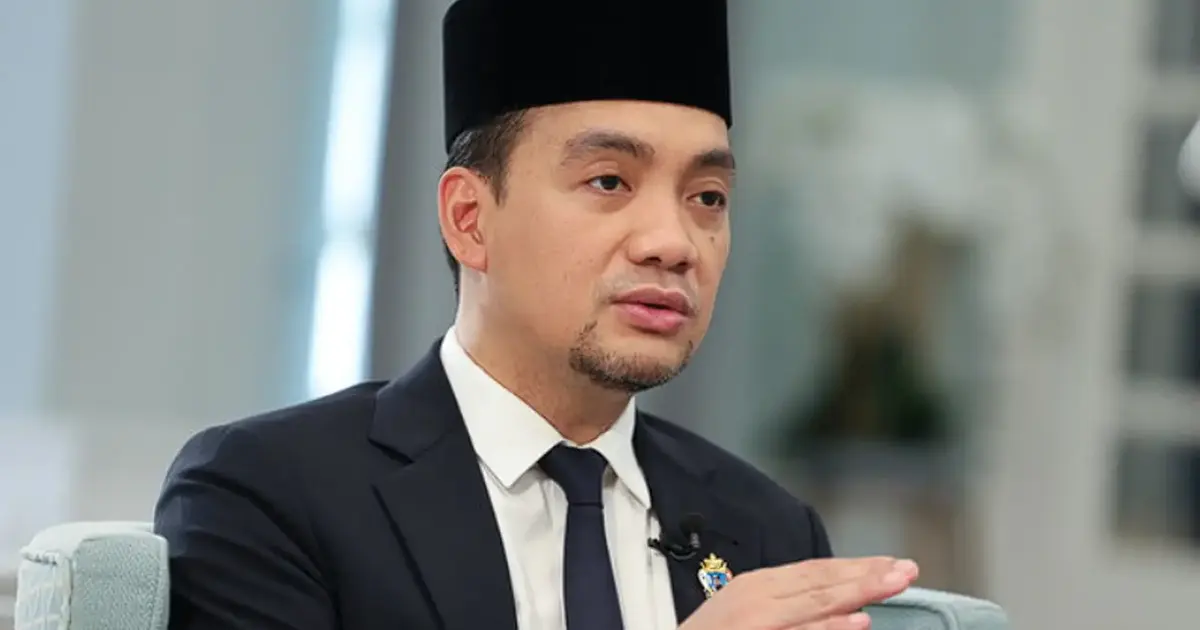
Caretaker Johor menteri besar Onn Hafiz has pushed back against suggestions that the palace's endorsement of the state assembly's dissolution represents political interference, characterising the process instead as a fundamental constitutional obligation that operates independently from partisan politics.
The distinction Onn Hafiz draws reflects broader tensions in Malaysia's political system regarding the appropriate boundaries between the monarchy's ceremonial and administrative functions. When a state assembly is dissolved, the sultan's approval is required under state constitutional provisions—a formal step that must be completed before elections can proceed. This requirement exists across all Malaysian states and serves as a fundamental constitutional safeguard, separating the executive decision-making of elected officials from the formal machinery of state authority.
By framing the sultan's role as procedural rather than interventionist, Onn Hafiz appears to be addressing concerns that the palace might be exerting undue influence over the timing or direction of state politics. Such concerns have surfaced periodically in Malaysian political discourse, particularly during periods of government transition or when assembly dissolutions occur under circumstances that some observers view as politically motivated. The caretaker menteri besar's clarification suggests he recognises the importance of maintaining public confidence in the neutrality of constitutional institutions.
The principle underlying Onn Hafiz's statement reflects Malaysia's constitutional monarchy model, wherein the ruler serves as the apex of state authority while day-to-day governance rests with elected representatives. Formal acts—including giving assent to legislation, dissolving assemblies, and appointing officials—routinely require royal approval, yet this requirement does not ordinarily signal active political direction from the palace. Rather, it represents a constitutional formality designed to ensure that major state decisions occur within the proper legal framework and with appropriate oversight from the institution representing the continuity of the state itself.
Understanding this distinction matters significantly for Malaysian political stability. If citizens and observers routinely conflate constitutional procedure with political interference, confidence in the impartiality of state institutions erodes. Conversely, if the monarchy's formal role is clearly articulated and understood as separate from day-to-day politics, the institution can fulfil its ceremonial and constitutional functions without becoming entangled in partisan disputes. Onn Hafiz's clarification reinforces this separation.
The Johor context adds particular weight to this discussion. As the largest state by population and a traditionally significant political entity, Johor's assembly decisions receive considerable public and media attention. The state has experienced multiple transitions and political developments over recent years, making clear communication about constitutional processes especially valuable for maintaining public understanding of how the system functions. When caretaker officials articulate the constitutional basis for their actions, they help educate the broader public about the separation between formal state authority and elected government.
Moreover, Onn Hafiz's statement addresses a recurrent source of misunderstanding in Malaysian politics. During elections and periods of political transition, various actors sometimes suggest that the palace is either obstructing or facilitating particular political outcomes. By emphasising that royal assent is a constitutional mandate operating according to fixed legal principles—rather than a discretionary political decision—the caretaker menteri besar grounds the discussion in institutional realities rather than speculation about royal preferences.
For readers across Southeast Asia, Malaysia's constitutional monarchy offers an instructive case study in how hereditary institutions and democratic governance can coexist. The model relies fundamentally on mutual respect for prescribed roles: the monarchy fulfils its constitutional functions without directing political outcomes, while elected governments govern within constitutional constraints that include respect for royal authority. When this balance functions properly, it provides stability and legitimacy. When misunderstandings arise about where one role ends and another begins, political tensions can intensify.
Onn Hafiz's role as caretaker menteri besar also influences the significance of his statement. A caretaker administration operates with restricted powers, typically managing routine matters while avoiding major policy initiatives pending fresh elections. In this context, his responsibility for dissolving the assembly and conducting the transition to new elections falls squarely within his mandate. By clarifying that each step in this process, including securing royal assent, constitutes a constitutional requirement rather than a political choice, he reinforces the legitimacy of the caretaker government's actions.
The statement also implicitly addresses accountability and transparency. When officials clearly explain the constitutional basis for their decisions, they make themselves answerable to the public on matters of principle and process. This contrasts with scenarios where political decisions are presented as technical necessities, or where constitutional processes are obscured behind vague references to consultation and approval. Explicit articulation of how constitutional procedures work serves the democratic principle that citizens should understand the mechanisms through which their government operates.
Looking forward, Onn Hafiz's emphasis on constitutional process offers a template for managing transitions and maintaining institutional confidence during politically sensitive periods. As Malaysian elections approach and various states conduct their own assembly dissolutions and electoral processes, clear communication about the constitutional roles of different institutions—particularly the palace—can help ensure that these procedures proceed with public confidence and minimal controversy about the boundaries between formal authority and political direction.

