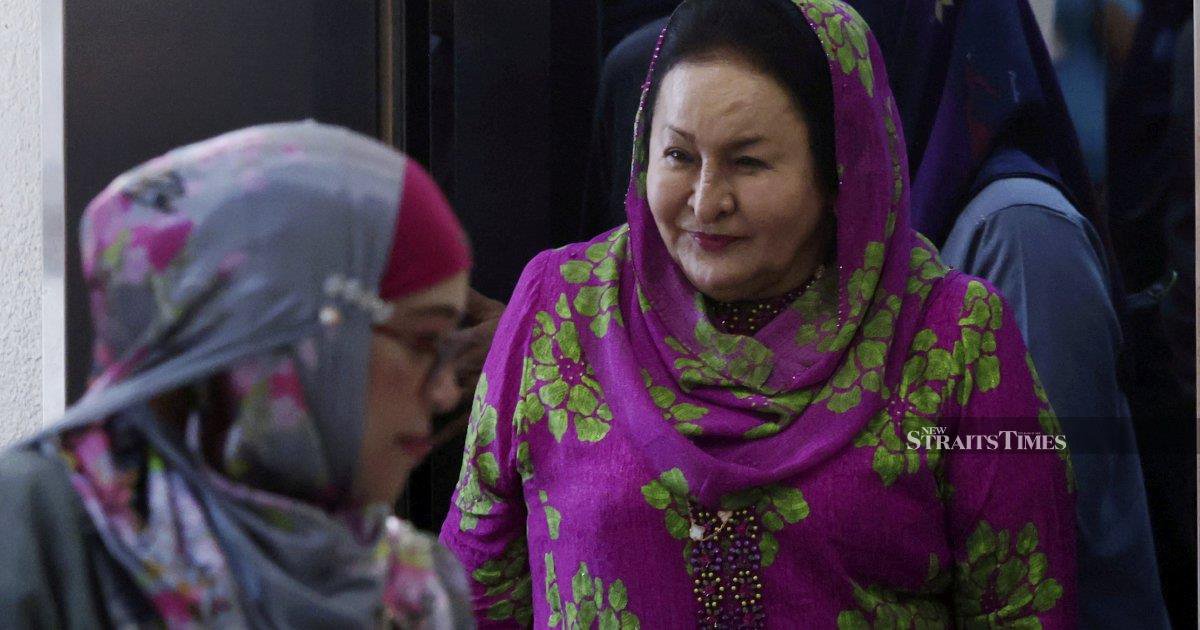
Datin Seri Rosmah Mansor has obtained a conditional stay of execution on a RM67.46 million judgment, temporarily halting her obligation to pay the sum to Lebanese jewellery company Global Royalty Trading SAL. The decision permits her to proceed with her appeal at the Court of Appeal without being forced to settle the substantial debt immediately, a significant development in a protracted legal dispute involving high-value jewellery transactions.
The stay of execution is a procedural mechanism that suspends enforcement of a court judgment while an appeal is pending. This means the judgment remains on record and binding, but the payment obligation does not take effect until the appeals process concludes. Such stays are commonly granted where appellants demonstrate they have reasonable prospects of success or face potential irreparable harm if forced to pay before their appeal is heard. The court's approval of Rosmah's application suggests the judiciary found sufficient grounds to warrant delaying enforcement.
The case itself centres on transactions involving high-value jewellery purchases, a matter that has drawn considerable attention given Rosmah's profile as the wife of former Prime Minister Datuk Seri Najib Razak. The origins of the dispute trace back to dealings between Rosmah and Global Royalty Trading SAL, with the Lebanese firm ultimately seeking enforcement of what it claims as a legitimate debt. The RM67.46 million figure represents a substantial sum, underscoring the magnitude of the commercial disagreement between the parties.
Rosmah's decision to appeal indicates her legal team believes the lower court made an error in either law or fact, or both. Appeals courts typically examine whether judges correctly applied the law to the facts presented, whether procedural rules were followed, and whether the judgment is manifestly unreasonable. For a stay to be granted, courts generally require appellants to show that their case raises serious issues to be tried, that they would suffer irreparable harm if the stay were refused, and that the balance of convenience favours granting the stay. The court's approval suggests these criteria were satisfied.
The timing of this judgment carries weight given Malaysia's ongoing focus on accountability and financial oversight. The Bukit Aman police special investigation unit (D9) and other agencies have previously been investigating matters related to Rosmah's financial dealings and purchases, as part of broader inquiries into the 1Malaysia Development Berhad (1MDB) scandal and related financial irregularities from the previous administration. This jewellery case, while ostensibly a commercial dispute, exists within a broader context of scrutiny around high-value transactions undertaken during that period.
The role of Global Royalty Trading SAL in this dispute is noteworthy. The Lebanese company initiated legal proceedings to recover what it contends are legitimate payments owed for jewellery goods or services. International commercial disputes of this nature are not uncommon, but they become politically and publicly sensitive when prominent figures are involved. The company's persistence in pursuing enforcement suggests considerable confidence in the underlying debt, though legal contests often turn on technical and interpretive matters rather than simple acknowledgment of obligation.
For Malaysian legal observers and business practitioners, this case illustrates several important principles about civil litigation and appellate practice. Stays of execution are not automatically granted—they require deliberation and justified reasoning from the bench. The conditional nature of this stay likely means certain requirements or undertakings have been imposed on Rosmah, possibly including security deposits or other assurances that protect Global Royalty Trading SAL's position should the appeal ultimately fail. Such conditions ensure the stay does not become an indefinite escape from obligation.
The appeal process itself may take considerable time. Malaysia's Court of Appeal, while operating efficiently by regional standards, manages a substantial caseload, and commercial appeals involving large sums and complex factual disputes can require lengthy hearings and deliberation. During this period, neither party receives the finality they seek: Rosmah remains under judgment but does not pay, while Global Royalty Trading SAL holds an unexecuted judgment and faces further legal proceedings before recovery becomes possible.
Beyond the immediate legal technicalities, this case reflects broader questions about enforcement of commercial obligations involving figures with political connections. The stay does not prejudge the ultimate appeal outcome—the Court of Appeal could uphold, overturn, or vary the original judgment. What remains clear is that this dispute will continue to occupy judicial attention and will likely generate further developments as the appellate process unfolds.
The stay granted to Rosmah provides breathing room for her legal representatives to prepare their appeal arguments in full, presenting their challenge to the lower court's reasoning to a higher tribunal. For Global Royalty Trading SAL, the stay represents a continuation of the uncertainty surrounding payment, though their judgment remains enforceable once the appeal concludes. The ultimate resolution will depend on how the Court of Appeal evaluates the parties' respective positions when the case reaches full hearing.

